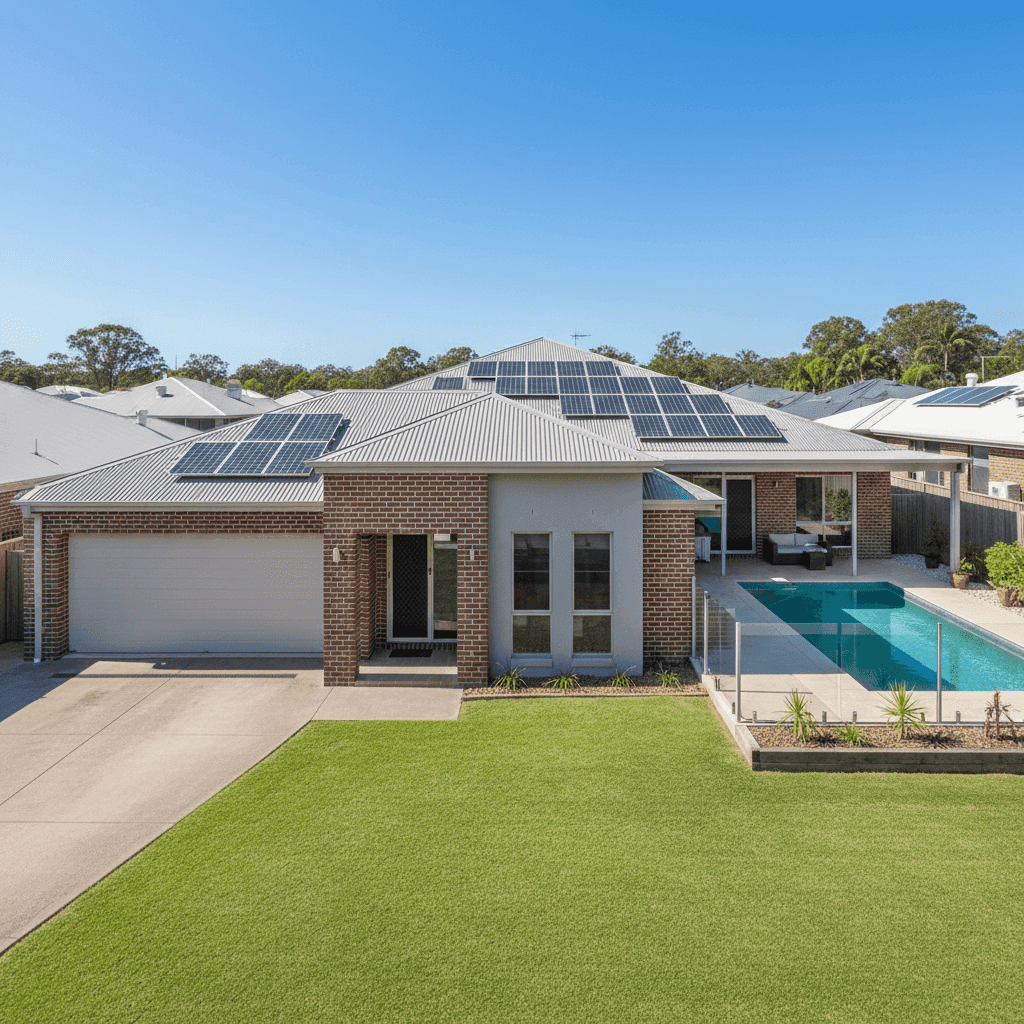
If you own a free standing home in Boyne Island, QLD 4680, you already know this coastal Central Queensland suburb has a lot going for it — waterfront access, a relaxed lifestyle, and a tight-knit community. But when it comes to home insurance, knowing whether you're getting a fair deal can be harder to pin down. This article breaks down a real home and contents insurance quote for a four-bedroom property in the area, compares it against local, state, and national benchmarks, and offers practical guidance for homeowners looking to protect their investment.
---
Is This Quote Fair?
The quote in question comes in at $2,871 per year (or $282 per month) for combined home and contents cover, with a building sum insured of $800,000 and contents valued at $100,000. Both the building and contents excess are set at $1,000.
Based on available market data, this premium is rated CHEAP — that is, below average for the area. That's genuinely good news for the homeowner. In a suburb where insurance costs can vary dramatically depending on the insurer, the property's features, and the level of cover selected, landing below the local average by a significant margin suggests this quote is competitively priced.
To put it in perspective: the suburb average premium for Boyne Island is $5,677 per year, meaning this quote is roughly 49% cheaper than what the typical homeowner in the area is paying. Even compared to the suburb's 25th percentile — the cheapest quarter of quotes — which sits at $3,434 per year, this premium still comes in lower. That's a strong result.
---
How Boyne Island Compares
Understanding how your suburb sits within the broader insurance landscape is useful context when evaluating any quote. Here's how Boyne Island stacks up:
| Benchmark | Premium |
|---|---|
| This Quote | $2,871/yr |
| Suburb 25th Percentile | $3,434/yr |
| Suburb Median | $4,364/yr |
| Suburb Average | $5,677/yr |
| Suburb 75th Percentile | $6,980/yr |
| QLD State Median | $3,903/yr |
| QLD State Average | $9,129/yr |
| National Median | $2,764/yr |
| National Average | $5,347/yr |
(Based on a sample of 23 quotes in the Boyne Island area.)
A few things stand out here. First, Queensland's state average of $9,129 per year is extraordinarily high — nearly double the national average of $5,347. This reflects the elevated risk profile of much of Queensland, where cyclones, flooding, and storm damage drive premiums up significantly across the state. Boyne Island, situated near Gladstone on the Central Queensland coast, is not immune to severe weather, which makes the suburb's own average of $5,677 understandable.
Second, it's worth noting the difference between averages and medians. The QLD state average is heavily skewed by high-risk areas and high-value properties. The state median of $3,903 is a more representative figure for a typical Queensland homeowner. Similarly, the national median of $2,764 is notably lower than the national average, suggesting a handful of very expensive policies pull the average up.
For more localised data, you can explore Boyne Island suburb insurance statistics, Queensland-wide home insurance trends, and national home insurance benchmarks.
---
Property Features That Affect Your Premium
Every property is different, and insurers price risk based on a combination of location, construction, and features. Here's how the characteristics of this particular home likely influence its premium:
Brick Veneer Walls & Colorbond Roof Brick veneer is generally viewed favourably by insurers — it's durable, fire-resistant, and holds up well in storms. Combined with a steel Colorbond roof, which is lightweight, corrosion-resistant, and commonly used in coastal Queensland, this construction profile is considered relatively low-risk. Both materials contribute to a more competitive premium.
Slab Foundation & Tile Flooring A concrete slab foundation is standard for homes built in Queensland and is generally associated with structural stability. Tile flooring is similarly durable and resistant to moisture damage — a practical choice in a coastal climate. These features are unlikely to attract any premium loading.
Built in 2009 A home built in 2009 benefits from construction standards introduced after significant updates to the Building Code of Australia. It's modern enough to meet contemporary safety requirements, yet old enough to have a proven track record. Insurers typically view homes from this era positively.
Swimming Pool Pools add value to a property but also introduce liability considerations. Most insurers factor in pool ownership when calculating premiums, particularly for public liability cover. It's worth confirming your policy explicitly covers pool-related incidents.
Solar Panels Solar panels are increasingly common in Queensland, and most home insurance policies cover them as a fixture of the building — but not always. Check whether your policy covers the panels for storm damage, hail, and accidental breakage, as these are the most common causes of solar claims in Queensland.
No Cyclone Risk Classification Despite being on the Queensland coast, Boyne Island does not fall within a designated cyclone risk zone. This is a meaningful factor — cyclone-rated areas can attract significant premium loadings. The absence of this classification likely contributes to the competitive pricing seen in this quote.
214 sqm, 4 Bedrooms, 2 Bathrooms, Standard Fittings A mid-sized home with standard fittings is straightforward for insurers to assess. There are no high-end finishes or bespoke features that would push the rebuild cost — and therefore the sum insured — into premium territory.
---
Tips for Homeowners in Boyne Island
1. Review your sum insured regularly Building costs in Queensland have risen sharply in recent years. An $800,000 sum insured may be appropriate now, but it's worth reassessing annually to ensure it reflects current construction costs in your area. Underinsurance is one of the most common — and costly — mistakes homeowners make.
2. Confirm your solar panels are covered As mentioned above, solar panel coverage varies between policies. Ask your insurer specifically whether your panels are included under the building section and what events are covered. Some policies require panels to be listed separately.
3. Don't overlook contents coverage $100,000 in contents cover is a reasonable starting point, but it's easy to underestimate the replacement value of everything inside your home. Do a room-by-room audit periodically to make sure your contents sum insured reflects reality — especially after major purchases.
4. Compare quotes at renewal time Even if you're happy with your current insurer, it pays to shop around at renewal. The insurance market shifts constantly, and the cheapest option today may not be the best value next year. Use a comparison service to benchmark your renewal premium against the market before automatically rolling over.
---
Compare Home Insurance Quotes in Boyne Island
Whether you're reviewing your existing policy or shopping for cover on a new property, comparing quotes is the single most effective way to ensure you're not overpaying. Get a home insurance quote at CoverClub and see how your premium stacks up against real market data for Boyne Island and beyond. It takes just a few minutes and could save you hundreds of dollars a year.