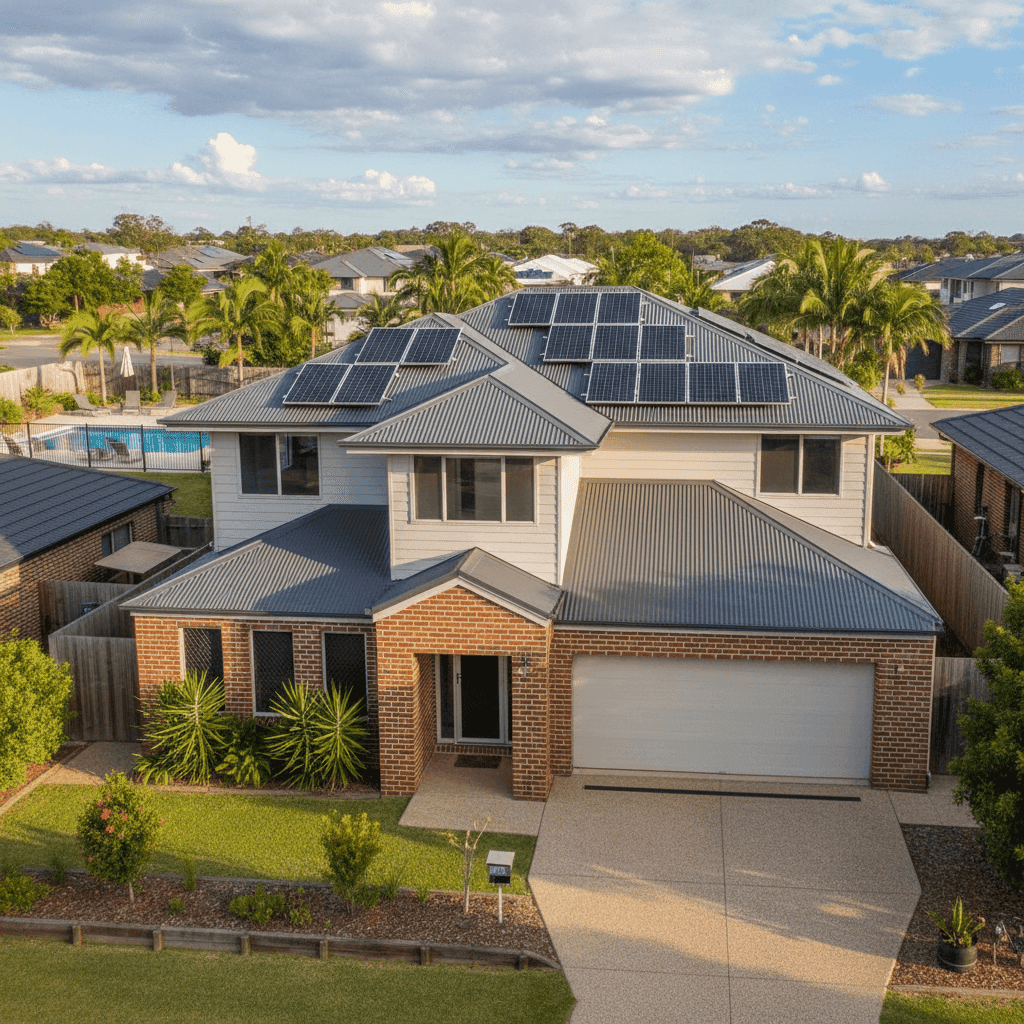
Boyne Island, nestled along Queensland's Gladstone coast, is a popular choice for families seeking a relaxed lifestyle with easy access to waterways and local amenities. Like many regional QLD suburbs, home insurance here reflects a unique mix of coastal proximity, local weather patterns, and property characteristics. This article breaks down a recent building-only insurance quote for a three-bedroom free standing home in Boyne Island (QLD 4680), helping you understand what's driving the price — and whether there's room to save.
---
Is This Quote Fair?
The quote in question comes in at $3,567 per year (or $342 per month) for building-only cover on a 160 sqm free standing home with a sum insured of $550,000 and a building excess of $2,000. Our price rating for this quote is FAIR — Around Average.
That "fair" rating isn't a consolation prize — it's actually a meaningful signal. It tells us this premium sits in a reasonable range relative to what other homeowners in the area are paying, without being an outlier in either direction. You're not overpaying significantly, but there may still be opportunities to sharpen the price with a bit of comparison shopping.
Given the property's features — double brick construction, a Colorbond steel roof, slab foundation, and tile flooring — insurers generally view this as a well-built, lower-risk structure. These characteristics can work in your favour when negotiating or comparing quotes.
---
How Boyne Island Compares
To put this quote in proper context, let's look at the numbers across three levels: suburb, state, and national. You can explore full pricing data on the Boyne Island insurance stats page, the QLD state overview, and the national statistics page.
Suburb Level (Boyne Island, QLD 4680)
Based on 23 quotes collected in the area:
| Metric | Premium |
|---|---|
| Suburb Average | $5,677/yr |
| Suburb Median | $4,364/yr |
| 25th Percentile | $3,434/yr |
| This Quote | $3,567/yr |
| 75th Percentile | $6,980/yr |
This quote sits just above the 25th percentile for the suburb — meaning roughly 75% of quotes collected in Boyne Island are more expensive. That's a genuinely competitive result. The suburb average of $5,677 is notably higher, suggesting some properties in the area attract significantly steeper premiums.
State Level (QLD)
Queensland's home insurance landscape is famously volatile. The state average premium sits at $9,129/yr, though the median is a much more representative $3,903/yr. The large gap between these two figures reflects the outsized impact of high-risk properties — particularly in cyclone-prone and flood-affected areas — pulling the average upward. At $3,567, this quote comes in below the QLD median, which is a positive sign.
National Level
Across Australia, the national average premium is $5,347/yr, with a median of $2,764/yr. This quote sits above the national median but well below the national average — consistent with what you'd expect for a regional Queensland property with a solid construction profile.
---
Property Features That Affect Your Premium
Several characteristics of this property have a direct influence on the insurance premium. Understanding them can help you make smarter decisions when reviewing or renewing your policy.
Double Brick Walls
Double brick is one of the most favoured construction types among insurers. It offers excellent structural integrity, strong fire resistance, and good resilience against storm damage. Compared to timber-framed or clad homes, double brick properties often attract lower premiums — and this home benefits from that.
Colorbond Steel Roof
Steel roofing, particularly Colorbond, is widely regarded as durable and low-maintenance. It performs well in high-wind events and is resistant to corrosion — a relevant consideration for coastal Queensland properties. Insurers generally price Colorbond roofs favourably compared to older tile or fibro roofing.
Slab Foundation & Tile Flooring
A concrete slab foundation reduces the risk of subsidence and pest-related structural damage. Combined with tile flooring (which is resistant to water damage and easy to replace), these features present a lower claims risk profile to underwriters.
Swimming Pool
Pools add value to a property but also introduce liability considerations. Some insurers factor pool-related risks — such as structural damage or liability for injury — into their building cover pricing. It's worth confirming exactly what your policy covers in relation to the pool.
Solar Panels
Solar panels are increasingly common in Queensland, and most building policies will cover them as a fixed structure. However, coverage limits and conditions vary between insurers, so it pays to check that your sum insured adequately accounts for the replacement value of your solar system.
Ducted Climate Control
Ducted air conditioning systems are a significant fixed asset and are typically covered under building insurance. Their inclusion can nudge the sum insured — and therefore the premium — upward, but they're an important part of protecting your home's full value.
Not in a Cyclone Risk Zone
This is a notable factor. Many parts of coastal Queensland attract cyclone loading on premiums, which can be substantial. Boyne Island is not classified as a cyclone risk area for this property, which helps keep the premium more competitive compared to far-north Queensland locations.
---
Tips for Homeowners in Boyne Island
Whether you're renewing an existing policy or shopping around for the first time, these practical tips can help you get better value on your home insurance.
- Review your sum insured regularly. Building costs have risen sharply in recent years. Make sure your $550,000 sum insured reflects current rebuilding costs — not just the original purchase price or an outdated estimate. Underinsurance is one of the most common and costly mistakes homeowners make.
- Compare quotes before renewal. The spread between the 25th and 75th percentile in Boyne Island is enormous — from $3,434 to $6,980 per year. That's a potential difference of over $3,500 annually for similar properties. Don't assume your current insurer is offering you the best deal.
- Check your pool and solar panel coverage specifically. Ask your insurer to confirm how your pool and solar system are covered, including any sub-limits. Some policies have caps on solar panel replacement that may fall short of your actual system's value.
- Consider your excess strategically. This quote carries a $2,000 building excess. Opting for a higher excess can reduce your annual premium, but make sure it's an amount you could comfortably cover in the event of a claim. For minor damage, you may end up not claiming at all — so the excess level matters.
---
Ready to Compare?
A "fair" rating is a good starting point, but it doesn't mean you can't do better. Insurance pricing varies significantly between providers — even for identical properties — so comparing multiple quotes is always worthwhile. Get a home insurance quote through CoverClub to see how your property stacks up and find a policy that genuinely fits your needs and budget.