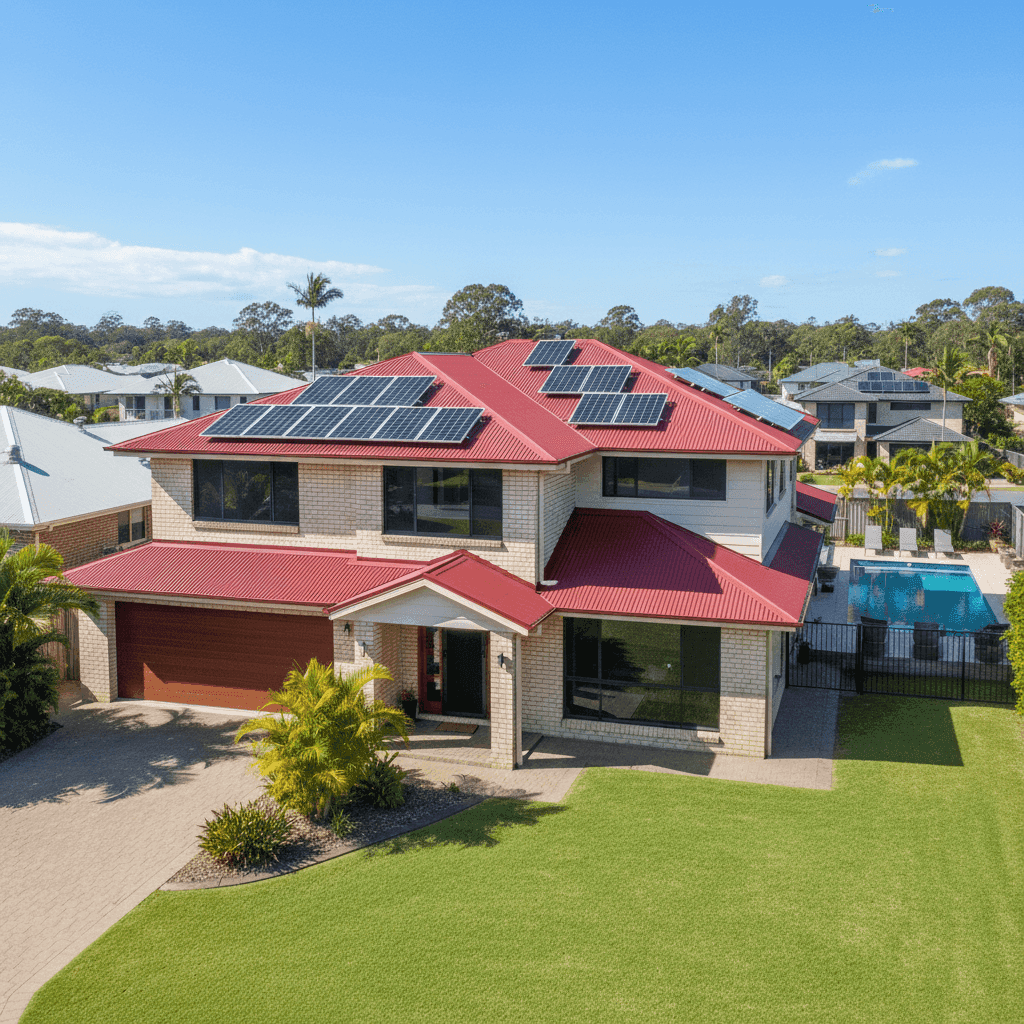
If you own a free standing home in Boyne Island, QLD 4680, you already know this coastal community on the Gladstone coast comes with its own unique set of considerations when it comes to home insurance. From the subtropical climate to the mix of older and newer housing stock, premiums in this part of Central Queensland can vary quite significantly. This article breaks down a real home and contents insurance quote for a 3-bedroom, 1-bathroom property in Boyne Island — and helps you understand whether it represents good value.
---
Is This Quote Fair?
The quote in question comes in at $3,669 per year (or $352/month) for combined home and contents cover, with a building sum insured of $603,000 and contents valued at $30,000. The building excess is set at $2,000 and the contents excess at $1,000.
Our price rating for this quote is FAIR — Around Average.
That rating reflects a quote that sits in a reasonable middle ground — not the cheapest available, but well within a normal range for the area. Specifically, it lands just above the suburb's 25th percentile of $3,434/yr, meaning roughly three-quarters of comparable quotes in the area cost more. That's a reasonably competitive position, particularly for a property with additional features like a pool and solar panels that can nudge premiums upward.
For a property of this size and specification — 160 sqm, double brick construction, Colorbond roof, on a slab foundation — a sub-$4,000 annual premium is a solid result. It's not rock-bottom, but it reflects an insurer pricing the risk sensibly rather than gouging.
---
How Boyne Island Compares
To put this quote in proper context, it helps to look at the broader pricing landscape. Here's how this premium stacks up across three levels of comparison:
| Benchmark | Premium |
|---|---|
| This Quote | $3,669/yr |
| Boyne Island (4680) Suburb Average | $5,677/yr |
| Boyne Island (4680) Suburb Median | $4,364/yr |
| QLD State Average | $9,129/yr |
| QLD State Median | $3,903/yr |
| National Average | $5,347/yr |
| National Median | $2,764/yr |
A few things stand out here. First, the Boyne Island suburb average of $5,677/yr is notably higher than this quote — meaning many homeowners in the same postcode are paying considerably more. The suburb's 75th percentile sits at $6,980/yr, so a significant portion of local homeowners are spending nearly double this quote.
Second, when you look at Queensland state-wide data, the picture becomes even more striking. The QLD average premium of $9,129/yr is heavily skewed by high-risk coastal and cyclone-prone areas in Far North Queensland. The state median of $3,903/yr is a more representative figure, and this quote comes in just below that — a positive sign.
Against national benchmarks, the quote is above the national median of $2,764/yr but well below the national average of $5,347/yr. This is fairly typical for a Queensland property, where weather-related risks generally push premiums above the national median.
The sample size for Boyne Island is 23 quotes, which provides a reasonable (if not exhaustive) basis for comparison. The data suggests this is a competitive quote for the suburb.
---
Property Features That Affect Your Premium
Several characteristics of this particular property have a meaningful influence on what insurers charge. Here's what matters most:
Double Brick Walls Double brick is generally viewed favourably by insurers. It's robust, fire-resistant, and holds up well in severe weather events. Compared to lightweight cladding or weatherboard, brick construction typically attracts lower premiums — or at least doesn't attract a loading.
Steel/Colorbond Roof Colorbond roofing is another tick in the insurer's box. It's durable, resistant to corrosion, and performs well in high winds. In Queensland's storm season, roof integrity is a major factor in claims, so a steel roof can help keep premiums in check.
Slab Foundation A concrete slab foundation is straightforward to assess and generally considered low-risk compared to elevated or suspended timber floors, which can be more susceptible to moisture damage and pest-related issues.
Swimming Pool A pool adds both value and liability to a property. Insurers factor in the cost of potential pool-related damage (e.g., from storm debris, structural issues) as well as public liability considerations. This will add a modest loading to the premium.
Solar Panels Solar systems are increasingly common, but they do add to the rebuild cost of a home. Panels, inverters, and associated wiring all need to be covered. Ensuring your sum insured accounts for the replacement value of your solar system is important — and it's worth confirming your policy explicitly covers panels.
Ducted Climate Control Ducted air conditioning is a significant fixed asset. Like solar panels, it contributes to the overall rebuild cost and needs to be reflected in your building sum insured.
Construction Year: 1993 At around 30 years old, this home is mature but not elderly. Properties from this era are generally well-built and comply with building codes that were in place before some of the more stringent cyclone-resistance requirements of the 2000s. It's worth ensuring the sum insured reflects current rebuilding costs, which have risen sharply in recent years.
---
Tips for Homeowners in Boyne Island
1. Review Your Sum Insured Regularly Construction costs have increased substantially across Australia in recent years. A sum insured of $603,000 for a 160 sqm home works out to roughly $3,769/sqm — which is in a reasonable range, but worth validating with a quantity surveyor or using an online building cost estimator. Being underinsured at claim time can be a costly mistake.
2. Confirm Your Solar Panels Are Covered Not all policies automatically include solar panels under building cover, or they may apply sub-limits. Check your Product Disclosure Statement (PDS) carefully to confirm panels and inverters are covered at full replacement value.
3. Shop Around at Renewal The spread of premiums in Boyne Island is wide — from $3,434/yr at the 25th percentile to $6,980/yr at the 75th. That's a difference of over $3,500/yr for comparable properties. Loyalty doesn't always pay in insurance, so it's worth comparing quotes each year rather than simply auto-renewing.
4. Consider Your Excess Levels Strategically This quote carries a $2,000 building excess and $1,000 contents excess. Opting for a higher excess can reduce your annual premium, but make sure you can comfortably cover that amount out of pocket if you need to make a claim. For most homeowners, an excess of $1,000–$2,500 strikes a reasonable balance.
---
Compare Your Home Insurance on CoverClub
Whether you're reviewing an existing policy or shopping for cover for the first time, comparing quotes is the single most effective way to ensure you're not overpaying. CoverClub makes it easy to see how your premium stacks up against real data from your suburb, your state, and across Australia. Get a home insurance quote today and find out if you're getting a fair deal — or if there's room to do better.