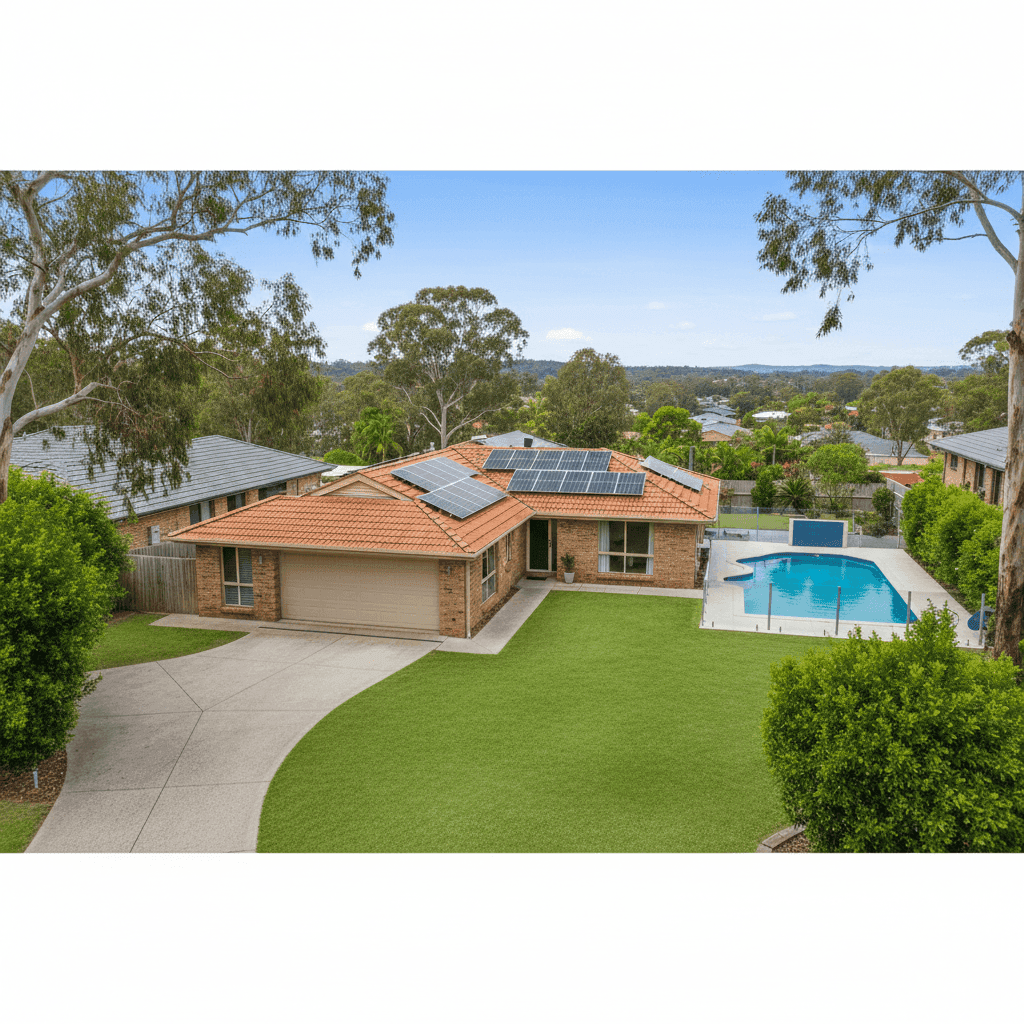
Bracken Ridge, nestled in Brisbane's northern suburbs, is a well-established residential area known for its family-friendly streets, leafy blocks, and easy access to Moreton Bay. For owners of a free standing home in this postcode, understanding what drives home insurance costs — and whether a given quote represents good value — can mean the difference between overpaying and being properly covered at the right price. This analysis breaks down a real home and contents insurance quote for a four-bedroom, three-bathroom brick veneer home in Bracken Ridge (QLD 4017), and puts it in context against local, state, and national benchmarks.
---
Is This Quote Fair?
The quote in question comes in at $2,276 per year (or $228/month), covering both building (sum insured: $777,000) and contents ($50,000), each with a $1,000 excess. Our price rating for this quote is FAIR — Around Average, and the data backs that up.
Compared to the suburb average of $2,396/yr for Bracken Ridge, this quote sits about 5% below the local mean — a modest but genuine saving. It also tracks closely with the suburb median of $2,219/yr, meaning roughly half of comparable quotes in the area come in lower, and half come in higher. That's a reasonable position to be in.
What makes this quote genuinely competitive is the context of what's being insured. A 235 sqm home with above-average fittings, a swimming pool, and solar panels carries more risk and replacement cost than a bare-bones property — yet the premium still lands within a sensible range. Homeowners who see quotes at the suburb's 75th percentile ($3,004/yr) or above should take note: there's meaningful room to shop around.
---
How Bracken Ridge Compares
To appreciate how well-priced this quote is, it helps to zoom out and look at the bigger picture. According to Queensland state insurance data, the average home insurance premium across QLD is $9,129/yr, with a state median of $3,903/yr. That's a stark contrast to the $2,276 quoted here.
Queensland's elevated state average is heavily influenced by high-risk areas — think Far North Queensland, cyclone-prone coastal towns, and flood-affected inland regions — where premiums can run into the tens of thousands annually. Bracken Ridge, sitting in Brisbane's relatively stable northern suburbs and outside designated cyclone risk zones, benefits significantly from its geography.
At the national level, the average premium sits at $5,347/yr (median: $2,764/yr), again reflecting the drag of high-risk postcodes across Australia. The Bracken Ridge quote at $2,276/yr sits below the national median, which is a solid outcome for a property of this size and specification.
Even within the Brisbane LGA, where the average premium reaches $16,277/yr (heavily skewed by flood-prone suburbs and high-value inner-city properties), this Bracken Ridge quote looks very reasonable. The suburb's 69-quote sample gives us a statistically meaningful local benchmark, and the picture it paints is of a suburb with manageable — if not cheap — insurance costs.
| Benchmark | Premium |
|---|---|
| This Quote | $2,276/yr |
| Bracken Ridge Suburb Average | $2,396/yr |
| Bracken Ridge Suburb Median | $2,219/yr |
| QLD State Average | $9,129/yr |
| QLD State Median | $3,903/yr |
| National Average | $5,347/yr |
| National Median | $2,764/yr |
| Brisbane LGA Average | $16,277/yr |
---
Property Features That Affect Your Premium
Every property is different, and insurers price risk based on a range of physical characteristics. Here's how the features of this particular home influence what you pay:
Brick Veneer Walls & Tiled Roof Brick veneer construction is widely regarded as a lower-risk building type by Australian insurers. It's durable, fire-resistant, and holds up well in storms. Combined with a tiled roof — another robust, long-lasting material — this home presents a relatively favourable risk profile compared to, say, weatherboard or fibro construction with a metal sheet roof.
Concrete Slab Foundation A slab foundation is generally considered stable and low-maintenance, reducing the likelihood of subsidence or structural movement claims. This works in the homeowner's favour at premium time.
Timber & Laminate Flooring While attractive and common in Queensland homes, timber and laminate flooring can be more susceptible to water damage than tiles. Insurers may factor this in, particularly when assessing contents or internal damage scenarios.
Swimming Pool A pool adds liability considerations to a policy — particularly around public liability coverage. It also represents an asset that may need to be covered under the building sum insured, so it's worth confirming your policy includes pool infrastructure.
Solar Panels Solar panels are increasingly common on Queensland rooftops, but they do add complexity to a home insurance policy. Panels can be damaged by hail, storms, or falling debris, and their replacement cost should be factored into your building sum insured. Check whether your policy covers panels as part of the building or requires a separate endorsement.
Above-Average Fittings With above-average fittings quality, the cost to rebuild or repair this home is higher than a standard property. The $777,000 building sum insured reflects this, and it's important that figure is kept up to date — underinsurance is one of the most common and costly mistakes Australian homeowners make.
1983 Construction Homes built in the early 1980s can carry slightly higher risk profiles due to ageing infrastructure — plumbing, electrical wiring, and roofing materials may be approaching the end of their serviceable life. Some insurers price this in; others don't. It's worth checking whether your policy has any age-related exclusions or conditions.
---
Tips for Homeowners in Bracken Ridge
1. Review your building sum insured annually Construction costs have risen significantly in recent years across Queensland. A sum insured set even two or three years ago may no longer reflect the true cost of rebuilding your home. Use a building cost calculator or speak with a quantity surveyor to make sure $777,000 (or whatever figure applies to your property) still stacks up.
2. Check your solar panel coverage With solar panels on the roof, confirm with your insurer exactly how they're covered. Are they included in the building sum insured? Are they covered for accidental damage, storm damage, and power surge? Don't assume — get it in writing.
3. Shop around at renewal time Insurance loyalty rarely pays. Insurers often reserve their best rates for new customers, meaning long-term policyholders can end up overpaying. Given the spread between the 25th percentile ($1,620/yr) and 75th percentile ($3,004/yr) in Bracken Ridge, there's clearly significant variation in what different insurers charge for similar properties.
4. Consider your pool liability coverage Make sure your policy includes adequate public liability cover, especially with a pool on the property. Standard policies typically include $20 million in liability cover, but it's worth confirming this applies to pool-related incidents and that your pool meets Queensland safety barrier requirements — non-compliance could affect a claim.
---
Compare Your Home Insurance Quote Today
Whether you're renewing your policy or shopping for the first time, comparing quotes is the single most effective way to make sure you're not overpaying. At CoverClub, you can see how your premium stacks up against real quotes from your suburb and across Australia — in minutes, with no obligation. Don't leave money on the table: get a quote today and see what Bracken Ridge homeowners are actually paying.