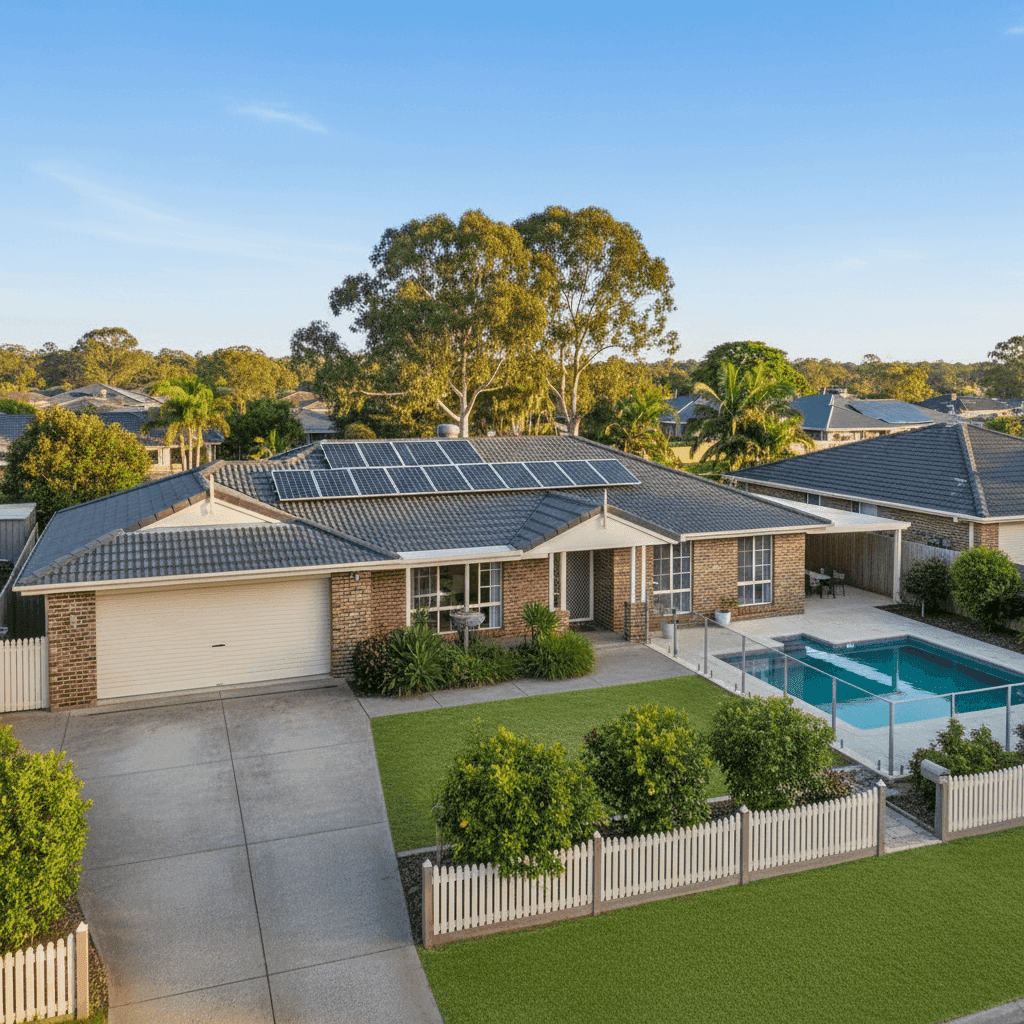
Bracken Ridge is a well-established residential suburb in Brisbane's northern corridor, known for its family-friendly streets, leafy blocks, and a solid mix of older brick homes. If you own a free-standing home here and you're wondering whether your home insurance premium stacks up, you're in the right place. This article breaks down a real quote for a 4-bedroom, 3-bathroom brick veneer home in Bracken Ridge — and puts the numbers into context so you can make a more informed decision.
---
Is This Quote Fair?
The quote in question comes in at $2,014 per year (or roughly $196 per month) for combined home and contents cover, with a $600,000 building sum insured and $80,000 in contents cover. Both the building and contents excess are set at $1,000.
Our price rating for this quote is FAIR — around average. That might sound underwhelming, but in the context of the Australian home insurance market — particularly in Queensland — landing near the average is actually a reasonable outcome. It means you're not being significantly overcharged, but there may still be room to find a more competitive deal depending on your insurer and the specific inclusions.
A "fair" rating reflects that the premium sits in a middle band: not in the bargain tier, but well clear of the expensive end of the market. For a property of this size, age, and specification, it's a defensible price point.
---
How Bracken Ridge Compares
To understand whether $2,014 represents good value, it helps to zoom out and look at the broader pricing landscape. Here's how this quote compares across different benchmarks:
| Benchmark | Premium |
|---|---|
| This quote | $2,014/yr |
| Bracken Ridge suburb average | $2,396/yr |
| Bracken Ridge suburb median | $2,219/yr |
| Bracken Ridge 25th percentile | $1,620/yr |
| Bracken Ridge 75th percentile | $3,004/yr |
| QLD state average | $9,129/yr |
| QLD state median | $3,903/yr |
| National average | $5,347/yr |
| National median | $2,764/yr |
| Brisbane LGA average | $16,277/yr |
Based on 69 quotes collected for the Bracken Ridge 4017 postcode.
A few things stand out immediately. At $2,014, this quote sits below both the suburb average ($2,396) and the suburb median ($2,219) — meaning it's actually better than what most Bracken Ridge homeowners are paying. It falls in the lower half of the suburb's pricing range, closer to the 25th percentile ($1,620) than the 75th ($3,004).
Compared to the broader Queensland market, the difference is stark. The state average of $9,129 is heavily skewed by high-risk areas — think flood-prone towns, cyclone corridors in Far North Queensland, and coastal regions exposed to severe weather. The QLD median of $3,903 is a more useful comparison, and this quote comes in well beneath it.
Similarly, the national average of $5,347 reflects the outsized influence of high-risk postcodes across the country. The national median of $2,764 is more representative of typical Australian homeowners, and at $2,014, this Bracken Ridge quote still tracks below that figure.
You can explore more detailed pricing data for this postcode on our Bracken Ridge suburb stats page, or compare it against all QLD premiums and national benchmarks.
---
Property Features That Affect Your Premium
Every property has its own risk profile, and insurers price accordingly. Here's how the specific characteristics of this home influence what you'd expect to pay:
Brick Veneer Walls & Tiled Roof Brick veneer is widely regarded as a solid, durable construction type that performs well in fire and moderate storm conditions. Combined with a tiled roof, this home presents a relatively low-risk profile from a structural standpoint. Insurers generally view these materials favourably compared to weatherboard or corrugated iron.
Slab Foundation A concrete slab foundation is common in Queensland homes built from the 1970s onwards. It's generally considered stable and low-maintenance, though it can be more vulnerable to certain types of ground movement. For most suburban Brisbane properties, slabs are a neutral-to-positive factor in premium calculations.
Built in 1983 At over 40 years old, this home is well past its original construction phase. Older homes can attract slightly higher premiums due to the potential for ageing electrical wiring, plumbing, and roofing materials. That said, a 1983 brick veneer home in good condition is far from a liability — and many insurers price these properties competitively.
Above-Average Fittings The above-average fittings quality — think quality cabinetry, stone benchtops, premium fixtures — is reflected in both the building sum insured ($600,000) and the overall premium. Higher-quality finishes cost more to repair or replace, so this is a legitimate driver of the premium.
Swimming Pool Pools add a modest liability and maintenance consideration to a home insurance policy. They can also increase the overall replacement cost of the property, which is factored into the building sum insured.
Solar Panels Solar panels are increasingly common on Queensland rooftops and are typically covered under building insurance. They add some replacement value to the structure and can slightly influence the premium, though the effect is usually minor.
Timber & Laminate Flooring These flooring types are susceptible to water damage, which is worth keeping in mind when reviewing your policy's water damage inclusions. Make sure your policy covers escape of liquid and storm-related water ingress — both common claims in South East Queensland.
---
Tips for Homeowners in Bracken Ridge
1. Review your sum insured regularly Building costs have risen significantly in recent years. The $600,000 sum insured on this property should be checked against current construction costs — underinsurance is one of the most common and costly mistakes homeowners make. Use a building cost calculator or speak to a local builder to sense-check your coverage amount.
2. Check what's covered for your pool and solar panels Not all policies treat pools and solar panels the same way. Some include them automatically under building cover; others require specific endorsements. Confirm with your insurer exactly what's covered, including accidental damage and storm damage to panels or pool equipment.
3. Consider your excess strategically Both the building and contents excess on this policy are set at $1,000. Opting for a higher excess can reduce your annual premium, which makes sense if you have the financial buffer to cover it in the event of a claim. Conversely, if cash flow is tight, a lower excess provides more predictable out-of-pocket costs.
4. Compare quotes at renewal time Even a "fair" premium can often be improved by shopping around. Insurers recalibrate their pricing models regularly, and the market is competitive. Don't assume your renewal quote is the best available — it rarely is.
---
Find a Better Deal with CoverClub
Whether you're renewing your policy or buying cover for the first time, comparing quotes is the single most effective way to make sure you're not overpaying. CoverClub makes it easy to see how your premium stacks up against real data from your suburb and beyond.
Get a home insurance quote today and find out whether you're getting the best deal available for your Bracken Ridge home.