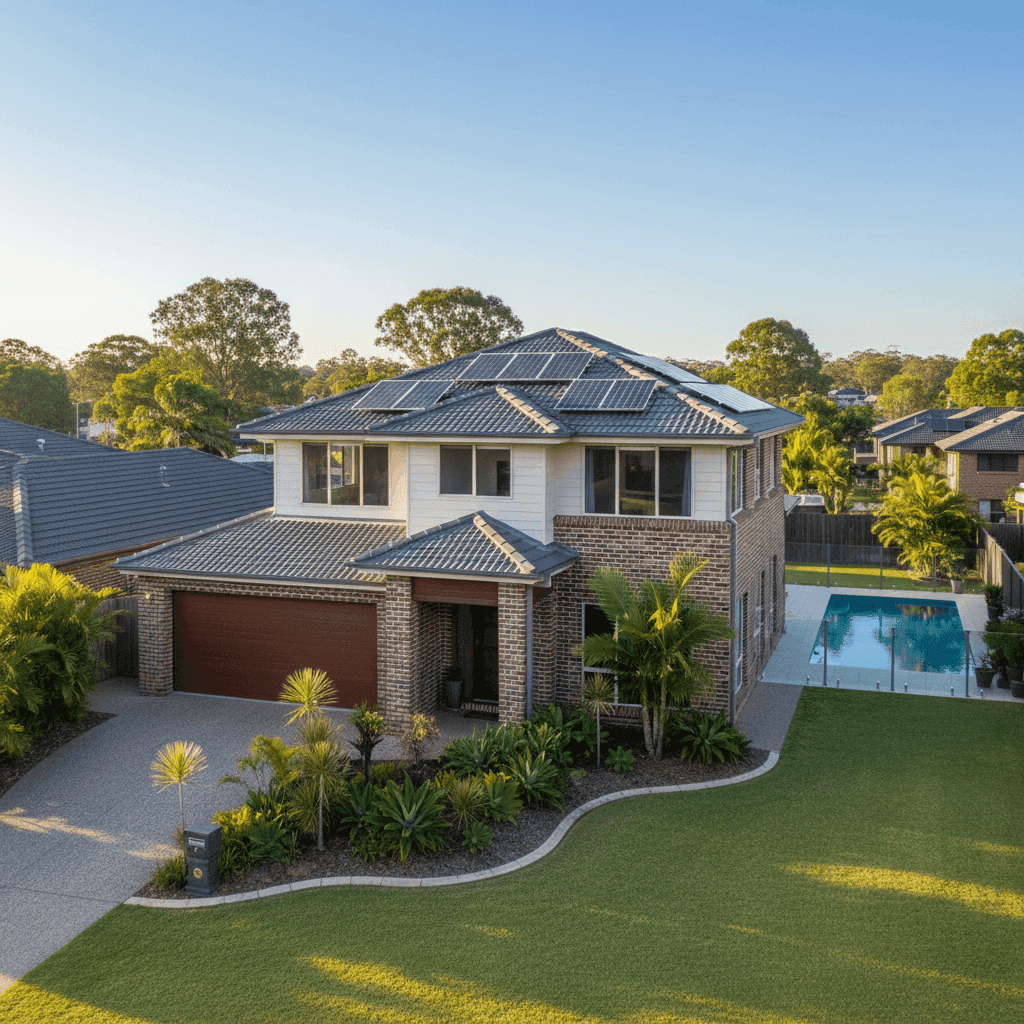
If you own a free standing home in Bracken Ridge, QLD 4017, you've probably noticed that home insurance costs can vary dramatically depending on who you ask. This article breaks down a real home and contents insurance quote for a four-bedroom, three-bathroom brick veneer home in the suburb — and puts the numbers into context using suburb, state, and national data so you can make a genuinely informed decision.
---
Is This Quote Fair?
The quote in question comes in at $1,944 per year (or $190 per month) for combined home and contents cover, with a building sum insured of $533,000 and contents valued at $90,000. Both the building and contents excess are set at $1,000.
Our pricing analysis rates this quote as Fair — Around Average, and the data backs that up. Across 69 quotes collected for the Bracken Ridge area, the suburb average sits at $2,396 per year and the median at $2,219 per year. At $1,944, this quote lands below both the average and the median, which is a solid result.
To put it in percentile terms: the 25th percentile for Bracken Ridge is $1,620 per year, and the 75th percentile is $3,004 per year. This quote falls comfortably in the second quartile — meaning it's better than average, but there's still room to potentially do better if you shop around.
The "Fair" rating reflects that while this isn't the cheapest option on the market, it's a reasonable price for the level of cover provided — particularly given the property's features and size.
---
How Bracken Ridge Compares
One of the most striking things about this quote is how well it holds up against broader benchmarks.
| Benchmark | Average | Median |
|---|---|---|
| Bracken Ridge (suburb) | $2,396/yr | $2,219/yr |
| Queensland (state) | $9,129/yr | $3,903/yr |
| Australia (national) | $5,347/yr | $2,764/yr |
| Brisbane LGA | $16,277/yr | — |
The Queensland state average of $9,129 per year is heavily skewed by high-risk areas — particularly Far North Queensland, where cyclone exposure, flooding, and storm surge push premiums into the tens of thousands. Bracken Ridge, sitting in Brisbane's northern suburbs, is not classified as a cyclone risk area, which is a meaningful advantage.
The national average of $5,347 per year tells a similar story. Much of Australia's most expensive insurance territory is concentrated in tropical and coastal Queensland, Northern Territory, and parts of Western Australia. Bracken Ridge homeowners benefit from a comparatively benign risk profile.
The Brisbane LGA average of $16,277 per year looks alarming at first glance, but this figure is dragged up significantly by flood-prone suburbs and high-value properties across the broader council area. Bracken Ridge's relatively elevated terrain helps keep local premiums more manageable than many Brisbane postcodes.
---
Property Features That Affect Your Premium
Several characteristics of this property have a direct bearing on the premium quoted.
Brick veneer construction and tiled roof are generally viewed favourably by insurers. Brick veneer offers good fire resistance and structural durability, while tile roofs tend to perform well in hail events compared to metal or Colorbond alternatives. Both features contribute to a more competitive premium.
Slab foundation is standard for Queensland homes of this era and doesn't typically attract loading — unlike properties on stumps or suspended timber floors, which can be more vulnerable to moisture and termite damage.
Timber and laminate flooring is worth noting for contents cover. These floor types can be susceptible to water damage, so it's worth confirming your policy covers accidental water damage from internal sources (like a burst pipe or overflowing appliance).
Above-average fittings quality means the cost to repair or replace internal fixtures — think kitchen cabinetry, bathroom tapware, and built-ins — is higher than a standard home. This is appropriately reflected in the $533,000 building sum insured for a 235 sqm home, which works out to roughly $2,268 per square metre. That's a reasonable rebuild estimate for a well-appointed home in this market.
The swimming pool, solar panels, and ducted climate control all add value to the property and can influence premiums in different ways. Pools introduce liability considerations and require specific inclusions in your policy. Solar panels — particularly inverters and panels themselves — may or may not be covered under a standard building policy, so it's worth checking the product disclosure statement carefully. Ducted air conditioning systems are typically covered as a fixed building fixture.
At 40+ years old (built in 1983), this home is well past the new-build phase. Older properties can sometimes attract higher premiums due to ageing roofing, plumbing, and electrical systems — making it even more important to maintain the property well and keep your insurer informed of any significant upgrades.
---
Tips for Homeowners in Bracken Ridge
1. Check your solar panel coverage explicitly. Many standard home insurance policies cover solar panels as part of the building, but some exclude inverters or limit cover for panels damaged by specific events. Ask your insurer directly and get it in writing — solar systems represent a significant investment that shouldn't be left to assumption.
2. Review your building sum insured regularly. Construction costs have risen sharply across Australia in recent years. A sum insured of $533,000 for a 235 sqm home is reasonable today, but it's worth reassessing annually. Underinsurance is one of the most common — and costly — mistakes homeowners make. Use a building cost calculator or speak to a quantity surveyor if you're unsure.
3. Consider your pool liability. Swimming pools introduce personal liability exposure, particularly if guests or neighbours are injured on your property. Make sure your policy includes adequate liability cover (most standard policies offer $20 million or more) and that the pool is compliant with Queensland's pool safety legislation.
4. Shop around at renewal time. Insurance loyalty rarely pays off. Even if your current premium is fair, it's worth comparing quotes every 12 months. Insurers regularly adjust their pricing models, and a quote that was competitive last year may not be the best available today.
---
Compare Your Home Insurance Quote Today
Whether you're assessing a new quote or reviewing your current policy at renewal, having the right data makes all the difference. CoverClub helps Australian homeowners understand what they're paying — and whether they could be paying less. Get a home insurance quote now and see how your premium stacks up against real data from your suburb, your state, and across the country.