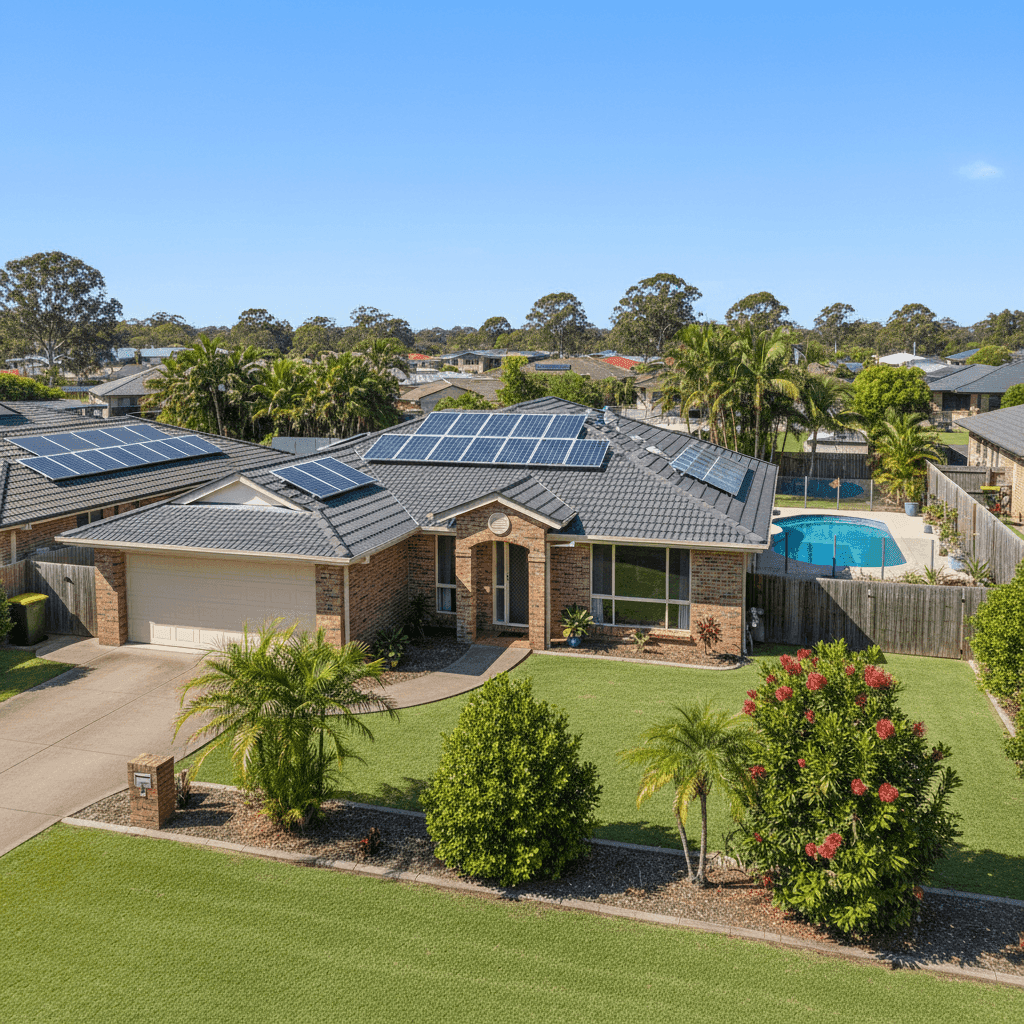
If you own a free standing home in Bracken Ridge, QLD 4017, you've probably wondered whether you're paying a fair price for home insurance — or whether there's a better deal out there. In this article, we analyse a real home and contents insurance quote for a four-bedroom, double brick home in Bracken Ridge, comparing it against local, state, and national benchmarks to help you make a more informed decision.
---
Is This Quote Fair?
The quote in question comes in at $2,695 per year (or $258 per month) for combined home and contents cover, with a building sum insured of $921,000 and contents valued at $232,000. Both the building and contents excess sit at $2,000.
Our price rating for this quote is FAIR — Around Average.
That assessment holds up well when you dig into the numbers. The suburb average premium for Bracken Ridge sits at $2,396 per year, and the median is $2,219 per year, based on 69 quotes collected for this area. At $2,695, this quote lands just above the suburb average — roughly 12.5% higher — but comfortably within the 75th percentile of $3,004. In other words, while it's not the cheapest quote available in the suburb, it's far from the most expensive either.
For a property of this size and specification — 214 sqm, above-average fittings, a pool, solar panels, and ducted climate control — a premium nudging above the suburb average is quite understandable. These features all contribute to a higher replacement cost and, in turn, a higher premium.
---
How Bracken Ridge Compares
To put this quote in proper context, it helps to zoom out and look at the broader insurance landscape.
| Benchmark | Average Premium | Median Premium |
|---|---|---|
| Bracken Ridge (suburb) | $2,396/yr | $2,219/yr |
| Queensland (state) | $9,129/yr | $3,903/yr |
| Australia (national) | $5,347/yr | $2,764/yr |
| Brisbane LGA | $16,277/yr | — |
The figures tell a striking story. Queensland's state average premium of $9,129 per year is dramatically higher than what Bracken Ridge homeowners are typically paying — a reflection of the significant flood, cyclone, and storm risk that affects many parts of the state. Areas in Far North Queensland, for instance, can push premiums into the tens of thousands annually.
Bracken Ridge, sitting in Brisbane's northern suburbs, is not classified as a cyclone risk area, which is a meaningful advantage. The suburb's premiums are also well below the national average of $5,347, and even below the national median of $2,764 — making it a relatively affordable suburb in which to insure a home.
The Brisbane LGA average of $16,277 per year may look alarming at first glance, but this figure is heavily skewed by high-risk flood-affected postcodes elsewhere in Greater Brisbane. Bracken Ridge's position on elevated ground helps insulate homeowners from some of the worst premium pressures seen in low-lying riverside suburbs.
---
Property Features That Affect Your Premium
Several characteristics of this particular property have a direct bearing on what insurers charge.
Double brick construction is generally viewed favourably by insurers. It offers strong resistance to fire, wind, and impact damage, which can help moderate premiums compared to timber-framed homes. Combined with a tiled roof, this property presents a robust construction profile that insurers tend to price more competitively.
Slab foundation is the standard construction method across much of Queensland and carries no particular premium penalty in non-reactive soil areas.
Above-average fittings — think stone benchtops, quality appliances, and premium fixtures — increase the cost to rebuild or repair, which is factored into the building sum insured of $921,000. This is a significant insured value and will naturally push the premium higher than a more modestly appointed home of the same size.
The swimming pool adds liability and replacement cost considerations, while solar panels represent a meaningful asset that needs to be covered under the building policy. Ducted climate control is another high-value fixed installation that contributes to the overall building replacement cost.
At 214 sqm, this is a generously sized home, and the combination of these premium features means the $921,000 building sum insured is well justified. Underinsurance is a genuine risk in Australia — if your sum insured doesn't reflect current rebuilding costs, you could be left significantly out of pocket after a major claim.
---
Tips for Homeowners in Bracken Ridge
1. Review your sum insured regularly Building costs have risen sharply in recent years. The $921,000 sum insured on this property reflects above-average fittings and a sizeable home, but it's worth recalculating your replacement cost annually — particularly if you've undertaken renovations or additions. Many insurers offer online calculators to help with this.
2. Compare quotes before renewing Loyalty doesn't always pay in insurance. Premiums can vary significantly between providers for the same level of cover. Getting a fresh quote through CoverClub before your renewal date takes only a few minutes and could reveal meaningful savings.
3. Consider your excess carefully This policy carries a $2,000 excess on both building and contents. A higher excess generally reduces your annual premium, but make sure the excess amount is one you could comfortably pay in the event of a claim. If $2,000 would stretch your finances, it may be worth paying a slightly higher premium for a lower excess.
4. Check what's included for your pool and solar panels Not all policies treat pools and solar panels the same way. Some insurers include solar panels as part of the building sum insured automatically; others require them to be listed separately. The same applies to pool equipment. Read your Product Disclosure Statement (PDS) carefully to confirm you have the right level of cover for these assets.
---
Compare Your Home Insurance Today
Whether you're renewing your existing policy or shopping around for the first time, CoverClub makes it easy to see how your quote stacks up. Explore suburb-level insurance data for Bracken Ridge or get a personalised quote in minutes. With real data from real quotes, you'll always know whether you're getting a fair deal.