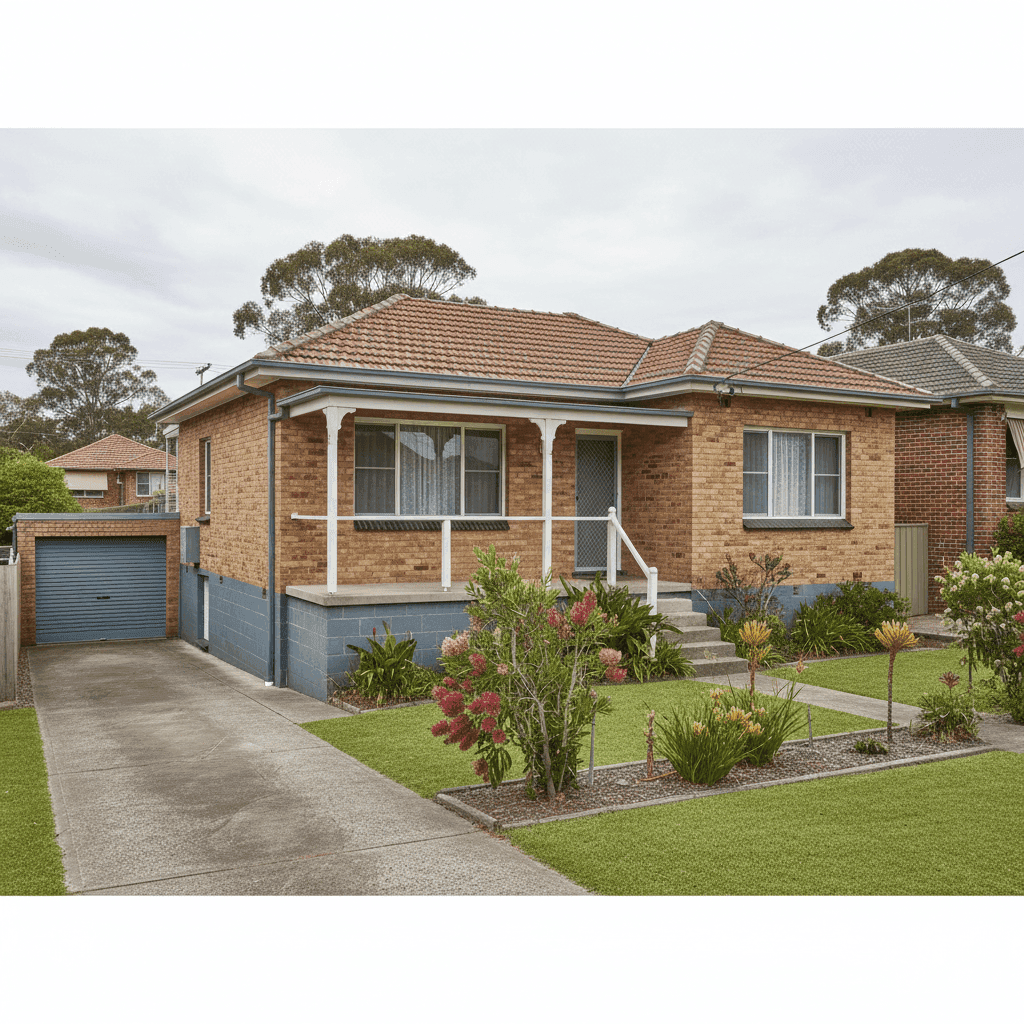
If you own a free standing home in Bradbury, NSW 2560, you've probably wondered whether your home insurance premium is competitive — or whether you're quietly paying more than you need to. This article breaks down a real building-only insurance quote for a three-bedroom brick veneer home in Bradbury, compares it against local, state, and national benchmarks, and offers practical tips to help you get better value on your cover.
---
Is This Quote Fair?
The quote in question comes in at $2,190 per year (or $210/month) for building-only cover on a free standing home with a sum insured of $590,000 and a $1,000 building excess.
Our price rating for this quote is FAIR — around average. That's actually a reasonably positive result. In the home insurance market, "around average" means you're not being overcharged, but there's still room to potentially do better with the right insurer.
To put it in context:
- The suburb average for Bradbury is $2,713/yr, and the median sits at $2,374/yr
- This quote of $2,190 falls below both the suburb average and median, placing it near the 25th percentile of $2,060/yr
- That means roughly 75% of comparable quotes in the suburb come in higher — a solid position to be in
So while there's no cause for alarm, it's worth understanding what's driving the premium and whether switching insurers or adjusting your policy could push you closer to that 25th percentile benchmark.
---
How Bradbury Compares
One of the most striking things about Bradbury's insurance landscape is how favourably it sits relative to broader NSW and national figures. Check out the full suburb stats for Bradbury (NSW 2560) for a deeper look.
| Benchmark | Average Premium | Median Premium |
|---|---|---|
| Bradbury (suburb) | $2,713/yr | $2,374/yr |
| LGA (Wollongong) | $2,751/yr | — |
| NSW (state) | $9,528/yr | $3,770/yr |
| National | $5,347/yr | $2,764/yr |
The NSW state average of $9,528/yr looks alarming at first glance, but it's heavily skewed by high-risk and high-value properties across the state — think flood-prone regions, bushfire-exposed rural areas, and prestige coastal homes. The median of $3,770/yr is a more representative figure for typical NSW homeowners, and even then, Bradbury sits comfortably below it.
You can explore the NSW state insurance stats and national home insurance data to see how different regions stack up.
The Wollongong LGA average of $2,751/yr also aligns closely with the suburb average, suggesting Bradbury is fairly typical for the broader Macarthur and Illawarra fringe area — not a high-risk outlier, but not the cheapest pocket in the state either.
---
Property Features That Affect Your Premium
Several characteristics of this particular property influence how insurers price the risk. Here's what's at play:
Brick Veneer Walls & Tiled Roof
Brick veneer construction with a tiled roof is one of the most common combinations in Australian suburbia — and for good reason. Insurers generally view this combination favourably. Brick veneer offers solid fire resistance and structural durability, while tiles are considered low-maintenance and long-lasting compared to Colorbond or older materials like fibro. This combination typically attracts more competitive premiums than timber-framed or asbestos-clad homes.
Built in 1985
A construction year of 1985 places this home in a mature but generally well-regarded era of Australian residential building. Homes from this period were built under established standards and are less likely to have the wiring or plumbing issues associated with much older properties. That said, some insurers do apply modest loadings for homes approaching or exceeding 40 years of age, particularly around roof and plumbing replacement costs.
Slab Foundation & Elevated by at Least 1 Metre
This is an interesting combination. A concrete slab is typically associated with ground-level construction, but the property is noted as being elevated by at least one metre. This elevation can be a meaningful risk-reducer in areas prone to stormwater or localised flooding — water is less likely to enter the living areas. Insurers often view elevation positively, and it may be contributing to the below-average premium here.
Ducted Climate Control
The presence of ducted climate control adds to the insured value of the home and can contribute to a slightly higher premium, as it represents a significant asset to repair or replace in the event of a claim. It's worth confirming your sum insured adequately accounts for this system.
Timber & Laminate Flooring
Flooring type can affect claims costs — timber and laminate floors are more susceptible to water damage than tiles. If a pipe bursts or stormwater enters the home, floor replacement can be a sizeable part of a claim. Ensuring your sum insured reflects current replacement costs for these materials is important.
No Pool, No Solar Panels
The absence of a pool and solar panels simplifies the risk profile. Both can add complexity and cost to a policy, so their absence here likely contributes to keeping the premium competitive.
---
Tips for Homeowners in Bradbury
1. Review Your Sum Insured Annually
With a sum insured of $590,000 for a 130 sqm home, you're sitting at roughly $4,538/sqm — which is within a reasonable range for current construction costs in NSW, but building costs have risen sharply in recent years. Use a building cost calculator or speak with a quantity surveyor to confirm you're not underinsured.
2. Compare at Least Three Quotes Before Renewing
Insurance loyalty rarely pays off. Insurers often offer their best rates to new customers, meaning long-term policyholders can end up paying a premium that no longer reflects the market. Get a fresh quote at CoverClub to see what competing insurers would charge for the same property.
3. Consider Whether Building-Only Cover Is Enough
This quote covers the building structure only. If you have valuable contents — furniture, appliances, clothing, electronics — a combined building and contents policy may offer better overall value than two separate policies. It's worth running the numbers both ways.
4. Check Your Excess Settings
A $1,000 building excess is standard, but increasing your excess (say, to $2,000) can meaningfully reduce your annual premium. If you have sufficient savings to cover a higher excess in the event of a claim, this can be a smart way to lower your ongoing costs — just ensure the trade-off makes financial sense for your situation.
---
Compare Your Home Insurance Today
Whether you're renewing an existing policy or shopping for the first time, it pays to know where your quote sits in the market. CoverClub makes it easy to benchmark your premium against real data from your suburb and beyond. Start comparing home insurance quotes at CoverClub and make sure you're getting the right cover at a fair price.