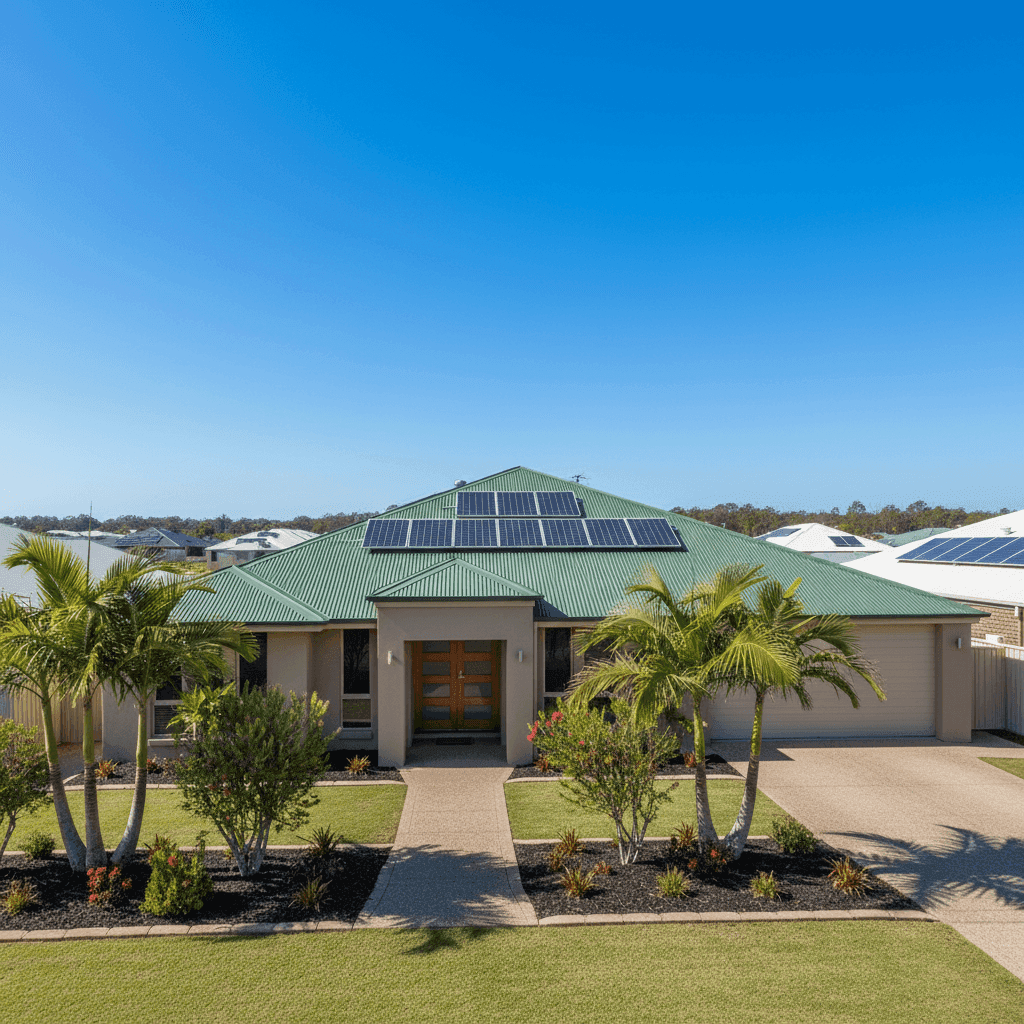
Home insurance in regional Queensland can be a complicated — and costly — business. This article takes a close look at a real building insurance quote for a three-bedroom free standing home in Brandon, QLD 4808, breaking down what's driving the premium, how it compares to local and national benchmarks, and what homeowners in the area can do to make sure they're getting genuine value for money.
---
Is This Quote Fair?
The short answer: yes, broadly speaking. This quote has been rated Fair (Around Average) — and when you dig into the numbers, that assessment holds up.
The annual premium of $2,496 sits comfortably below the suburb average of $3,116 and the suburb median of $3,200 for Brandon. It also falls below the Queensland state average of $4,547 and even below the national average of $2,965. In fact, it lands just above the suburb's 25th percentile of $2,337 — meaning roughly three-quarters of comparable quotes in the area come in higher.
For a property in a declared cyclone risk zone, that's a genuinely competitive result. Cyclone-prone regions in North Queensland are notorious for attracting some of the steepest premiums in the country, so seeing a quote that undercuts both the local and state averages is worth noting.
That said, "fair" doesn't necessarily mean "the best available." There's still meaningful room between this premium and the 25th percentile, and with a sum insured of $570,000 for a 160 sqm concrete-and-Colorbond home, it's worth ensuring the coverage is genuinely adequate — not just competitively priced.
---
How Brandon Compares
To put this quote in proper context, here's how Brandon stacks up against broader benchmarks:
| Benchmark | Annual Premium |
|---|---|
| This Quote | $2,496 |
| Brandon Suburb Average | $3,116 |
| Brandon Suburb Median | $3,200 |
| Brandon 25th Percentile | $2,337 |
| Brandon 75th Percentile | $3,375 |
| QLD State Average | $4,547 |
| QLD State Median | $3,931 |
| National Average | $2,965 |
| National Median | $2,716 |
| Burdekin LGA Average | $19,587 |
A few things stand out immediately. First, the Burdekin LGA average of $19,587 is extraordinarily high — a stark reminder of just how severe insurance pricing can be across parts of this region. Brandon's suburb-level figures are far more moderate, suggesting localised risk factors (flood mapping, proximity to infrastructure, insurer competition) are playing a meaningful role in keeping premiums lower than the broader LGA.
Second, Queensland's state average of $4,547 is dramatically higher than the national average of $2,965 — a gap that reflects the disproportionate impact of cyclone, storm, and flood risk across the state. This quote, at $2,496, sits well below both figures.
You can explore the full data for this suburb at Brandon QLD 4808 insurance stats, compare it against Queensland-wide figures, or view national home insurance benchmarks.
---
Property Features That Affect Your Premium
Several characteristics of this property have a direct bearing on how insurers price the risk — for better and for worse.
Cyclone Risk Zone
This is the single biggest factor. Brandon falls within a designated cyclone risk area, which triggers specific engineering and wind-resistance assessments in most insurer underwriting models. Homes in these zones almost always attract higher base premiums than equivalent properties in southern states.
Concrete External Walls
Concrete construction is generally viewed favourably by insurers. It offers strong resistance to wind, fire, and impact — all relevant perils in North Queensland. Compared to timber-framed homes, concrete walls can contribute to a more competitive premium.
Steel / Colorbond Roof
Colorbond steel roofing is widely used across regional Queensland and is considered a durable, low-maintenance option. Insurers typically rate it similarly to tile, though the quality of installation and the age of fixings can influence how well it performs in high-wind events.
Slab Foundation
A concrete slab foundation is a solid, low-risk base from an insurance perspective. It eliminates the elevated-floor risks associated with older Queensland homes on stumps, and there's no underfloor cavity to trap moisture or allow pest ingress.
Solar Panels
The property includes solar panels, which are worth noting. Most building insurance policies cover solar panels as part of the structure, but it's important to confirm this with your insurer. Some policies have sub-limits or exclusions for panels, particularly for storm or hail damage — both realistic risks in this part of Queensland.
Construction Year: 1975
At roughly 50 years old, this home predates many modern building codes. While concrete construction means the structural integrity is likely sound, older properties can attract slightly higher premiums due to the age of electrical wiring, plumbing, and roofing fixings. A recent building inspection could be a worthwhile investment.
Building Excess: $2,000
The building excess on this policy is $2,000 — on the higher end of the typical range. A higher excess generally reduces the annual premium, so this may be contributing to the competitive price point. Homeowners should weigh the cost saving against their ability to comfortably cover that out-of-pocket amount in the event of a claim.
---
Tips for Homeowners in Brandon
1. Confirm Your Solar Panels Are Covered
Before your next renewal, ask your insurer specifically whether solar panels are included in your building sum insured and whether there are any sub-limits or exclusions for storm, hail, or cyclone damage. If they're not adequately covered, you may need to increase your sum insured or add a specific endorsement.
2. Review Your Sum Insured Annually
Construction costs in regional Queensland have risen significantly over the past few years. A sum insured of $570,000 for a 160 sqm home may be appropriate today, but it's worth recalculating each year using a building cost estimator to ensure you wouldn't be underinsured after a total loss. Underinsurance is one of the most common — and costly — mistakes homeowners make.
3. Understand Your Cyclone Excess
Many insurers apply a separate, higher cyclone excess for properties in declared cyclone zones — sometimes 1–2% of the sum insured, which on a $570,000 home could mean an out-of-pocket cost of $5,700–$11,400 per cyclone-related claim. Check your Product Disclosure Statement carefully to understand what applies.
4. Compare at Renewal, Not Just at Purchase
The insurance market in North Queensland is competitive but volatile. Premiums can shift significantly between years as insurers adjust their risk models. Don't assume your current insurer is still the best option at renewal — use a comparison tool to check the market each year.
---
Ready to Compare?
Whether you're renewing your current policy or shopping for the first time, it pays to see what the full market has to offer. Get a home insurance quote at CoverClub and compare real premiums for your property in Brandon — so you can make a confident, informed decision.