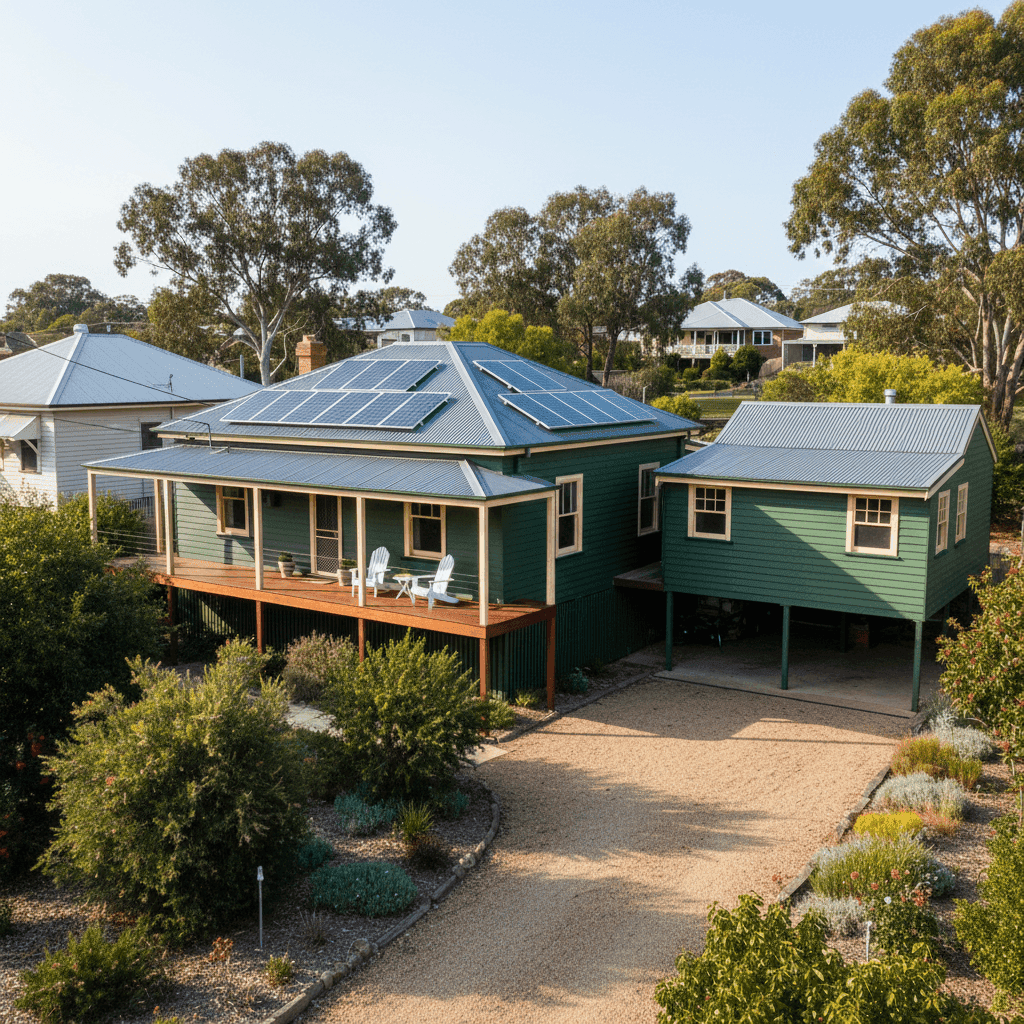
Branxton is a charming Hunter Valley township with a strong sense of community and a growing population of families drawn to its rural character and relative affordability. But when it comes to insuring a free standing home here, the premium you're quoted can vary significantly depending on your property's age, construction, and the features it includes. This article breaks down a real home and contents insurance quote for a four-bedroom, two-bathroom property in Branxton (NSW 2335) — and helps you understand whether it represents fair value.
---
Is This Quote Fair?
The quote in question comes in at $2,220 per year (or $227/month), covering both building and contents for a property with a building sum insured of $771,127 and contents valued at $134,918. The building excess is set at $4,000 and the contents excess at $2,000.
Our price rating for this quote is Expensive (Above Average) — and the data backs that up.
Compared to the suburb average for Branxton of $1,943/yr, this quote sits roughly 14% higher. That's a meaningful gap, particularly when you consider that the suburb's 75th percentile sits at $2,192/yr — meaning this quote is above even the most expensive quartile of comparable local properties.
That said, context matters. This isn't a cookie-cutter home. The 1935 construction date, weatherboard timber walls, stump foundation, and the presence of a granny flat all introduce complexities that insurers price carefully. More on those factors below.
---
How Branxton Compares
One of the more striking takeaways from this data is just how favourably Branxton stacks up against broader benchmarks — even if this particular quote is on the higher end locally.
| Benchmark | Average Premium |
|---|---|
| Branxton (suburb) | $1,943/yr |
| NSW (state) | $3,801/yr |
| National | $2,965/yr |
Branxton homeowners are, on average, paying less than half what NSW residents pay statewide. The NSW average of $3,801/yr is heavily influenced by high-risk coastal and flood-prone areas, as well as Sydney's elevated rebuild costs. Similarly, the national average of $2,965/yr reflects the outsized premiums paid in cyclone-prone Queensland and Northern Australia.
From that perspective, even an "expensive" local quote of $2,220 is still well below what most Australians pay. However, it's worth noting the Maitland LGA average sits at a striking $13,875/yr — a figure likely skewed by flood-affected properties in low-lying parts of the local government area. Branxton itself has some flood risk considerations given its proximity to the Hunter River, so it's reassuring that the suburb-level premiums remain relatively contained.
---
Property Features That Affect Your Premium
Several characteristics of this property have a direct bearing on the premium — some pushing it higher, others potentially helping to keep it in check.
Age and Construction (1935, Weatherboard Timber Walls)
Homes built in the 1930s carry inherent risk from an insurer's perspective. Ageing electrical wiring, older plumbing systems, and the structural quirks of pre-war construction all raise red flags. Weatherboard timber walls, while beautiful and historically significant, are more susceptible to fire, rot, and pest damage than brick or rendered alternatives. Insurers typically apply a loading to timber-clad homes, especially older ones.
Stump Foundation
A home on stumps (also called a raised or pier foundation) is more vulnerable to foundation movement, particularly in areas with clay-heavy soils or moisture variation. This can lead to structural claims that are costly to rectify, and insurers price accordingly.
Granny Flat
The presence of a granny flat increases the overall rebuild cost and complexity of the property. It may also introduce questions around rental income, liability, and contents coverage for any occupants. Ensuring your policy explicitly covers the granny flat — including its structure and any fixtures — is essential.
Solar Panels
Solar panels are generally viewed neutrally to positively by insurers, though they do add to the replacement cost of the building. Confirm that your policy covers panels for damage from storms, hail, and fire — not all standard policies include this automatically.
Ducted Climate Control
Ducted systems are expensive to repair or replace and are typically covered under building insurance. Their inclusion increases the sum insured and, by extension, the premium — but it's a legitimate cost that's important to have covered.
Above-Average Fittings Quality
Above-average fittings — think stone benchtops, quality cabinetry, premium fixtures — significantly increase rebuild costs. A $771,127 sum insured on a 130 sqm home reflects these higher-quality finishes, and insurers will price the policy to match.
---
Tips for Homeowners in Branxton
1. Review Your Sum Insured Annually
Building costs have risen sharply in regional NSW over recent years. Make sure your sum insured genuinely reflects what it would cost to rebuild your home today — including the granny flat, solar panels, and quality fittings. Underinsurance is one of the most common and costly mistakes homeowners make.
2. Ask About Timber Home Specialists
Not all insurers treat weatherboard homes the same way. Some specialist or regional insurers have more competitive pricing for heritage-era timber homes. Shopping around — rather than renewing automatically — can make a meaningful difference. Compare quotes at CoverClub to see what's available for your property type.
3. Consider Your Excess Strategy
This quote carries a $4,000 building excess and $2,000 contents excess. Opting for a higher excess is one lever you can pull to reduce your annual premium — but only if you're comfortable covering that amount out of pocket in the event of a claim. Run the numbers before adjusting.
4. Check Your Flood Coverage
Given Branxton's proximity to the Hunter River and the elevated LGA-level premiums in the Maitland area, it's worth scrutinising exactly what flood coverage your policy includes. Standard home insurance policies in Australia are required to offer flood cover, but the definitions and exclusions vary. Don't assume you're covered — read the Product Disclosure Statement (PDS) carefully.
---
Find a Better Deal with CoverClub
Whether you think your current premium is too high or you're shopping around for the first time, CoverClub makes it easy to compare home and contents insurance options tailored to your property. Our suburb-level data means you can see exactly how your quote stacks up against your neighbours — not just a national average. Get a quote today and find out if you could be paying less for the same level of cover.