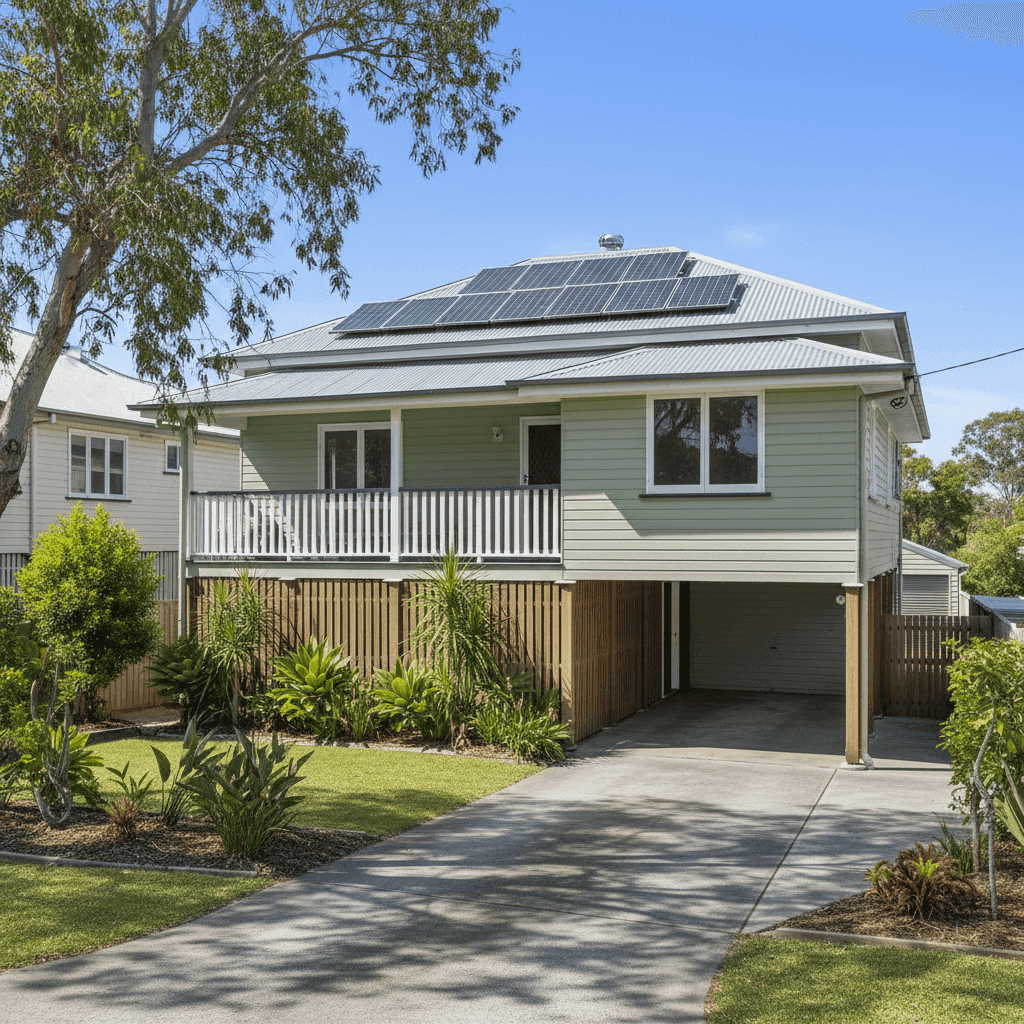
If you own a free standing home in Brassall, QLD 4305, understanding what you should be paying for building insurance is one of the smartest financial checks you can make. Brassall is a well-established residential suburb in the Ipswich region of South East Queensland — a growing corridor that has attracted significant attention from both homeowners and insurers alike. This article breaks down a real building insurance quote for a three-bedroom, weatherboard home in the suburb, compares it against local, state, and national benchmarks, and offers practical guidance for homeowners looking to get the best value on their cover.
---
Is This Quote Fair?
The quote in question comes in at $1,877 per year (or $192/month) for building-only cover on a 130 sqm free standing home, with a sum insured of $455,000 and a building excess of $3,000.
Our price rating for this quote is CHEAP — below average — and the data backs that up convincingly.
When you look at the suburb-level statistics for Brassall (QLD 4305), the average annual premium across 39 quotes sits at $4,357, with a median of $2,797. This quote lands well beneath even the 25th percentile of $1,981 — meaning it's cheaper than at least 75% of quotes recorded in the suburb. That's a genuinely strong result.
Zooming out to the state level, the picture becomes even more striking. The Queensland state average for home building insurance is a hefty $9,129 per year, with a median of $3,903. Queensland's elevated premiums reflect the state's exposure to cyclones, flooding, and severe storm events — risks that push insurers to price more conservatively across the board. At $1,877, this quote is less than 21% of the QLD average — a remarkable gap.
Against national benchmarks, where the average sits at $5,347 and the median at $2,764, the quote again performs well below the midpoint. For a homeowner in Brassall, this is the kind of result worth taking seriously.
---
How Brassall Compares
To put the numbers in perspective, here's how Brassall stacks up across the key benchmarks:
| Benchmark | Annual Premium |
|---|---|
| This Quote | $1,877 |
| Brassall 25th Percentile | $1,981 |
| Brassall Median | $2,797 |
| Brassall Average | $4,357 |
| Brassall 75th Percentile | $4,596 |
| National Median | $2,764 |
| National Average | $5,347 |
| QLD State Median | $3,903 |
| QLD State Average | $9,129 |
| Ipswich LGA Average | $8,744 |
The spread within Brassall itself — from $1,981 at the 25th percentile to $4,596 at the 75th — illustrates just how much variation exists even within a single suburb. This is a common pattern in Australian home insurance: two similar homes on the same street can attract wildly different premiums depending on the insurer, the property's specific risk profile, and the level of cover selected.
The LGA figure of $8,744 (based on the broader Ipswich region) is particularly eye-opening. It suggests that while Brassall itself sits at a more moderate price point, the surrounding region carries significantly higher average costs — likely driven by flood-prone pockets and storm exposure across the LGA.
---
Property Features That Affect Your Premium
Several characteristics of this property are worth examining when considering why this quote has landed where it has.
Weatherboard timber walls are one of the most influential factors. Timber-framed and clad homes are generally considered higher risk by insurers due to their susceptibility to fire and, over time, moisture damage and rot. Older weatherboard homes can attract premium loadings compared to brick or rendered construction. However, this is offset somewhat by the steel/Colorbond roof, which is highly regarded by insurers — it's durable, resistant to fire, and performs well in storm conditions compared to terracotta or concrete tiles.
Stumped foundations are common in older Queensland homes (this one was built in 1975) and can be a mixed bag for insurers. On the positive side, homes on stumps can be less susceptible to inundation damage if stumps are at an adequate height. On the other hand, older stumps may require maintenance and can be flagged during claims assessments.
The timber and laminate flooring is consistent with the era of construction and doesn't significantly shift the risk profile, though it's worth noting that these materials can be vulnerable to water ingress — a relevant consideration in Queensland.
The presence of solar panels is increasingly common and generally doesn't add materially to premiums, though homeowners should confirm their panels are explicitly covered under their building policy, as some insurers treat them as a separate item.
With no pool, no ducted climate control, and no cyclone risk classification, this property avoids several common premium triggers. The absence of a cyclone risk rating is particularly notable — properties in North Queensland or coastal zones often face significant loadings for this exposure alone.
The standard fittings quality also keeps the sum insured at a reasonable level. High-end fixtures and finishes can push rebuild costs — and therefore the sum insured — considerably higher.
---
Tips for Homeowners in Brassall
1. Review your sum insured regularly Construction costs in Queensland have risen sharply in recent years. A sum insured of $455,000 for a 130 sqm home may be appropriate today, but it's worth reassessing annually. Underinsurance is one of the most common and costly mistakes homeowners make — if rebuild costs exceed your sum insured, you'll be out of pocket for the difference.
2. Check your flood cover status Brassall and the broader Ipswich region have experienced significant flooding events historically. When comparing policies, confirm whether flood is included as standard or available as an optional add-on. Not all "comprehensive" building policies automatically include flood cover, and the definitions can vary between insurers.
3. Maintain your stumps and subfloor For homes on stumped foundations, keeping the subfloor area clear, well-ventilated, and free from moisture damage isn't just good home maintenance — it can support smoother claims outcomes. Some insurers may scrutinise subfloor conditions when assessing storm or water damage claims.
4. Compare quotes before your renewal date The wide spread of premiums in Brassall — from under $2,000 to over $4,500 — shows that loyalty to a single insurer doesn't always pay off. Shopping around at renewal time is one of the most effective ways to ensure you're not overpaying. Even if your current premium feels reasonable, a comparison could reveal meaningfully cheaper options for the same level of cover.
---
Ready to Compare?
Whether your current premium feels too high or you're just curious where you stand, comparing quotes is the fastest way to find out. Get a home insurance quote at CoverClub and see how your property stacks up against real data from your suburb and across Australia. It takes just a few minutes and could save you hundreds of dollars a year.