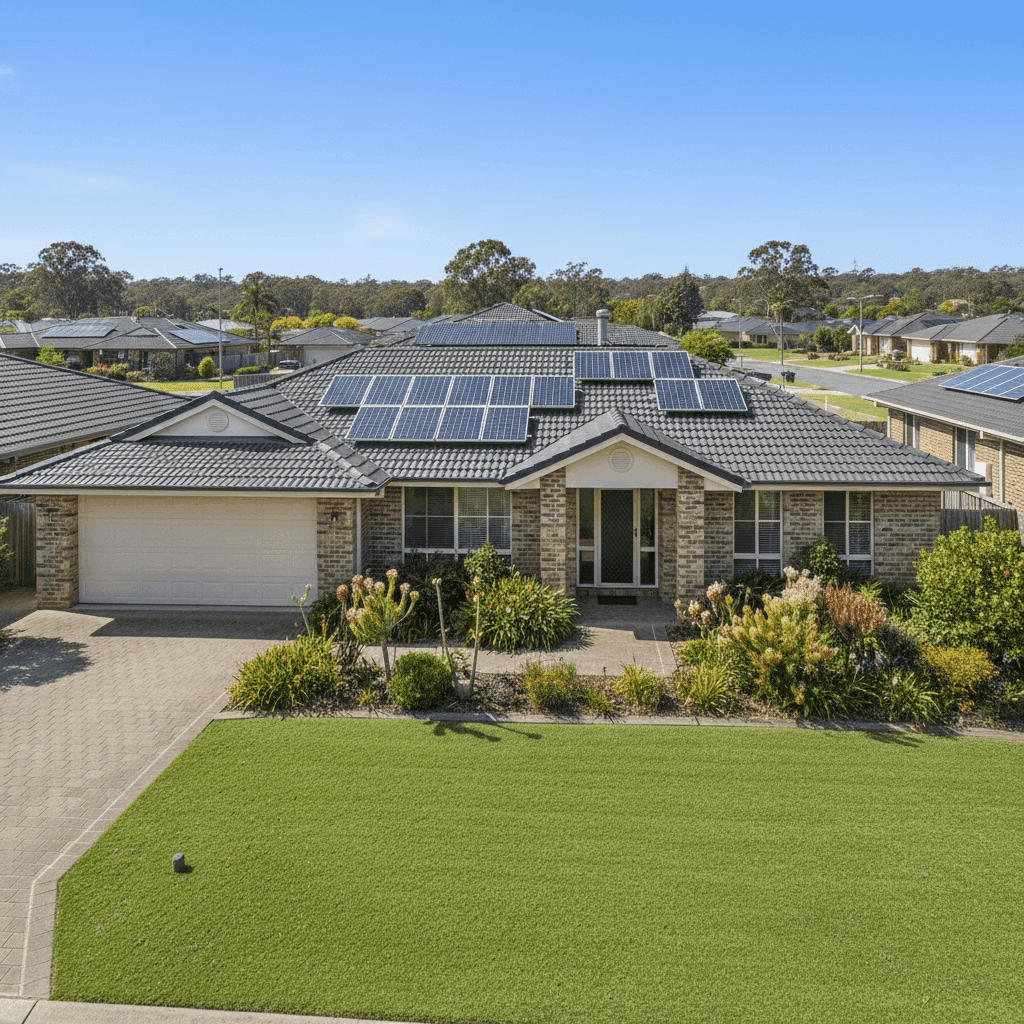
Bridgeman Downs, nestled in Brisbane's northern suburbs, is a well-established, family-friendly pocket of Queensland known for its generous block sizes and quality housing stock. If you own a free standing home here — particularly a larger five-bedroom property — understanding what you should expect to pay for home and contents insurance is an important part of managing your household budget. This article breaks down a real insurance quote for a property in this suburb, benchmarks it against local, state, and national data, and offers practical tips to help you get the best value cover.
---
Is This Quote Fair?
The quote in question comes in at $2,280 per year (or $223/month) for combined home and contents insurance, covering a building sum insured of $1,387,000 and $100,000 in contents. The building excess is $3,000 and the contents excess is $1,000.
Our pricing engine has rated this quote as FAIR — Around Average, and the data backs that up. At $2,280 annually, this premium sits comfortably below the Bridgeman Downs suburb average of $2,436/yr and the suburb median of $2,467/yr. That's a meaningful saving of roughly $150–$190 per year compared to what most comparable properties in the area are paying.
It's worth noting that the spread of premiums across Bridgeman Downs is quite wide — the 25th percentile sits at $1,665/yr while the 75th percentile reaches $3,255/yr. This means the cheapest quarter of quotes are significantly lower, but a large portion of homeowners are paying well above this figure. Landing below the median is a reasonable outcome, though there is still room to explore whether a more competitive rate is available.
---
How Bridgeman Downs Compares
One of the standout findings here is just how favourably Bridgeman Downs compares to the broader Queensland market. Check out the full suburb stats for Bridgeman Downs (QLD 4035) for a deeper look at local pricing trends.
| Benchmark | Annual Premium |
|---|---|
| This Quote | $2,280 |
| Bridgeman Downs Suburb Average | $2,436 |
| Bridgeman Downs Suburb Median | $2,467 |
| Brisbane LGA Average | $4,485 |
| QLD State Average | $4,547 |
| QLD State Median | $3,931 |
| National Average | $2,965 |
| National Median | $2,716 |
The contrast with the broader Queensland state average is striking. At $4,547/yr, the QLD state average is nearly double this quote — a reflection of the significant cyclone and flood risk premiums that affect many regional and coastal Queensland properties. Bridgeman Downs, being a non-cyclone-risk area in Brisbane's north, benefits from a considerably lower risk profile.
Even against the national average of $2,965/yr, this quote comes in roughly $685 cheaper — a strong result for a large, well-appointed home. The Brisbane LGA average of $4,485/yr further highlights how much variability exists within Queensland itself, driven largely by flood-prone suburbs closer to the river and bay.
---
Property Features That Affect Your Premium
Several characteristics of this property work in the homeowner's favour from an insurance pricing perspective:
Brick Veneer Construction Brick veneer external walls are generally viewed favourably by insurers. They offer solid fire resistance and durability compared to lightweight cladding materials, which can translate to more competitive premiums.
Tiled Roof A concrete or terracotta tile roof is considered a lower-risk roofing material than Colorbond or, particularly, older corrugated iron. Tiles are robust and long-lasting, and insurers typically price them accordingly.
Slab Foundation A concrete slab foundation is a stable and well-understood construction type that doesn't carry the same risks as older stumped or suspended timber foundations, which can be prone to movement, moisture damage, and pest issues.
1995 Build Year At around 30 years old, this home sits in a sweet spot — modern enough to have been built to reasonably contemporary standards, but old enough that any construction teething issues would be long resolved. Very old homes (pre-1970s) often attract higher premiums due to outdated wiring, plumbing, or materials.
Solar Panels The presence of solar panels adds some replacement value to the property, and it's important to ensure these are correctly included in the building sum insured. Most policies cover rooftop solar as part of the building, but it's worth confirming this with your insurer.
Above-Average Fittings Quality With above-average fittings, the building sum insured of $1,387,000 for a 334 sqm home is substantial — working out to roughly $4,150 per square metre. This reflects the cost of replacing quality fixtures, finishes, and inclusions, and is an important consideration to get right. Under-insuring a premium home can leave you significantly out of pocket after a major claim.
No Pool, No Cyclone Risk The absence of a pool removes a common liability and maintenance risk factor. Being outside a cyclone risk zone is a significant premium advantage for Queensland homeowners — cyclone-rated policies in northern QLD can cost dramatically more.
---
Tips for Homeowners in Bridgeman Downs
1. Review Your Building Sum Insured Regularly Construction costs have risen sharply in recent years. A sum insured that was accurate two or three years ago may no longer reflect the true cost of rebuilding your home, especially with above-average fittings. Use a building cost calculator annually and adjust your cover accordingly.
2. Confirm Solar Panels Are Covered Check your policy wording to ensure your solar panel system is explicitly included under building cover. Some policies have limits on solar coverage or require you to declare the system separately. With energy systems becoming more valuable, this is a detail worth clarifying.
3. Compare Quotes Before Renewal Even if your current premium seems reasonable, insurers often reserve their best rates for new customers. Set a reminder to compare quotes 3–4 weeks before your renewal date. A 15–20% saving is not uncommon simply by switching or negotiating.
4. Consider Your Excess Settings This policy carries a $3,000 building excess and a $1,000 contents excess. Opting for a higher excess is a common way to reduce your annual premium — but make sure you can comfortably cover that amount out of pocket if you need to make a claim. For a home of this value, a higher excess may be a sensible trade-off.
---
Compare Your Home Insurance Options
Whether you're renewing your policy or insuring a new property, it pays to shop around. CoverClub makes it easy to compare home and contents insurance quotes tailored to your specific property — so you're not leaving money on the table. Get a quote today at CoverClub and see how your current premium stacks up against the market.