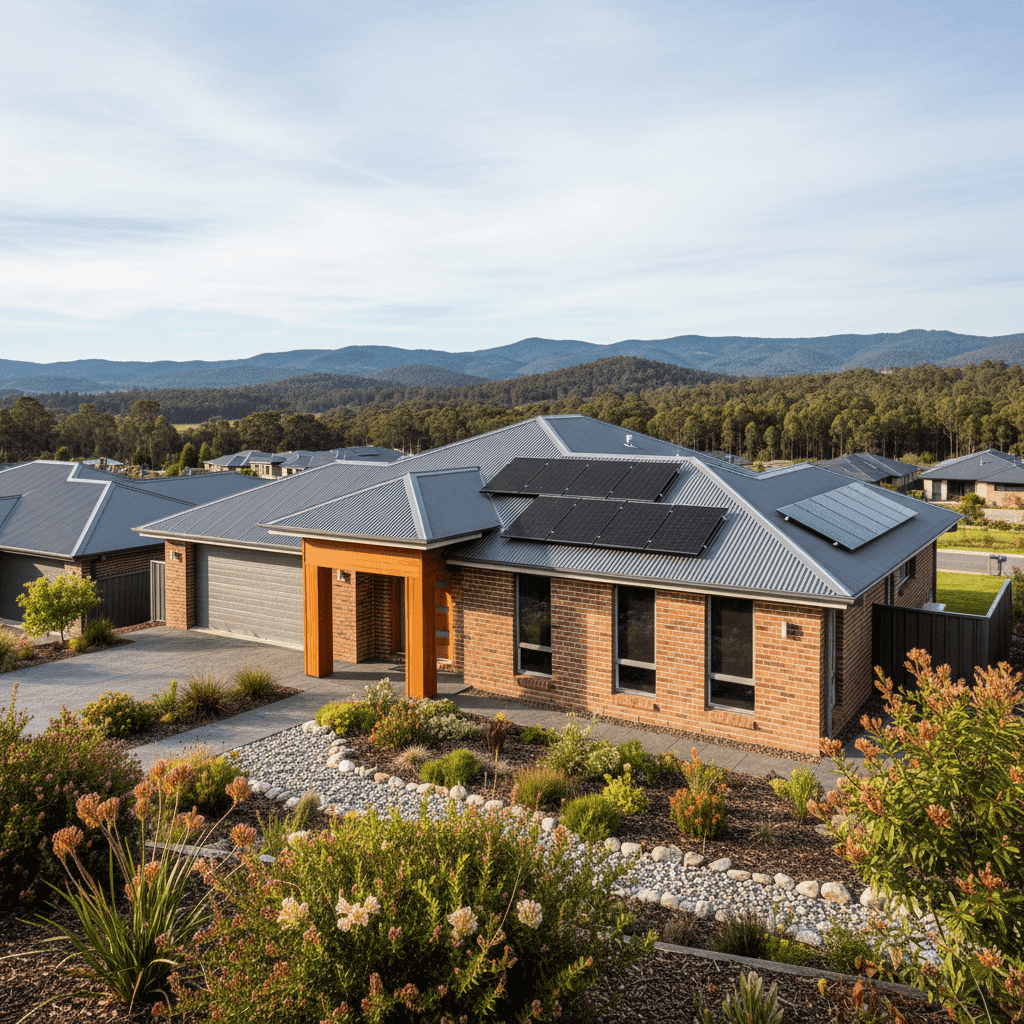
Nestled in the heart of the Victorian Alps, Bright is one of regional Victoria's most picturesque towns — famous for its autumn foliage, the Ovens River, and a growing community of tree-changers and holiday homeowners. But living in a beautiful alpine setting comes with its own set of insurance considerations. This article breaks down a real home and contents insurance quote for a four-bedroom free standing home in Bright (postcode 3741), examines how the premium stacks up against state and national benchmarks, and offers practical tips to help local homeowners get the best value from their cover.
---
Is This Quote Fair?
The quote in question comes in at $3,153 per year (or $316 per month) for combined home and contents cover, with a building sum insured of $1,133,000 and contents valued at $58,000. The building excess is set at $3,000, and the contents excess at $1,000.
Our price rating for this quote is FAIR — Around Average, which is a reasonable outcome given the property's location and characteristics. Here's the context:
- VIC state average premium: $2,921/yr
- VIC state median: $2,694/yr
- National average premium: $2,965/yr
- National median: $2,716/yr
- LGA (Alpine/Unincorporated Vic) average premium: $3,614/yr
At $3,153, this quote sits 8% above the Victorian state average and 6% above the national average — but it is notably 13% below the LGA average of $3,614. That's actually a solid result for a property in this part of regional Victoria, where insurers factor in elevated bushfire exposure, alpine weather events, and the relative remoteness of the area.
In short: paying slightly more than the state average is expected for a property in Bright, and coming in well under the LGA average suggests this quote is competitive for the region. Explore home insurance statistics for Bright VIC 3741 for a deeper look at local pricing trends.
---
How Bright Compares
Understanding where your premium sits relative to broader benchmarks helps you judge whether you're being charged fairly or whether it's worth shopping around.
| Benchmark | Annual Premium |
|---|---|
| This Quote | $3,153 |
| VIC State Average | $2,921 |
| VIC State Median | $2,694 |
| National Average | $2,965 |
| National Median | $2,716 |
| LGA Average | $3,614 |
The gap between the state median ($2,694) and this quote ($3,153) is around $459 per year — meaningful, but not alarming when you consider the risk profile of an alpine location. Bright sits within a high bushfire risk zone, and insurers price that risk into premiums for properties throughout the Alpine Shire and surrounding unincorporated areas.
It's also worth noting that no suburb-level data was available for this particular postcode, which can make direct local comparisons tricky. The LGA average, however, provides a strong reference point — and by that measure, this quote looks genuinely competitive.
Browse VIC home insurance statistics or national home insurance data to see how premiums vary across the country.
---
Property Features That Affect Your Premium
Several characteristics of this particular property have a direct bearing on the premium calculated. Here's how each one plays a role:
Brick Veneer Walls & Colorbond Roof
Brick veneer construction is generally well-regarded by insurers — it offers solid structural integrity and reasonable fire resistance compared to weatherboard or timber cladding. Combined with a steel Colorbond roof, this home has a construction profile that many insurers view favourably. Colorbond roofing is durable, low-maintenance, and performs well in both high-wind and ember-attack scenarios — a genuine advantage in bushfire-prone alpine regions.
Slab Foundation & Tile Flooring
A concrete slab foundation is considered one of the more stable and insurer-friendly foundation types. It reduces the risk of subsidence and minimises the likelihood of underfloor pest or moisture damage. Tile flooring similarly carries a lower risk profile than carpet or timber, particularly when it comes to water damage claims.
Solar Panels
This property has solar panels installed, which adds a modest amount to the insured value of the building. Solar systems are typically covered under building insurance, but it's worth confirming with your insurer that the panels and associated inverter equipment are explicitly included in your policy — not all standard policies cover them automatically.
Ducted Climate Control
A ducted heating and cooling system is a significant fixed asset that forms part of the building's value. It's reflected in the building sum insured and can also be a source of claims if the system is damaged by a storm, fire, or electrical fault. Ensuring your sum insured accounts for the full replacement cost of this system is important.
Building Size & Sum Insured
At 277 square metres, this is a substantial home. The building sum insured of $1,133,000 reflects the cost to fully rebuild the property from scratch — including materials, labour, architect fees, and council approvals. In regional areas like Bright, rebuild costs can be higher than metropolitan areas due to the cost of transporting materials and sourcing tradespeople, so a higher sum insured is entirely appropriate.
No Pool
The absence of a swimming pool removes one common source of liability and maintenance-related claims, which can have a minor positive effect on premiums.
---
Tips for Homeowners in Bright
1. Review your bushfire preparedness annually Bright and the surrounding Alpine region sit in one of Victoria's most fire-prone landscapes. Some insurers offer premium discounts for properties with ember guards on vents, metal fly screens, and maintained asset protection zones (APZs). Check with your insurer whether documented bushfire mitigation measures could reduce your premium.
2. Don't underinsure your building With construction costs continuing to rise across regional Victoria, it's critical to revisit your building sum insured each year. A 277 sqm home with ducted climate control, quality fittings, and solar panels could cost well over $1 million to rebuild — make sure your cover keeps pace with current building rates, not what it cost to build in 2018.
3. Confirm your solar panels are covered As mentioned above, solar panels aren't universally covered under standard home insurance policies. Ask your insurer directly whether your panels and inverter are included, and for how much. If they're not, request a policy endorsement or consider a specialist add-on.
4. Compare quotes before renewal Even a "fair" quote can be beaten. The insurance market is competitive, and premiums can vary significantly between providers for the same property. Use a comparison platform like CoverClub to benchmark your renewal quote against the broader market — it only takes a few minutes and could save you hundreds of dollars.
---
Ready to Compare?
Whether you're a long-term Bright local or a newer arrival to this stunning corner of Victoria, making sure your home and contents insurance is both comprehensive and competitively priced is essential. At CoverClub, we make it easy to compare quotes from multiple insurers in one place — so you can be confident you're getting the right cover at the right price. Get a home insurance quote today and see how your premium stacks up.