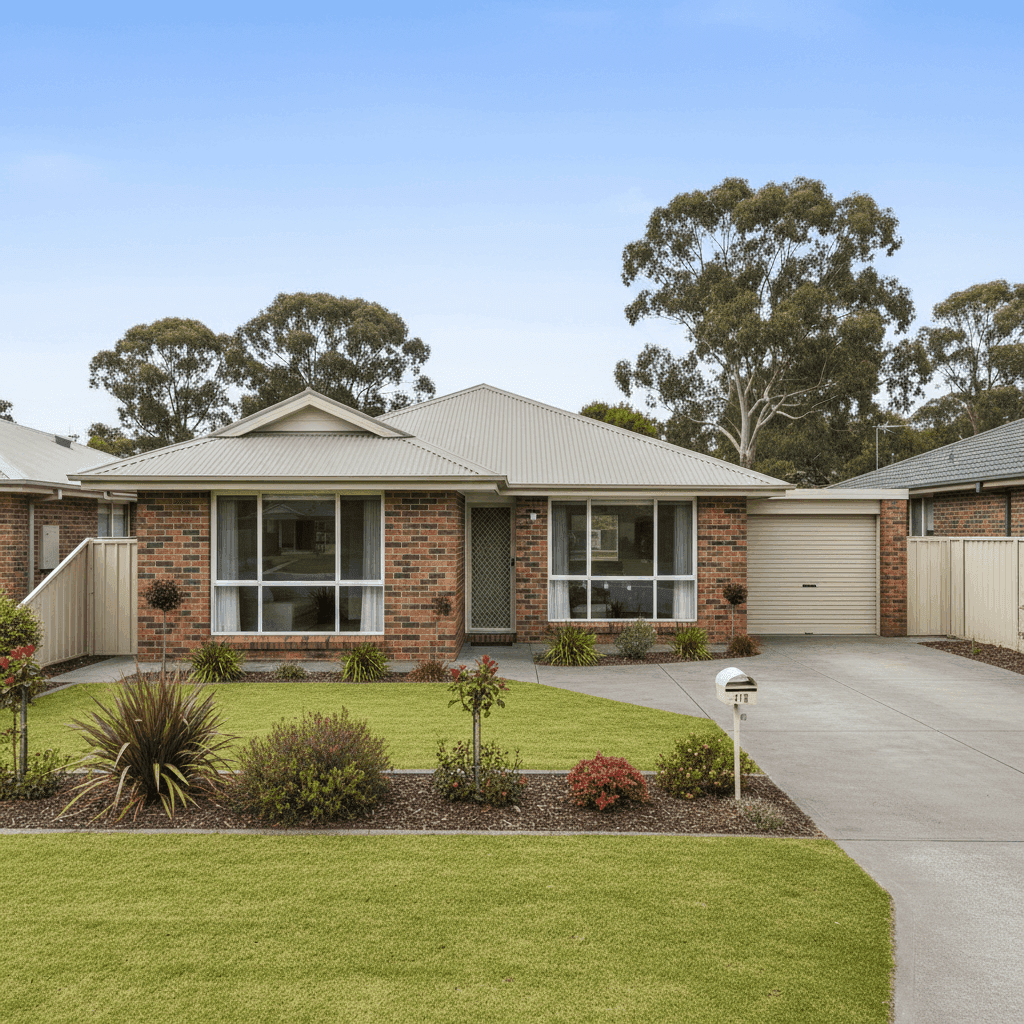
If you own a free standing home in Brighton, TAS 7030, you're probably wondering whether you're paying a fair price for your home and contents insurance. Brighton is a growing suburb located in the City of Clarence, roughly 20 kilometres north of Hobart, popular with families seeking affordable housing in a semi-rural setting. In this article, we break down a real home insurance quote for a 3-bedroom brick veneer home in the area, compare it against local, state and national benchmarks, and share some practical tips to help you get better value on your policy.
---
Is This Quote Fair?
The quote in question comes in at $1,154 per year (or about $113 per month) for a combined home and contents policy, covering a building sum insured of $450,000 and contents valued at $50,000. Both the building and contents excess are set at $1,000.
Our price rating for this quote is FAIR — Around Average, and the data backs that up.
Looking at Brighton suburb insurance data, the suburb average premium sits at $1,226/yr, while the median is $1,119/yr. This quote lands almost exactly between those two figures — comfortably within the middle of the pack for the area. It's above the 25th percentile of $925/yr (meaning cheaper options do exist) but well below the 75th percentile of $1,403/yr, so you're not being overcharged.
In short: this is a reasonable quote, not a bargain, but not a rip-off either. There's some room to do better if you shop around, but you're not in dangerous territory.
---
How Brighton Compares to the Rest of Tasmania and Australia
One of the most striking takeaways from this data is just how affordable Brighton is relative to broader benchmarks.
| Benchmark | Average Premium | Median Premium |
|---|---|---|
| Brighton (suburb) | $1,226/yr | $1,119/yr |
| Tasmania (state) | $2,814/yr | $2,326/yr |
| Australia (national) | $5,347/yr | $2,764/yr |
Brighton homeowners are paying, on average, less than half of what Tasmanians pay statewide, and a fraction of the national average. Even compared to the LGA of Northern Midlands average of $2,528/yr, Brighton looks very competitive.
Why the difference? Brighton benefits from relatively low exposure to the extreme weather events — such as cyclones, flooding, and bushfire — that drive up premiums in other parts of Australia. The suburb's inland location in southern Tasmania keeps it outside the high-risk coastal and tropical zones that push national premiums to eye-watering levels in places like Queensland and Northern New South Wales.
It's worth noting the Brighton sample size used in our comparison is 14 quotes, so while directionally reliable, a larger dataset would give even greater confidence. Still, the trend is clear: Brighton is one of Tasmania's more affordable places to insure a home.
---
Property Features That Affect Your Premium
Every home is different, and insurers price risk based on the specific characteristics of your property. Here's how the features of this particular home likely influence the premium:
Brick Veneer Walls Brick veneer is generally viewed favourably by insurers. It's durable, fire-resistant, and less susceptible to wind damage than timber-framed cladding. This construction type typically attracts more competitive premiums compared to, say, weatherboard or asbestos-clad homes.
Steel / Colorbond Roof A Colorbond steel roof is another tick in the right column. It's lightweight, long-lasting, and performs well in wind and rain. Insurers tend to price these roofs more favourably than older materials like terracotta tiles or corrugated iron in poor condition.
Slab Foundation A concrete slab foundation is solid and low-maintenance, reducing the risk of subsidence or pest-related structural damage. This is generally a neutral-to-positive factor for insurers.
Timber / Laminate Flooring Timber and laminate floors can be a moderate risk factor — they're more susceptible to water damage than tiles, for example. However, at the standard fittings level, this is unlikely to significantly move the needle on your premium.
Built in 1986 At nearly 40 years old, this home sits in a middle-risk age bracket. It's old enough that some systems (plumbing, wiring, roofing) may be approaching end-of-life, which can concern insurers. However, it's not so old as to fall into the high-risk category of pre-1960s homes. Keeping up with maintenance is key.
No Pool, Solar Panels, or Ducted Climate Control The absence of a pool removes a common liability risk. No solar panels means no concerns around panel-related fire risk or inverter damage. And without ducted climate control, there's one less complex system that could fail and cause internal damage. These omissions all contribute to keeping the premium relatively lean.
---
Tips for Homeowners in Brighton
1. Review your sum insured annually Building costs have risen sharply in recent years. The $450,000 sum insured on this policy may have been accurate when it was set, but it's worth recalculating your home's replacement cost each year using an online calculator. Being underinsured is one of the most common — and costly — mistakes homeowners make.
2. Consider raising your excess to lower your premium With a $1,000 excess on both building and contents, there may be room to increase this if you have a financial buffer in place. Many insurers offer meaningfully lower premiums in exchange for a higher excess. Just make sure you can comfortably cover the excess amount if you need to make a claim.
3. Maintain your home proactively Insurers can and do reject claims where poor maintenance contributed to the damage. Given this home is approaching 40 years old, staying on top of roof condition, gutters, plumbing, and electrical systems isn't just good housekeeping — it protects your ability to claim.
4. Bundle and compare If you have separate car insurance or other policies, check whether bundling them with the same insurer unlocks a multi-policy discount. At the same time, use a comparison service to make sure loyalty isn't costing you — it's common for long-term customers to pay more than new customers for identical cover.
---
Compare Your Home Insurance Quote Today
Whether you're reviewing an existing policy or shopping for the first time, it pays to compare. CoverClub makes it easy to see how your quote stacks up against others in Brighton and across Tasmania. Get a home insurance quote now and find out if you could be paying less for the same level of cover.