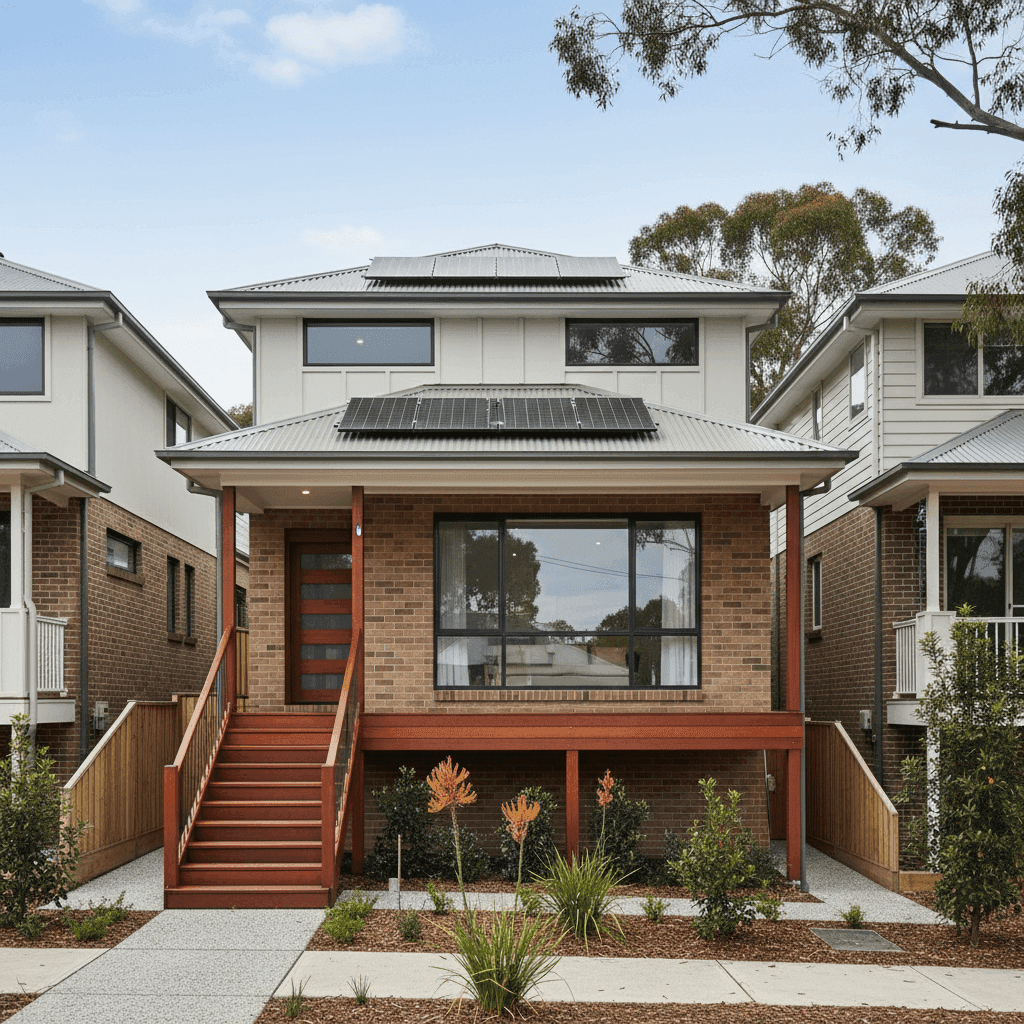
Brighton is one of Melbourne's most sought-after bayside suburbs, known for its iconic beach boxes, tree-lined streets, and a mix of period homes and contemporary townhouses. If you own a three-bedroom townhouse in Brighton VIC 3186, you're sitting on a significant asset — and making sure it's properly protected is just as important as the property itself. This article breaks down a real building insurance quote for a townhouse in this postcode, compares it against local and national benchmarks, and offers practical tips to help you get the most out of your cover.
---
Is This Quote Fair?
The quote in question comes in at $2,046 per year (or $196/month) for building-only cover on a three-bedroom, two-bathroom townhouse, with a $700,000 sum insured and a $1,000 building excess.
Our price rating for this quote is FAIR — Around Average, which is a reasonable outcome for this type of property in Brighton.
Here's why: the suburb average premium for Brighton (3186) sits at $2,920/yr, with a median of $2,606/yr. This quote lands noticeably below both figures, suggesting the homeowner is getting a competitive deal relative to their neighbours. It also falls below the 75th percentile of $4,096/yr, meaning the majority of Brighton homeowners are paying more.
The only reason this quote doesn't rate as "Good" or "Great" is that the suburb's 25th percentile sits at $1,690/yr — meaning roughly a quarter of comparable properties in Brighton are being insured for less. There's still room to shop around, but this quote is by no means overpriced.
---
How Brighton Compares
To put this quote in proper context, it helps to zoom out and look at the broader picture.
| Benchmark | Premium |
|---|---|
| This quote | $2,046/yr |
| Brighton (3186) suburb average | $2,920/yr |
| Brighton (3186) suburb median | $2,606/yr |
| Bayside LGA average | $2,625/yr |
| Victoria state average | $3,000/yr |
| Victoria state median | $2,718/yr |
| National average | $5,347/yr |
| National median | $2,764/yr |
The quote beats the Victorian state average of $3,000/yr by around $954, which is a meaningful saving. It also comes in under the Bayside LGA average of $2,625/yr — a useful local reference point given that the LGA encompasses similar coastal and inner-suburban properties.
At the national level, the contrast is even starker. Australia's national average premium of $5,347/yr is heavily skewed by high-risk regions — particularly in Queensland and Western Australia, where cyclone, flood, and bushfire exposure push premiums significantly higher. Brighton, by comparison, benefits from a relatively benign risk profile, which is reflected in this more modest premium.
The national median of $2,764/yr is a more useful comparison than the average, and this quote sits comfortably below that figure too — another positive signal.
---
Property Features That Affect Your Premium
Several characteristics of this particular townhouse influence how insurers calculate the premium. Understanding these factors can help you anticipate future changes and make informed decisions.
Brick veneer construction is generally viewed favourably by insurers. It offers solid fire resistance and structural durability, which typically translates to lower premiums compared to weatherboard or lightweight cladding. Combined with a steel Colorbond roof, the property has a resilient exterior that holds up well against Melbourne's variable weather — from summer heat to winter storms.
Stump foundations are worth noting. While stumps are common in older Victorian homes and offer good ventilation, they can introduce some complexity around subsidence and pest risk. The 1995 construction date means the stumps are likely concrete or steel rather than timber, which reduces this concern considerably.
Timber and laminate flooring can be a cost consideration in the event of water damage claims, as these materials may require full replacement rather than simple repair. Insurers factor this into their risk assessments, particularly in properties with elevated moisture exposure.
The fact that this townhouse is elevated by at least one metre is a notable feature. Elevation can reduce flood and stormwater inundation risk, which is generally a positive factor for premiums — especially in coastal suburbs like Brighton where heavy rainfall events can cause localised flooding.
Solar panels are increasingly common on Australian rooftops, but they do add a layer of complexity to building insurance. Panels represent an additional asset that needs to be covered under the building sum insured, and some insurers have specific conditions around solar system damage. It's worth confirming your policy explicitly covers the solar installation.
Ducted climate control is another feature that adds to the rebuild cost and should be factored into your sum insured calculation. At $700,000, the sum insured appears appropriate for a 153 sqm townhouse in Brighton, though it's always wise to revisit this figure annually as construction costs rise.
---
Tips for Homeowners in Brighton
1. Verify your sum insured regularly Construction costs in Melbourne have risen sharply in recent years. A sum insured that was adequate two years ago may no longer reflect the true cost of rebuilding your townhouse from scratch. Use a building cost calculator or speak with a quantity surveyor to ensure your $700,000 cover keeps pace with current rebuild costs — especially with ducted systems and quality fittings included.
2. Confirm solar panel coverage Not all standard building policies automatically cover solar panels, or they may apply sub-limits. Check your Product Disclosure Statement (PDS) to confirm your system is fully covered, including inverters and mounting hardware. If in doubt, ask your insurer directly.
3. Shop around at renewal time This quote rates as fair, but the gap between the 25th and 75th percentile in Brighton is substantial — from $1,690/yr to $4,096/yr. That's a wide spread, and it means switching insurers at renewal could yield meaningful savings. Use a comparison platform like CoverClub to benchmark your renewal quote before accepting it.
4. Review your excess settings A $1,000 building excess is fairly standard, but opting for a higher excess can reduce your annual premium. If you have sufficient savings to cover a larger out-of-pocket cost in the event of a claim, increasing your excess to $2,000 or more could bring your premium down noticeably — worth modelling before your next renewal.
---
Compare Your Own Quote
Whether you're renewing your current policy or shopping for cover for the first time, it pays to see how your premium stacks up against the market. CoverClub makes it easy to compare home insurance quotes across multiple insurers in minutes. Get a quote today and find out if you're paying a fair price — or if there's a better deal waiting for you.