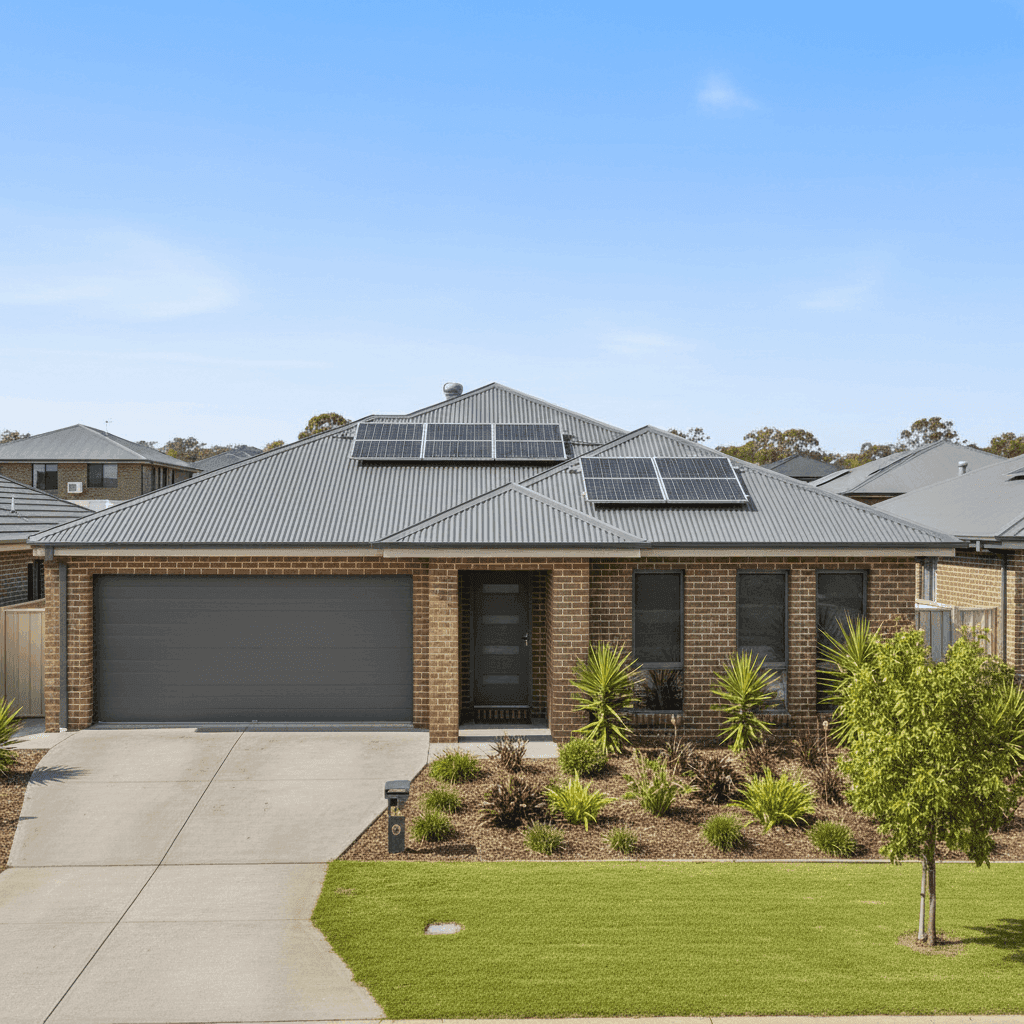
If you own a free standing home in Brightview, QLD 4311, you've probably wondered whether you're paying a fair price for home insurance — or quietly overpaying while your insurer quietly profits. This article breaks down a real home and contents insurance quote for a three-bedroom, two-bathroom brick veneer home in Brightview, compares it against suburb, state, and national benchmarks, and offers practical tips to help you get better value.
---
Is This Quote Fair?
The quote in question sits at $2,399 per year (or $230 per month) for combined home and contents cover, with a building sum insured of $600,000 and contents valued at $160,000. The building excess is $1,000 and the contents excess $500.
Our price rating for this quote is FAIR — Around Average.
That assessment holds up well under scrutiny. The annual premium of $2,399 sits just below the suburb average of $2,513 and the suburb median of $2,520, meaning this homeowner is paying slightly less than most of their Brightview neighbours for comparable cover. It also falls comfortably within the suburb's interquartile range of $2,222 to $2,865, which tells us this is a genuinely middle-of-the-road outcome — not a bargain, but certainly not a rip-off.
For a property with a relatively high building sum insured of $600,000 and a solid $160,000 in contents cover, landing near the suburb average is a reasonable result. There's room to do better with some targeted effort, but there's no alarm bell ringing here.
---
How Brightview Compares
To understand what "fair" really means, it helps to zoom out and look at the broader pricing landscape. View full Brightview suburb insurance stats →
| Benchmark | Annual Premium |
|---|---|
| This Quote | $2,399 |
| Brightview Suburb Average | $2,513 |
| Brightview Suburb Median | $2,520 |
| Brightview 25th Percentile | $2,222 |
| Brightview 75th Percentile | $2,865 |
| QLD State Average | $9,129 |
| QLD State Median | $3,903 |
| National Average | $5,347 |
| National Median | $2,764 |
| Lockyer Valley LGA Average | $11,404 |
The numbers tell a striking story. Queensland's state average premium of $9,129 per year is extraordinarily high — a figure heavily skewed by coastal and cyclone-prone areas where insurers price in significant catastrophe risk. The QLD state insurance data reflects a market under real pressure, with extreme weather events continuing to push premiums upward across much of the state.
Brightview, however, sits inland in the Lockyer Valley — well away from cyclone-affected coastlines — and that geography works in homeowners' favour. The suburb median of $2,520 is dramatically lower than the state median of $3,903, and also sits below the national median of $2,764. That's a meaningful advantage.
It's worth noting that the Lockyer Valley LGA average of $11,404 appears high relative to Brightview's suburb figures. This likely reflects the LGA's diverse risk profile, including flood-prone areas and rural properties with higher rebuilding costs. Brightview itself seems to attract more competitive pricing, which is good news for local homeowners.
The suburb sample size of 12 quotes is relatively small, so these averages should be treated as a useful guide rather than a definitive benchmark — but the directional picture is clear: Brightview is one of the more affordable pockets of Queensland for home insurance.
---
Property Features That Affect Your Premium
Several characteristics of this particular property influence how insurers price the risk.
Brick veneer construction is generally viewed favourably by insurers. It offers solid fire resistance and structural durability, which tends to translate into more competitive premiums compared to timber-framed or clad homes.
Steel/Colorbond roofing is another positive signal. Colorbond is lightweight, highly durable, and performs well in high-wind conditions. Insurers typically regard it as a lower-risk roofing material compared to terracotta tiles (which can crack and dislodge) or older materials like fibrous cement sheeting.
Slab foundation on a 1995-built home is standard and generally unproblematic from an insurance perspective. It's worth noting that slab homes can be more susceptible to certain subsidence or drainage issues over time, particularly in areas with reactive soils — something worth monitoring.
Solar panels are increasingly common on Australian homes, but they do add a layer of complexity to insurance. Panels represent a significant asset (and a replacement cost) that may or may not be covered under your standard building policy. It's essential to confirm with your insurer that your solar system — including inverters and mounting hardware — is explicitly covered under your building sum insured.
Ducted climate control adds to the overall replacement value of the home and is typically covered as a fixture under building insurance. Given the Lockyer Valley's hot summers, this is a meaningful inclusion.
The absence of a pool removes one common liability risk from the equation, which can help keep premiums in check.
---
Tips for Homeowners in Brightview
1. Confirm your solar panels are covered — and for how much. Solar installations can cost $8,000–$20,000 or more to replace. Many standard policies cover panels as part of the building, but some have sub-limits or exclusions. Ask your insurer directly, and make sure the replacement value of your system is factored into your building sum insured.
2. Review your building sum insured carefully. $600,000 is a substantial sum insured for a three-bedroom home, and it's important to ensure it reflects the actual cost to rebuild — not the market value of the property. Use a qualified quantity surveyor or your insurer's calculator to verify this figure. Being over-insured means you're paying more premium than necessary; being under-insured can leave you badly exposed after a major loss.
3. Consider adjusting your excess to manage your premium. This quote carries a $1,000 building excess and a $500 contents excess. Opting for a higher excess — say, $2,000 on the building — can meaningfully reduce your annual premium. This strategy works best if you have the financial buffer to cover a larger out-of-pocket cost in the event of a claim.
4. Shop around at renewal time. Insurer loyalty rarely pays off in Australia's home insurance market. Premiums can vary significantly between providers for the same property and level of cover. Getting a fresh quote through CoverClub at each renewal takes only a few minutes and could save you hundreds of dollars annually.
---
Compare Your Options with CoverClub
Whether you're renewing your existing policy or shopping for the first time, comparing quotes is the single most effective way to ensure you're not overpaying. CoverClub makes it easy to see what multiple insurers would charge for your Brightview home — so you can make a confident, informed decision. Start your free quote comparison today →