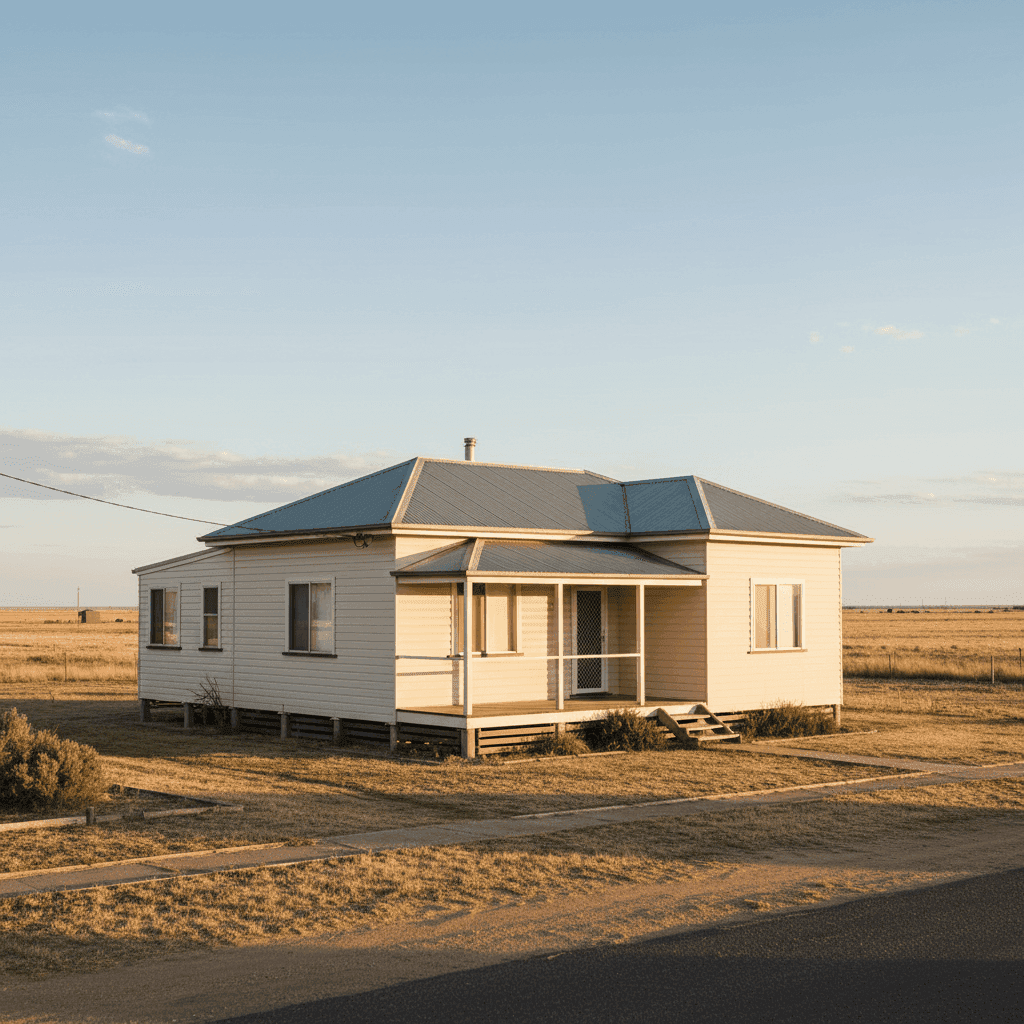
If you own a free standing home in Brim, VIC 3391, you're likely well aware that finding the right home insurance at a fair price takes a bit of research. Brim is a small rural town in the Yarriambiack Shire in Victoria's Wimmera region — a quiet agricultural community where property values and insurance dynamics differ quite a bit from metropolitan Melbourne. In this article, we break down a real home and contents insurance quote for a 2-bedroom, 2-bathroom weatherboard home in Brim, and explain exactly what's driving the premium — and whether it represents good value.
---
Is This Quote Fair?
The annual premium for this property came in at $2,466 per year (or $251 per month), covering both building and contents with a building sum insured of $556,000 and contents valued at $75,000.
Our price rating for this quote is CHEAP — below average — which is genuinely good news for the homeowner. Compared to what most Australians pay for equivalent cover, this premium sits comfortably below the benchmarks at both the state and national level.
To put it plainly: if you're paying $2,466 a year for home and contents cover in Brim, you're doing better than most Victorian homeowners and significantly better than the national average. That said, "cheap" doesn't always mean the cover is right for your needs — it's still worth reviewing the policy details carefully, particularly the $3,000 building excess and $1,000 contents excess, which are on the higher side and could affect out-of-pocket costs at claim time.
---
How Brim Compares
Here's how this quote stacks up against available benchmarks:
| Benchmark | Annual Premium |
|---|---|
| This Quote | $2,466 |
| Yarriambiack LGA Average | $2,490 |
| VIC State Average | $3,000 |
| VIC State Median | $2,718 |
| National Average | $5,347 |
| National Median | $2,764 |
The quote is almost perfectly in line with the Yarriambiack LGA average of $2,490, suggesting it's very representative of what local homeowners are paying. It sits 9% below the Victorian state average and 10% below the state median — a meaningful saving.
Most strikingly, it's less than half the national average of $5,347. That figure is heavily skewed by high-risk coastal and cyclone-prone areas in Queensland, Western Australia, and the Northern Territory, so it's not a like-for-like comparison — but it does illustrate that Brim homeowners enjoy a relatively favourable insurance environment.
You can explore more local data on the Brim suburb insurance stats page, compare it against the broader Victoria insurance landscape, or see where it sits against national home insurance benchmarks.
---
Property Features That Affect Your Premium
Several characteristics of this particular property influence how insurers price the risk — some favourably, others less so.
Weatherboard Timber Construction
The external walls are weatherboard wood, which is one of the most common construction types in regional Victoria. Timber-clad homes are generally seen as a moderate risk by insurers — they're more susceptible to fire than brick veneer but are well understood and widely insured. Premiums for weatherboard homes tend to be slightly higher than for brick, but the difference is usually modest.
Steel / Colorbond Roof
A Colorbond steel roof is actually a positive from an insurance perspective. These roofs are durable, low-maintenance, resistant to hail damage compared to terracotta tiles, and perform well in high-wind events. Many insurers view Colorbond favourably when calculating premiums.
Stump Foundation
The home sits on stumps, which is typical for older regional Victorian homes built before slab-on-ground became standard. Stumped homes can be more vulnerable to subsidence and pest damage (particularly termites), and some insurers factor this into their pricing. On the upside, stumped homes are generally easier and cheaper to repair after certain events like flooding, as the subfloor can be accessed and dried out more readily.
Built in 1993
At just over 30 years old, this home is in the middle ground — not brand new, but not old enough to attract the significant age-related loading that pre-1970s homes often do. Construction standards from the early 1990s are generally well regarded by insurers.
No High-Risk Features
This property has no pool, no solar panels, and no ducted climate control — all of which can add to a premium. The absence of these features keeps the risk profile clean and the quote competitive. It's also not in a cyclone risk zone, which is a major factor keeping premiums lower compared to northern Australian properties.
Slightly Elevated
The home is elevated by less than 1 metre, which is standard for a stumped home. This minor elevation can provide a degree of flood resilience, though it's unlikely to have a significant impact on the premium at this height.
---
Tips for Homeowners in Brim
1. Review Your Building Sum Insured Regularly
The building is insured for $556,000, which should reflect the full cost to rebuild — not the market value of the land. Construction costs have risen sharply in recent years, so it's worth getting a rebuild cost estimate every couple of years to make sure you're not underinsured. Tools like the Cordell Sum Sure Calculator can help.
2. Consider Whether the Excess Suits Your Situation
The $3,000 building excess is relatively high. If you're comfortable absorbing smaller claims out of pocket, this is fine — and it likely helped keep the premium down. But if a $3,000 upfront cost at claim time would be a stretch, it may be worth comparing quotes with a lower excess, even if the annual premium is slightly higher.
3. Protect Your Weatherboard Exterior
Timber weatherboard homes require regular maintenance to stay in good condition — and some insurers can reduce or deny claims if damage is deemed to result from lack of upkeep. Keep your paintwork fresh, check for rot or warping annually, and treat for termites proactively. This protects both your home and your ability to claim.
4. Compare at Renewal Time
Insurance premiums can shift significantly year to year, even if nothing about your property changes. The Yarriambiack LGA average is $2,490 — very close to this quote — but that doesn't mean there isn't a better deal available. Always compare before renewing.
---
Find the Best Home Insurance for Your Brim Property
Whether you're reviewing your current policy or shopping for cover for the first time, comparing quotes is the single most effective way to make sure you're not overpaying. CoverClub makes it easy to see how your premium stacks up and find competitive options tailored to your property.
Get a home insurance quote for your Brim property today — it only takes a few minutes and could save you hundreds.