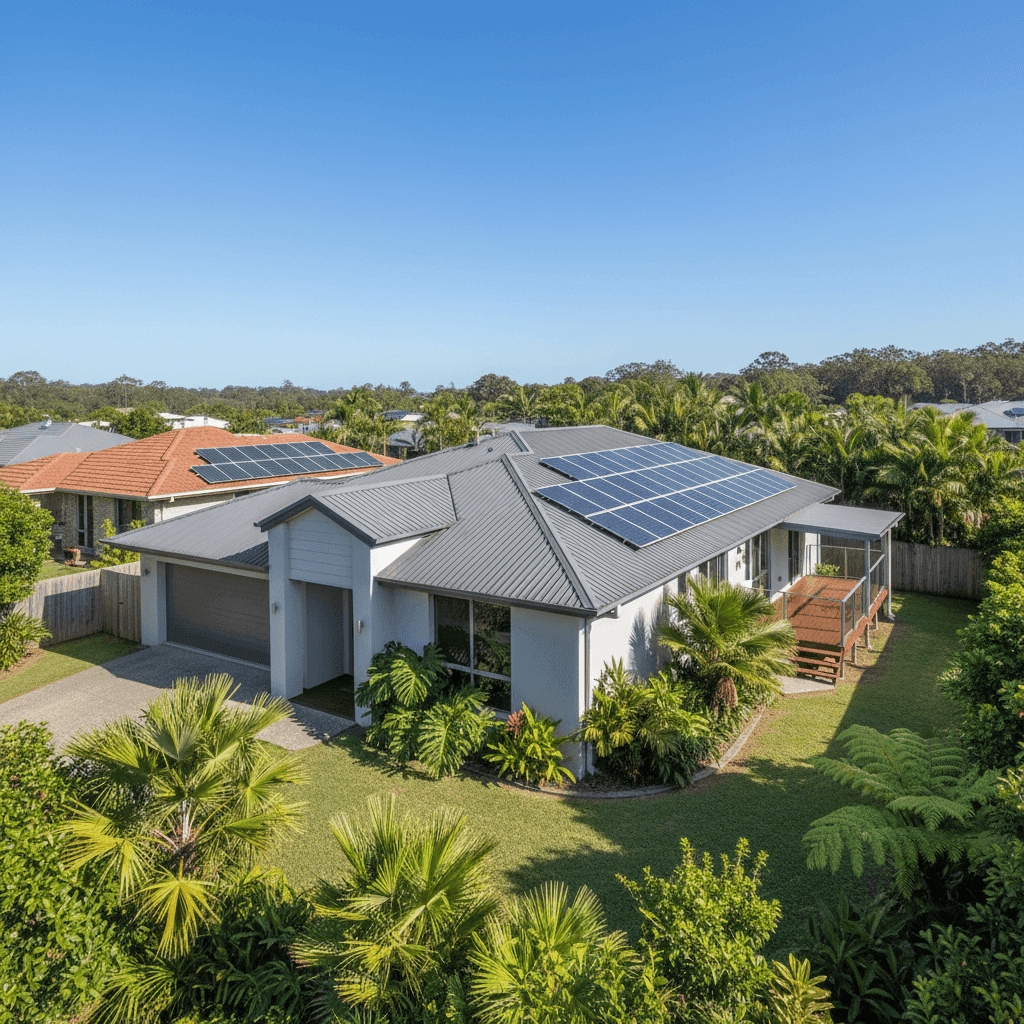
Brinsmead is a quiet, leafy suburb nestled in the hills just west of Cairns in Far North Queensland — a place known for its relaxed lifestyle, tropical surrounds, and proximity to the Great Barrier Reef. But living in paradise comes with a few financial realities, and home insurance is one of them. This article breaks down a real home and contents insurance quote for a three-bedroom, free-standing home in Brinsmead, comparing it against local, state, and national benchmarks to help you understand what you're paying — and why.
---
Is This Quote Fair?
The quote in question comes in at $3,935 per year (or $377 per month) for combined home and contents cover, with a building sum insured of $520,000 and contents valued at $56,000. The building excess sits at $2,000, while the contents excess is a more modest $500.
Our pricing analysis rates this quote as FAIR — around average for the area. That's genuinely good news for a property in this part of Queensland. Cairns and the surrounding region are among the most expensive areas in Australia for home insurance, largely due to the elevated cyclone risk that insurers must price into every policy. Against that backdrop, landing near the suburb average rather than well above it is a result worth noting.
The $3,935 premium sits comfortably within the middle band of what Brinsmead homeowners are paying, making it a reasonable benchmark for anyone shopping around in this postcode.
---
How Brinsmead Compares
To put this quote in proper context, it helps to look at the full picture across suburb, state, and national data. You can explore the live figures on the Brinsmead suburb stats page, the Queensland state overview, and the national insurance stats page.
Brinsmead (QLD 4870)
Based on a sample of 16 quotes in the suburb:
| Metric | Premium |
|---|---|
| 25th Percentile | $3,351/yr |
| Suburb Average | $4,160/yr |
| Suburb Median | $4,061/yr |
| 75th Percentile | $4,948/yr |
At $3,935, this quote sits below both the suburb average and median, and well clear of the top quartile. That's a solid outcome. The spread between the 25th and 75th percentile — nearly $1,600 — illustrates just how much premiums can vary depending on the insurer, the level of cover, and specific property characteristics.
Queensland State Context
The QLD state average of $9,129 per year looks alarming at first glance, but it's heavily skewed by high-risk coastal and cyclone-prone areas across the state. The state median of $3,903 is a far more representative figure, and this quote of $3,935 sits almost exactly on that median — confirming the "fair" rating is well-founded.
National Comparison
Zooming out to the national picture, the average Australian home insurance premium is $5,347 per year, with a national median of $2,764. The fact that Brinsmead premiums sit above the national median reflects the genuine risk loading that comes with living in a cyclone-declared area — this isn't price gouging, it's actuarial reality.
It's also worth noting that the Cairns LGA average of $12,404 per year is extraordinarily high, driven by properties in more exposed coastal and low-lying areas. By comparison, Brinsmead's hillside location appears to attract considerably more favourable pricing.
---
Property Features That Affect Your Premium
Several characteristics of this particular property have a meaningful influence on what insurers charge. Here's how they stack up:
Cyclone Risk Zone This is the single biggest factor. Brinsmead falls within a designated cyclone risk area, which adds a significant loading to premiums across the board. Insurers factor in the probability and potential severity of cyclone damage when calculating your rate — it's non-negotiable for properties in Far North Queensland.
Concrete External Walls Concrete construction is generally viewed favourably by insurers. It offers strong resistance to wind, impact, and fire compared to timber or lightweight cladding, which can translate to more competitive premiums. For a cyclone-prone area, this is a particularly valuable construction type.
Steel/Colorbond Roof Colorbond roofing is a popular choice in Queensland for good reason — it's durable, lightweight, and performs well in high-wind events. Insurers typically view it positively, especially when compared to older tile roofs that can become projectiles in severe storms.
Slab Foundation A concrete slab foundation is considered low-risk by most insurers. It eliminates the underfloor space that can be vulnerable to flooding or pest damage, and provides a stable base that performs reliably in most weather events.
Solar Panels Solar panels are an increasingly common feature and are generally covered under building insurance, but it's worth confirming this with your insurer. Some policies include them automatically; others require a specific endorsement. Given the value of a typical solar system, you'll want to ensure your $520,000 building sum insured adequately accounts for them.
Ducted Climate Control Ducted air conditioning is a fixed building asset and should be included in your building sum insured. It's a meaningful cost to replace, so ensuring your coverage figure reflects the full rebuild cost — including systems like this — is important.
1987 Construction A home built in 1987 sits in an interesting window. It predates many modern cyclone-resistant building codes introduced after Cyclone Tracy and subsequent reviews, which means some insurers may apply additional scrutiny. That said, concrete construction mitigates much of this concern.
---
Tips for Homeowners in Brinsmead
1. Review your building sum insured regularly Construction costs in Queensland have risen sharply in recent years. A sum insured of $520,000 for 139 sqm works out to roughly $3,741 per square metre — reasonable, but worth validating against current local builder rates annually. Underinsurance is one of the most common and costly mistakes homeowners make.
2. Confirm your solar panels are covered Ask your insurer directly whether your solar panels are included in the building definition and whether the sum insured is sufficient to cover replacement. Panel and inverter costs can easily run into the tens of thousands.
3. Shop around — the spread is wide The $1,600 gap between the 25th and 75th percentile in Brinsmead shows that not all insurers price this suburb the same way. Getting multiple quotes through a comparison platform like CoverClub takes minutes and could save you hundreds per year.
4. Check your cyclone-specific excess Many policies in cyclone-declared areas include a separate, higher excess that applies specifically to cyclone events. This can sometimes be $5,000 or more, separate from the standard building excess. Make sure you understand what you'd actually pay out of pocket if a cyclone caused damage.
---
Ready to Compare?
Whether you're renewing your existing policy or shopping for the first time, it pays to see what else is out there. Get a home insurance quote at CoverClub and compare real premiums for your Brinsmead property in minutes. With suburb-level pricing data and side-by-side comparisons, you'll know exactly where your quote stands before you commit.