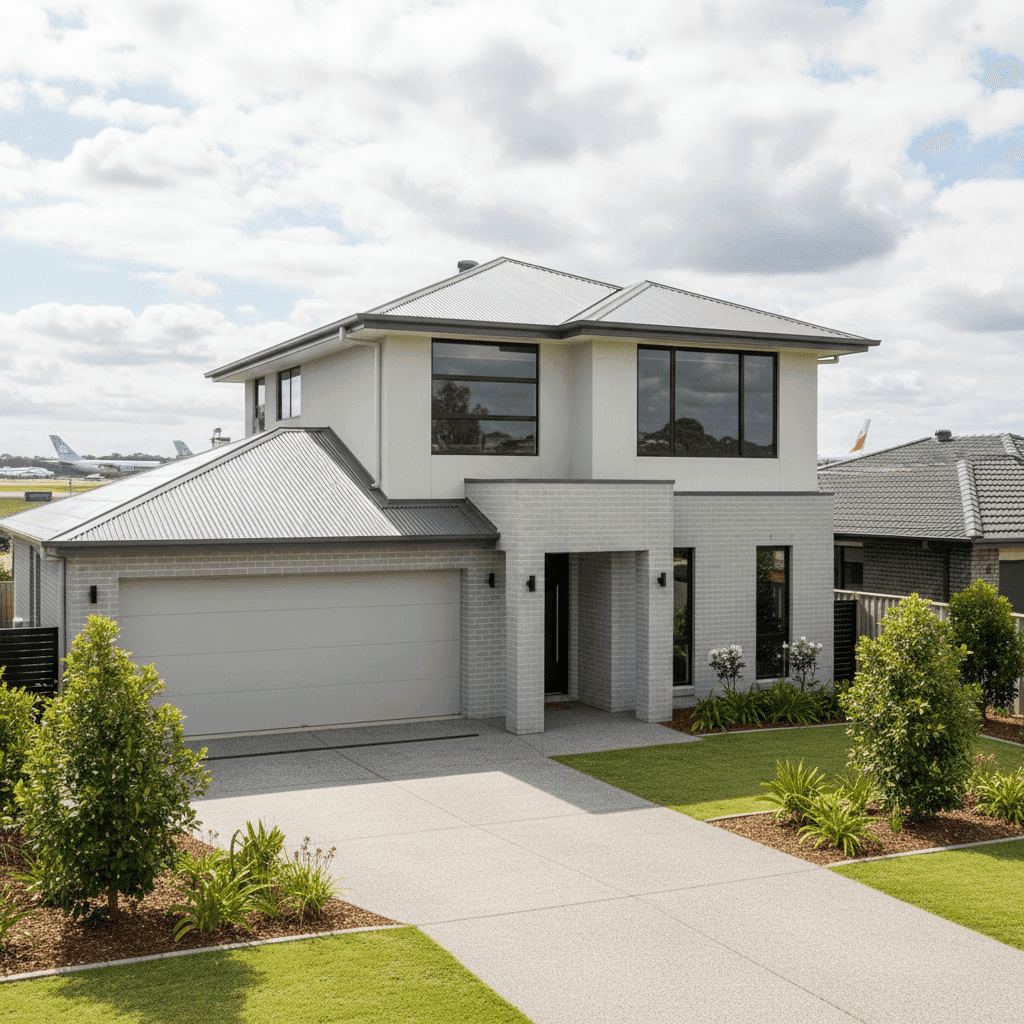
Brisbane Airport (postcode 4008) is a unique and evolving pocket of South East Queensland — home to a growing residential fringe, industrial precincts, and of course, one of Australia's busiest airports. For homeowners in this area, understanding what drives home insurance costs is essential, especially when premiums can vary significantly from one suburb to the next.
This article analyses a real home insurance quote for a five-bedroom, two-bathroom free-standing home in Brisbane Airport, QLD 4008, and puts the numbers into context against state and national benchmarks.
---
Is This Quote Fair?
The quote in question comes in at $13,463 per year (or $1,290/month) for combined Home and Contents cover, with a building sum insured of $550,000 and contents valued at $50,000. Both the building and contents excess sit at $1,000.
Our price rating for this quote is EXPENSIVE — Above Average.
To understand why, it helps to look at the broader picture. The Queensland state average premium is $9,129 per year, and the state median sits considerably lower at $3,903. Nationally, the average is $5,347 and the median is $2,764. This quote sits well above all four of those benchmarks.
That said, context matters. The LGA (Brisbane) average premium is $16,277 per year — which actually makes this quote look more competitive within its local government area. So while the premium is high by state and national standards, it is tracking below the broader Brisbane LGA average, which suggests the pricing is not entirely out of step with the local risk environment.
The "expensive" rating reflects the gap between this premium and what the typical Australian homeowner pays — but for a large, modern home in a complex urban risk zone like Brisbane Airport, elevated premiums are not unusual.
---
How Brisbane Airport Compares
No suburb-level data is currently available for Brisbane Airport (QLD 4008), which can make it tricky to benchmark this quote against immediate neighbours. However, the available data paints a clear picture:
| Benchmark | Annual Premium |
|---|---|
| This Quote | $13,463 |
| Brisbane LGA Average | $16,277 |
| QLD State Average | $9,129 |
| QLD State Median | $3,903 |
| National Average | $5,347 |
| National Median | $2,764 |
The gap between the QLD median ($3,903) and this quote ($13,463) is striking — but medians can be misleading. They reflect the midpoint of all policies, including smaller homes, units, and lower-value properties. A five-bedroom home with a $550,000 building sum insured is a significant asset, and premiums scale accordingly.
What's more telling is the comparison to the Brisbane LGA average. At $16,277, the typical Brisbane home insurance policy costs nearly $3,000 more per year than this quote. That's a meaningful gap that suggests this property may actually be reasonably priced relative to its immediate risk environment.
For a deeper dive into how Queensland compares to the rest of the country, the state consistently sits above the national average — driven by elevated weather risks including flooding, storms, and hail events that are common across South East Queensland.
---
Property Features That Affect Your Premium
Several characteristics of this property have a direct bearing on its insurance cost. Here's how each one stacks up:
Brick Veneer Walls Brick veneer is a popular and well-regarded construction type in Australia. It offers solid fire resistance and reasonable durability, which insurers generally view favourably. It's not as robust as full double brick, but it performs well in most risk assessments.
Steel / Colorbond Roof A Colorbond steel roof is one of the better choices from an insurance perspective. It's lightweight, durable, fire-resistant, and performs well in high-wind conditions. Compared to older tile roofs, Colorbond is less likely to sustain storm damage — a significant factor in Queensland.
Slab Foundation Concrete slab foundations are standard in modern Queensland construction and are generally considered low-risk by insurers. They're less susceptible to subsidence and moisture-related damage than older pier-and-beam foundations.
Timber / Laminate Flooring While aesthetically popular, timber and laminate flooring can be more susceptible to water damage than tiles. In the event of a flood or burst pipe, replacement costs can be significant — and this may be factored into contents and building assessments.
Construction Year: 2020 A relatively new build is a genuine advantage. Modern homes are constructed to current building codes, which in Queensland means improved cyclone and storm resistance standards. Newer properties also tend to have updated electrical and plumbing systems, reducing the likelihood of claims.
Ducted Climate Control Ducted air conditioning systems are a meaningful inclusion in the building sum insured. These systems are expensive to repair or replace, and their presence contributes to a higher overall rebuild cost — which is reflected in the $550,000 building sum insured.
No Pool, No Solar Panels The absence of a pool and solar panels removes two common sources of additional risk and liability. Pools increase public liability exposure, while solar panels add complexity to roof repairs. Not having either keeps the risk profile cleaner.
---
Tips for Homeowners in Brisbane Airport
1. Review your building sum insured regularly With construction costs rising across Queensland, the cost to rebuild your home can increase year on year. Make sure your $550,000 sum insured still reflects current rebuild costs — not just the market value of the property. Underinsurance is one of the most common and costly mistakes homeowners make.
2. Consider increasing your excess to reduce your premium Both the building and contents excess on this policy are set at $1,000. Opting for a higher voluntary excess — say, $2,000 or $2,500 — can meaningfully reduce your annual premium. Just make sure you can comfortably cover that amount out of pocket if a claim arises.
3. Shop around at renewal time Insurers rarely reward loyalty with better pricing. The fact that this quote sits below the Brisbane LGA average is encouraging, but that doesn't mean a better deal isn't available. Comparing quotes annually is one of the most effective ways to avoid overpaying.
4. Check for discounts you may be eligible for Some insurers offer discounts for homes with security systems, smoke alarms, or deadbolts. As a newer build (2020), this property likely already meets many of these requirements — it's worth asking your insurer whether these features are reflected in your premium.
---
Ready to Compare?
Whether you're renewing your policy or shopping for the first time, comparing quotes is the smartest move you can make. At CoverClub, you can enter your property details and see how your current premium stacks up — in seconds. Don't settle for the first number you're given. A few minutes of comparison could save you hundreds of dollars a year.