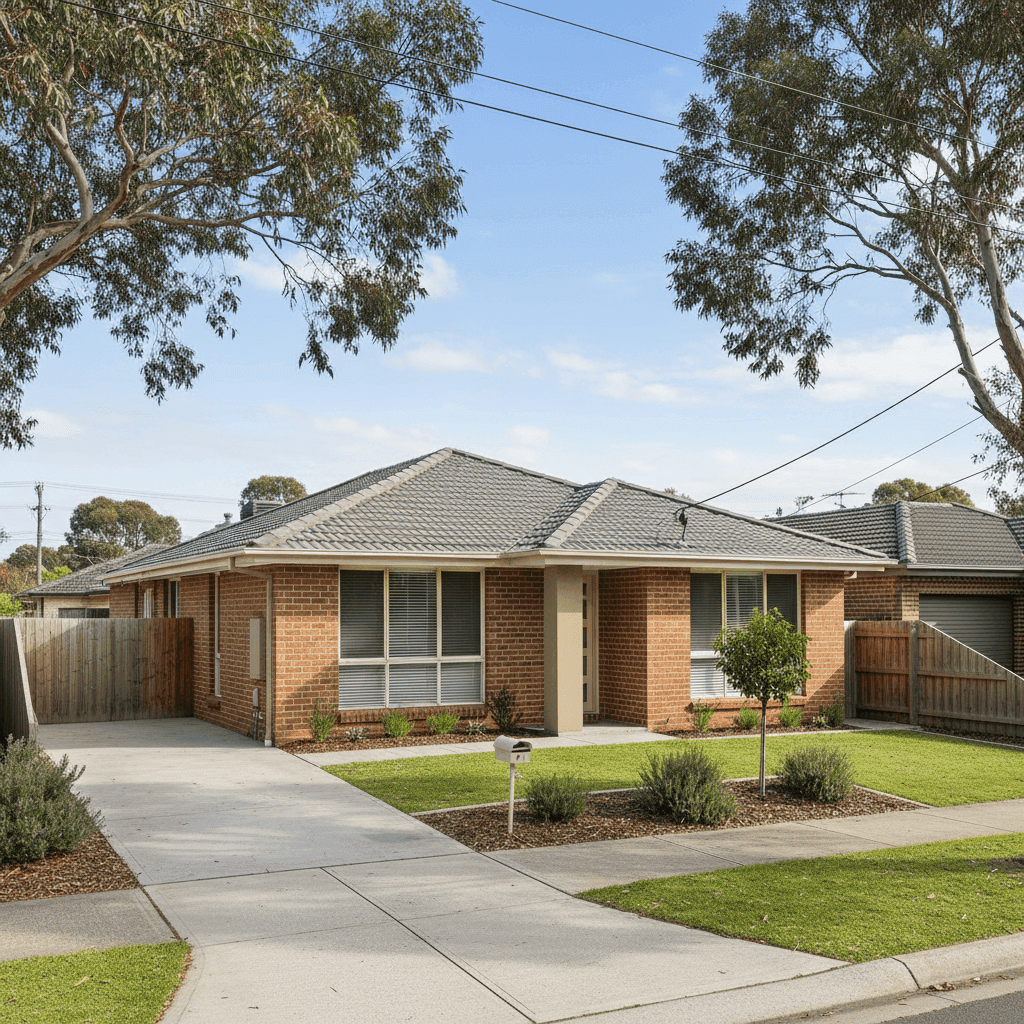
Broadmeadows, located in Melbourne's northern suburbs within the City of Hume, is a well-established residential area with a mix of older and newer housing stock. This analysis looks at a home and contents insurance quote for a two-bedroom, two-bathroom free-standing home in Broadmeadows VIC 3047 — a brick veneer property built in 2009 on a slab foundation with a tiled roof, covering 105 sqm. The annual premium came in at $1,624, or roughly $156 per month. So is that a fair price? Let's dig into the numbers.
---
Is This Quote Fair?
The short answer: this quote is rated Expensive — Above Average for the area.
With a building sum insured of $504,000 and $50,000 in contents cover, the combined exposure is significant, but the premium still sits noticeably above what most Broadmeadows homeowners are paying. Based on a sample of 27 quotes in the 3047 postcode, the suburb average sits at $1,273 per year and the median is $1,300 per year. This quote of $1,624 comes in around 27% above the suburb average — a meaningful gap worth investigating.
To put it in percentile terms: the 75th percentile for Broadmeadows premiums is $1,534 per year, meaning this quote exceeds what three-quarters of comparable properties in the suburb are paying. The 25th percentile sits at $1,018 per year, which gives a sense of just how wide the range can be — a spread of over $500 between cheaper and more expensive quotes in the same suburb.
That said, several property-specific factors can push a premium above the local average, and it's worth understanding what's driving the cost before assuming the insurer is simply overcharging.
---
How Broadmeadows Compares
One of the more reassuring findings in this analysis is how affordable Broadmeadows is relative to broader benchmarks. Check out the full VIC state insurance stats and national home insurance data for context.
| Benchmark | Average Premium | Median Premium |
|---|---|---|
| Broadmeadows (3047) | $1,273/yr | $1,300/yr |
| LGA — City of Hume | $1,775/yr | — |
| Victoria (VIC) | $3,000/yr | $2,718/yr |
| National | $5,347/yr | $2,764/yr |
Even at $1,624 — the "expensive" end for this suburb — this quote is still well below the Victorian state average of $3,000 per year and dramatically lower than the national average of $5,347. The elevated national average is heavily influenced by high-risk regions like cyclone-prone North Queensland and flood-affected areas in NSW, so it's not always the most useful comparison for a Melbourne homeowner.
What's more telling is the LGA comparison: the City of Hume average is $1,775 per year, meaning this quote is actually below the broader council area average. This suggests the quote isn't wildly out of line when viewed through a slightly wider geographic lens — though there's still room to shop around within the suburb itself.
---
Property Features That Affect Your Premium
Several characteristics of this property influence how insurers price the risk:
Brick Veneer Construction Brick veneer walls are generally viewed favourably by insurers. They offer solid fire resistance and structural durability, which can help keep premiums lower compared to timber-framed or clad homes. This is a positive factor for this property.
Tiled Roof Terracotta or concrete tile roofs are among the more resilient roofing types. They hold up well in storms and have a long lifespan, both of which reduce the likelihood of a weather-related claim. Another tick in the "lower risk" column.
Slab Foundation A concrete slab foundation is standard for homes built in this era and is generally considered low-risk by insurers. It eliminates the concerns associated with subfloor moisture or pest damage that can affect older homes with raised timber floors.
Built in 2009 At around 15–16 years old, this home sits in a relatively comfortable age bracket. It's modern enough to comply with updated building codes but old enough to have moved past the "new build" premium adjustments some insurers apply. Electrical, plumbing, and roofing systems should still be in reasonable condition.
Ducted Climate Control The presence of ducted heating and cooling is worth noting. This system adds to the replacement cost of the home, which may partly explain the $504,000 building sum insured. Ducted systems are expensive to replace and are factored into building valuations.
No Pool or Solar Panels The absence of a pool removes a meaningful liability risk from the equation, and no solar panels means no additional complexity around inverter coverage or roof penetration risks. Both of these simplify the risk profile.
Standard Fittings With standard-grade fittings throughout, there's no premium loading for high-end fixtures or custom finishes. This keeps the contents and building valuations straightforward.
---
Tips for Homeowners in Broadmeadows
1. Shop around — the range is wide With a 25th-to-75th percentile spread of over $500 in this suburb alone, there's clearly significant variation between insurers pricing the same risk. A quote at the 75th percentile isn't necessarily the best you can do. Compare quotes at CoverClub to see what other insurers would charge for the same property.
2. Review your building sum insured carefully At $504,000 for a 105 sqm home, the building sum insured works out to roughly $4,800 per sqm — which is on the higher end for a standard-finish property. It's worth using a building cost calculator to confirm this figure is accurate. Over-insuring pushes your premium up unnecessarily, while under-insuring can leave you exposed at claim time.
3. Consider your excess settings Both the building and contents excess on this policy are set at $1,000. Increasing your excess — say, to $1,500 or $2,000 — can reduce your annual premium meaningfully. If you have an emergency fund and are unlikely to make small claims, a higher excess is often a smart trade-off.
4. Bundle strategically, but verify the savings Many insurers offer discounts for bundling home and contents cover, which this policy already does. However, it's still worth getting separate quotes for building-only and contents-only cover to confirm the bundle is actually the better deal. Sometimes splitting cover across two providers works out cheaper.
---
Compare Your Options at CoverClub
Whether you're renewing your policy or buying cover for the first time, it pays to see the full picture. CoverClub makes it easy to compare home insurance quotes across multiple insurers in minutes — so you can see exactly where your premium sits relative to your neighbours. Get a quote today at CoverClub and find out if you're getting a fair deal.