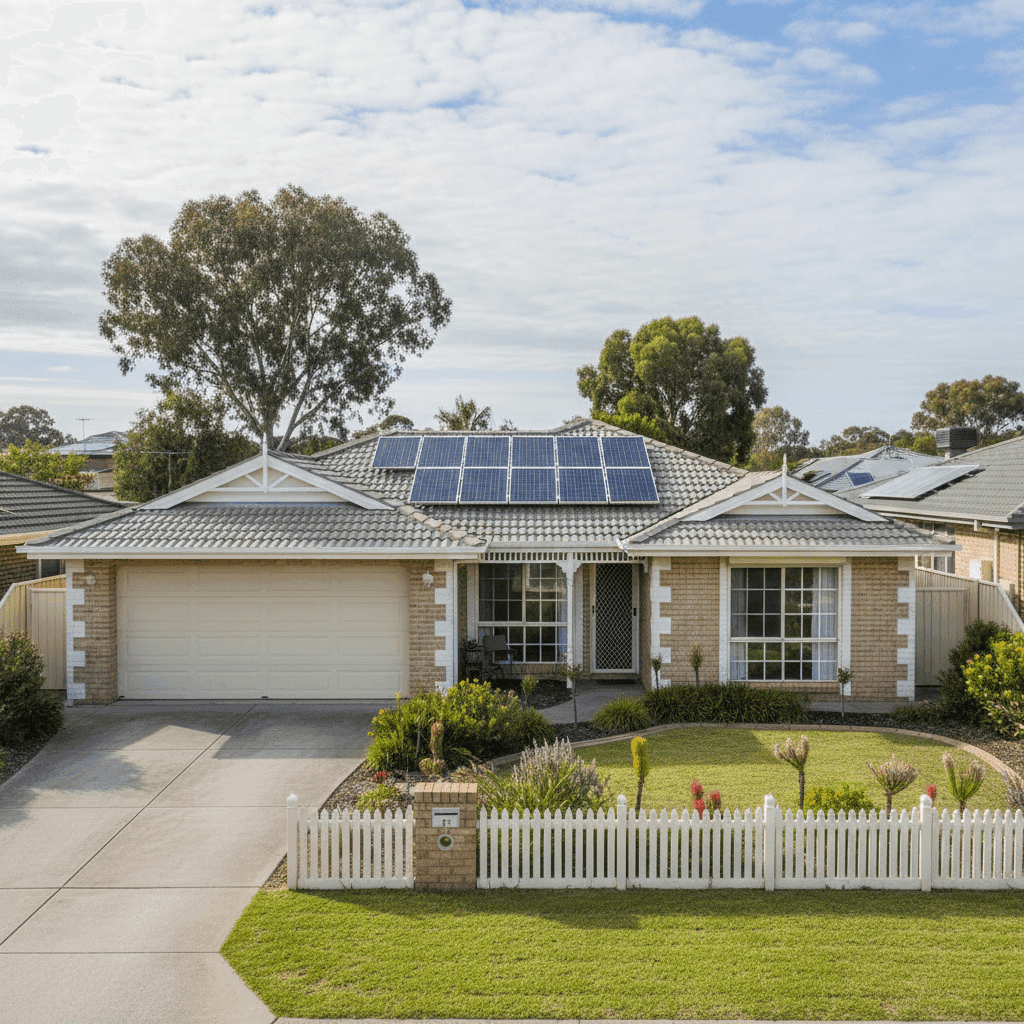
If you own a free standing home in Broadwater, WA 6280, you might be wondering whether your home insurance premium is competitive — or whether you're leaving money on the table. This article breaks down a real home and contents insurance quote for a four-bedroom, two-bathroom brick veneer property in Broadwater, comparing it against local, state-wide, and national benchmarks so you can make a genuinely informed decision.
---
Is This Quote Fair?
The short answer: yes — and then some.
The quote in question comes in at $637 per year (or about $62 per month) for combined home and contents cover, with a building sum insured of $402,000 and contents valued at $50,000. Our price rating for this quote is CHEAP, meaning it sits well below the average for comparable properties in the area.
To put that in perspective, the suburb average premium in Broadwater is $1,405 per year, with a median of $1,059. This quote lands below even the 25th percentile for the suburb — meaning it's cheaper than at least 75% of quotes we've seen for homes in this postcode. That's a significant saving, and for a homeowner on a budget, it could mean hundreds of dollars back in your pocket each year.
Of course, price alone doesn't tell the whole story. It's worth reviewing what the policy actually covers, the excess levels (a $2,000 building excess and $1,000 contents excess apply here), and any exclusions before committing. But from a pure cost standpoint, this quote is hard to argue with.
---
How Broadwater Compares
To understand just how well-priced this quote is, it helps to zoom out and look at the broader picture. You can explore the full data on the Broadwater suburb stats page, the WA state overview, and national insurance statistics.
Here's how the numbers stack up:
| Benchmark | Annual Premium |
|---|---|
| This Quote | $637 |
| Broadwater Suburb Average | $1,405 |
| Broadwater Suburb Median | $1,059 |
| Broadwater 25th Percentile | $682 |
| Capel LGA Average | $1,882 |
| WA State Average | $2,144 |
| WA State Median | $1,944 |
| National Average | $2,965 |
| National Median | $2,716 |
The gap between this quote and the national average is striking — at $637, this homeowner is paying less than a quarter of what the typical Australian pays for home and contents cover. Even against the WA state average of $2,144, the saving is over $1,500 annually.
It's worth noting that the suburb sample size for Broadwater is relatively small (13 quotes), so the local averages can shift with a few outliers. That said, the consistent gap across suburb, LGA, state, and national comparisons strongly supports the "cheap" rating here.
---
Property Features That Affect Your Premium
Several characteristics of this property work in the homeowner's favour when it comes to pricing.
Brick veneer construction is generally viewed favourably by insurers. It offers solid fire resistance and durability compared to weatherboard or fibrous cement, which can translate to lower rebuild risk and, in turn, lower premiums.
Tiled roofing is another tick in the right column. Tiles are considered a resilient roofing material — they hold up well against ember attacks and general weather wear, and they're less prone to the kind of damage that drives up claims.
No cyclone risk is a meaningful factor in Western Australia, where properties in the state's north can attract significant premium loadings due to tropical weather exposure. Broadwater, located in the South West region, sits outside the cyclone zone, which removes a major cost driver.
Solar panels are present on this property. While they add value to the home and may increase the sum insured slightly, many insurers now include solar panel cover within standard building policies, so the impact on premium is typically modest.
The property was built in 1975, which places it in a vintage bracket that some insurers treat cautiously — older homes can have ageing plumbing, wiring, or structural elements that increase risk. However, this doesn't appear to have pushed the premium up materially here, suggesting the other positive features are outweighing any age-related loading.
The stump foundation is worth monitoring. Homes on stumps can be susceptible to movement, subsidence, or pest activity over time. While this isn't necessarily a premium driver in itself, it's a good reason to keep up with regular maintenance and inspections.
---
Tips for Homeowners in Broadwater
Whether you're reviewing an existing policy or shopping around for the first time, here are a few practical steps to make sure you're getting the right cover at the right price.
1. Review your sum insured regularly. Building costs in regional WA have risen considerably in recent years. A sum insured of $402,000 for a 139 sqm home may be appropriate now, but it's worth checking against current construction costs annually to avoid being underinsured. Many insurers offer online calculators to help with this.
2. Consider your excess levels carefully. This policy carries a $2,000 building excess and $1,000 contents excess. Higher excesses typically mean lower premiums, but you need to be comfortable covering that amount out of pocket if you need to make a claim. If cash flow is a concern, it may be worth comparing quotes with a lower excess to understand the trade-off.
3. Keep up with home maintenance. Insurers can and do reject claims where damage is attributed to lack of maintenance rather than a sudden insured event. For a 1975-built home on stumps, this means staying on top of things like repairing cracked tiles, checking for termite activity, and ensuring gutters and drainage are clear — particularly heading into the wet season.
4. Don't auto-renew without comparing. Even if your current premium is competitive, the market changes year to year. Insurers often increase renewal premiums for existing customers while offering better rates to new ones. Use a comparison tool like CoverClub to benchmark your renewal quote before you accept it.
---
Ready to Compare Your Own Quote?
Whether you're in Broadwater or anywhere else in Australia, it pays to know where your premium sits relative to the market. At CoverClub, we make it easy to compare home and contents insurance quotes and understand exactly what you're paying for. Get a quote today and see how your premium stacks up.