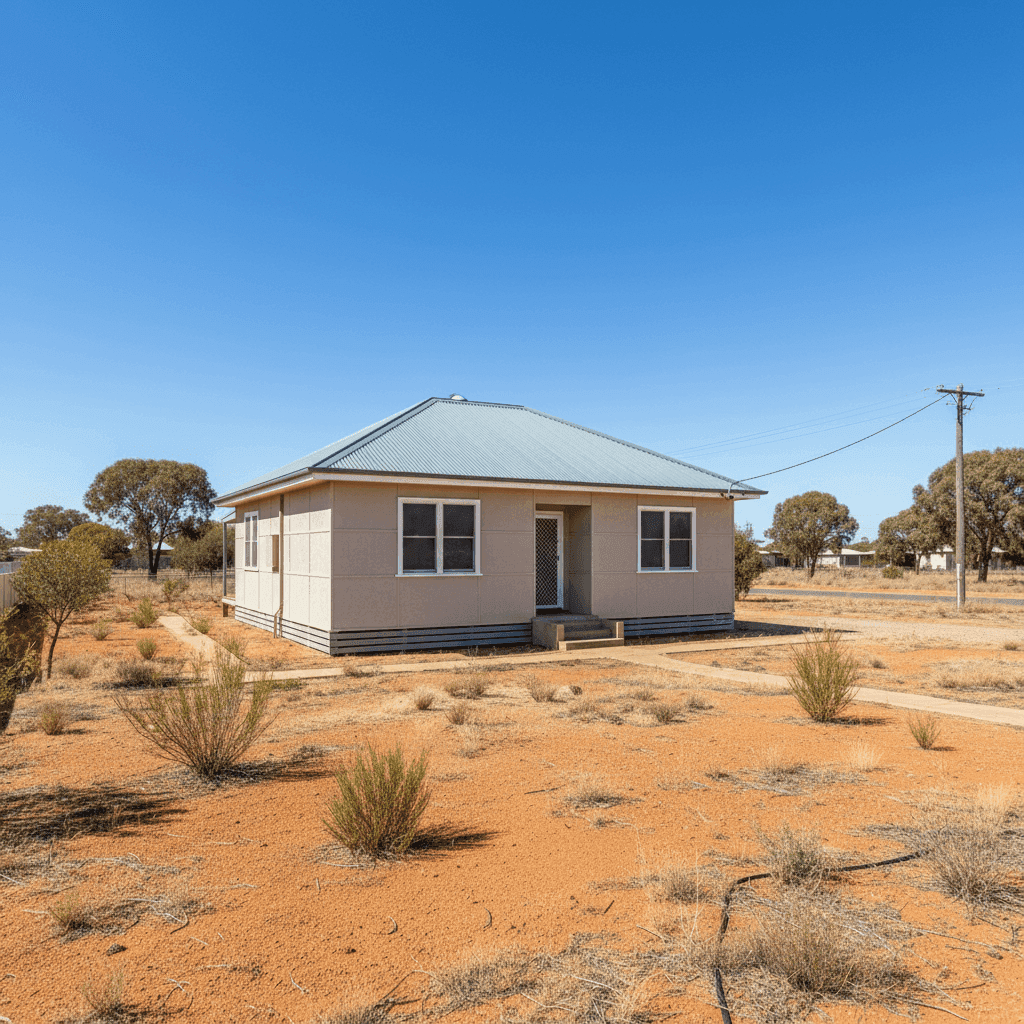
Home insurance in regional New South Wales can vary enormously depending on where you live, what your home is made of, and how much cover you actually need. This article takes a close look at a real home and contents insurance quote for a three-bedroom free standing home in Broken Hill, NSW 2880 — one of Australia's most iconic outback cities — and puts the numbers into context so you can decide whether you're getting a fair deal.
---
Is This Quote Fair?
The quote in question comes in at $1,234 per year (or around $114 per month) for combined home and contents cover, with a building sum insured of $300,000 and contents valued at $101,000. The building excess is $2,500, and the contents excess sits at $1,000.
Our price rating for this quote is FAIR — Around Average, which is a solid result. Here's why that matters: based on data collected across Broken Hill (NSW 2880), the suburb average premium is $1,829 per year, and the median sits at $1,630 per year. This quote lands well below both of those benchmarks, which is a meaningful saving.
To put it in percentile terms, the 25th percentile for the suburb is $1,021 per year and the 75th percentile is $2,154 per year. At $1,234, this quote sits comfortably in the lower half of the local market — not the cheapest available, but noticeably below what many Broken Hill homeowners are paying. For a property of this age and construction type, that's an encouraging sign.
---
How Broken Hill Compares
Broken Hill is a long way from Sydney in more ways than one — and that's reflected in the insurance data. While the suburb average of $1,829 per year sounds reasonable on its own, it looks remarkably affordable when you zoom out to the state and national picture.
According to NSW state insurance data, the average home and contents premium across New South Wales is $9,528 per year, with a state median of $3,770 per year. Those figures are heavily skewed by high-risk coastal and flood-prone areas, but they still illustrate just how much geography matters in insurance pricing.
At the national level, the average premium across Australia is $5,347 per year, with a national median of $2,764 per year. Again, Broken Hill sits well below both of these figures, which reflects the area's relatively lower exposure to the extreme weather events — such as cyclones, coastal flooding, and storm surge — that drive premiums sky-high in other parts of the country.
It's also worth noting that the LGA average for Unincorporated NSW is $4,060 per year, which covers a vast stretch of outback and semi-remote New South Wales. Even within this broader regional context, Broken Hill homeowners appear to be paying less than many of their LGA neighbours.
| Benchmark | Annual Premium |
|---|---|
| This Quote | $1,234 |
| Broken Hill Suburb Average | $1,829 |
| Broken Hill Suburb Median | $1,630 |
| NSW State Average | $9,528 |
| NSW State Median | $3,770 |
| National Average | $5,347 |
| National Median | $2,764 |
| Unincorporated NSW LGA Average | $4,060 |
---
Property Features That Affect Your Premium
Every home is different, and insurers price policies based on a detailed assessment of the property's characteristics. Here's how this particular home's features are likely influencing the premium:
Age of construction (1963): Older homes can attract higher premiums because ageing infrastructure — plumbing, wiring, and structural elements — carries greater risk of failure. A home built in 1963 is over 60 years old, so insurers may factor in the cost of replacing materials that are no longer to modern building standards.
Hardiplank/Hardiflex external walls: Fibre cement cladding like Hardiplank and Hardiflex is generally viewed favourably by insurers. It's durable, fire-resistant, and low-maintenance compared to timber weatherboard, which can mean a more competitive premium.
Steel/Colorbond roof: Colorbond roofing is one of the most insurer-friendly roof types in Australia. It's tough, long-lasting, resistant to fire and pests, and performs well in extreme heat — all relevant considerations in the Broken Hill climate.
Slab foundation: A concrete slab is a stable, low-risk foundation type that doesn't carry the same concerns as older stumped or suspended floors. This is a positive factor for premium pricing.
Timber/laminate flooring: Flooring type has a modest influence on contents and building cover, but timber and laminate floors are standard in many Australian homes and don't typically attract a loading.
Ducted climate control: The presence of ducted air conditioning adds to the replacement value of the home, which is captured in the building sum insured. It's worth ensuring your $300,000 sum insured accounts for the full cost of replacing this system.
Slightly elevated (less than 1m): The home is elevated by less than one metre, which has a minor effect on flood risk assessment. In Broken Hill's semi-arid environment, this is unlikely to be a significant rating factor.
No pool, no solar panels: The absence of a pool removes a common liability concern, and no solar panels means one less system to insure and maintain. Both keep the premium simpler and potentially lower.
---
Tips for Homeowners in Broken Hill
1. Check your building sum insured reflects today's rebuild costs Construction costs have risen significantly across Australia in recent years. A $300,000 sum insured on a 130 sqm home works out to roughly $2,300 per square metre — which is in the right ballpark for a regional area, but worth reviewing annually. Underinsurance is a serious risk; if your home is destroyed and the sum insured falls short of actual rebuild costs, you'll be out of pocket.
2. Review your contents figure carefully At $101,000, the contents cover needs to reflect the true replacement value of everything inside your home — furniture, appliances, clothing, electronics, and more. Many Australians underestimate their contents value. Walk through each room and tally up replacement costs at today's retail prices.
3. Consider the impact of your excess on your premium This quote carries a $2,500 building excess and a $1,000 contents excess. Choosing a higher excess is one of the most effective ways to reduce your annual premium, but make sure you could comfortably cover that amount in the event of a claim. If $2,500 would be a financial stretch, a lower excess (even at a slightly higher premium) may be worth it.
4. Shop around at renewal time Insurers don't always reward loyalty — in fact, many offer their best rates to new customers. Even if you're happy with your current policy, it's worth comparing quotes before your renewal date each year. The Broken Hill insurance market shows a wide spread between the 25th and 75th percentiles, which means there's real variation in what different insurers will charge for the same property.
---
Compare Your Own Quote
Whether you're a first-time buyer or a long-time Broken Hill local, it pays to know what the market looks like before you commit to a policy. CoverClub makes it easy to compare home and contents quotes from multiple insurers in one place — no phone calls, no pressure.
Get a quote today at CoverClub and see how your premium stacks up against your neighbours.