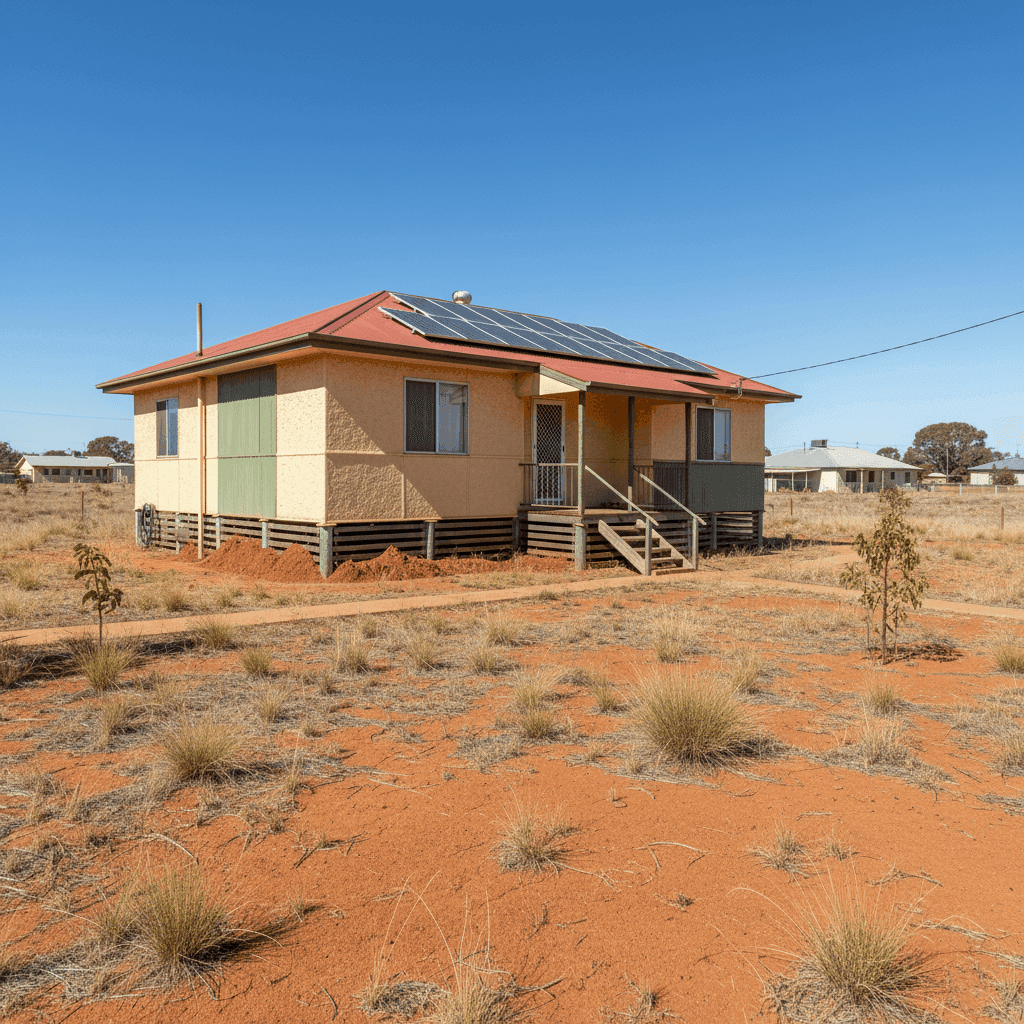
If you own a freestanding home in Broken Hill, NSW 2880, you're probably well aware that insurance costs in regional and remote New South Wales can be unpredictable. This article breaks down a real home and contents insurance quote for a three-bedroom, one-bathroom freestanding home in Broken Hill — and puts the numbers into context so you can judge whether you're getting a fair deal.
---
Is This Quote Fair?
The quote in question comes in at $1,245 per year (or roughly $118 per month), covering a building sum insured of $545,000 and contents valued at $50,000. The building excess sits at $2,000, with a contents excess of $600.
Our pricing model rates this quote as CHEAP — below average for the area. That's genuinely good news for the homeowner. Based on 66 quotes collected for the Broken Hill 2880 postcode, the suburb average premium is $2,152/yr and the median is $1,912/yr. This quote lands well below the 25th percentile of $1,308/yr — meaning it's cheaper than at least 75% of comparable quotes in the suburb.
In practical terms, this homeowner is saving over $900 a year compared to the average Broken Hill policyholder with similar coverage. Over five years, that's more than $4,500 in savings — not insignificant by any measure.
It's worth noting that the excess levels are on the higher side, particularly the $2,000 building excess. Higher excesses typically reduce premiums, so part of the reason this quote looks so competitive may be the trade-off in out-of-pocket costs if a claim is ever made. Homeowners should weigh that balance carefully.
---
How Broken Hill Compares
To put this quote in broader perspective, here's how Broken Hill stacks up against the rest of NSW and the national market:
| Benchmark | Average Premium | Median Premium |
|---|---|---|
| Broken Hill (2880) | $2,152/yr | $1,912/yr |
| NSW (State) | $3,801/yr | $3,410/yr |
| National | $2,965/yr | $2,716/yr |
| LGA (Unincorporated NSW) | $3,941/yr | — |
Broken Hill premiums are notably lower than both the NSW state average and the national average — a somewhat surprising result given that remote and regional properties often attract higher premiums due to limited access for emergency services and tradespeople. However, Broken Hill's relatively low exposure to cyclones, flooding, and bushfire (compared to coastal or northern NSW regions) likely contributes to its more modest pricing.
You can explore more data on the Broken Hill suburb insurance stats page, compare it against NSW state-wide figures, or benchmark against national home insurance averages.
---
Property Features That Affect Your Premium
Several characteristics of this particular property influence how insurers price the risk. Here's what stands out:
Age of Construction (1952)
Built in 1952, this home is over 70 years old. Older homes tend to attract higher premiums because ageing plumbing, wiring, and structural elements carry greater risk of failure. Some insurers apply loading to pre-1960s properties, so it's worth confirming your policy covers age-related wear or gradual deterioration clauses.
Stump Foundation
The home sits on stumps, which is common for older regional properties across NSW and Queensland. Stump foundations can be susceptible to movement, rot, or termite damage over time. Insurers assess this as a moderate risk factor, and some policies may exclude or limit cover for foundation-related damage.
Colorbond Steel Roof
The steel/Colorbond roof is actually a positive for insurers. Colorbond is durable, fire-resistant, and low-maintenance — qualities that can help keep premiums down compared to older tile or fibrous cement roofing materials.
Solar Panels
Solar panels are present on this property. Most standard home insurance policies cover solar panels as part of the building, but it's important to confirm this with your insurer. Damage from hail, storms, or falling debris should be included — but check the fine print, as some policies treat panels as optional extras.
Timber/Laminate Flooring
Timber and laminate floors are moderately priced to replace but can be susceptible to water damage. In the event of a burst pipe or storm ingress, flooring replacement costs can add up quickly, making adequate building sum insured particularly important.
Elevated Less Than 1 Metre
The property is slightly elevated — less than a metre off the ground. While this provides some protection against minor surface water ingress, it's not considered a significant flood mitigation feature by most insurers. Properties elevated more substantially (over 1 metre) can sometimes attract better flood-related terms.
No Pool, No Ducted Climate Control
The absence of a pool removes a common liability risk, and no ducted climate control means fewer mechanical systems that could fail and cause damage. Both factors can contribute to a leaner premium.
---
Tips for Homeowners in Broken Hill
1. Review your building sum insured regularly At $545,000, the building sum insured should reflect the full cost to rebuild — not the market value of the property. In regional areas like Broken Hill, rebuilding costs can be higher than expected due to labour and materials transport. Use a building cost calculator or speak with a local builder to validate your sum insured annually.
2. Understand your excess trade-off A $2,000 building excess is on the higher end. While it's helped keep this premium competitive, make sure you have that amount readily accessible in case of a claim. If cash flow is a concern, consider whether a slightly higher premium with a lower excess might suit your circumstances better.
3. Confirm solar panel coverage With solar panels on the roof, double-check that your policy explicitly covers them — including accidental damage, storm damage, and theft of inverters. If they're not listed, ask your insurer to add them or consider a specialist endorsement.
4. Get a termite inspection Stump foundations in older regional homes are a known target for termites. While insurance typically doesn't cover termite damage (it's considered a maintenance issue), an annual inspection can catch problems early and protect your home's structural integrity — keeping future insurance claims to a minimum.
---
Compare Your Own Quote
Whether you're a first-time buyer or a long-term Broken Hill resident reviewing your renewal, it pays to shop around. Premiums for the same property can vary by hundreds — sometimes thousands — of dollars between insurers. Get a home insurance quote through CoverClub and see how your current policy stacks up against the market in seconds.