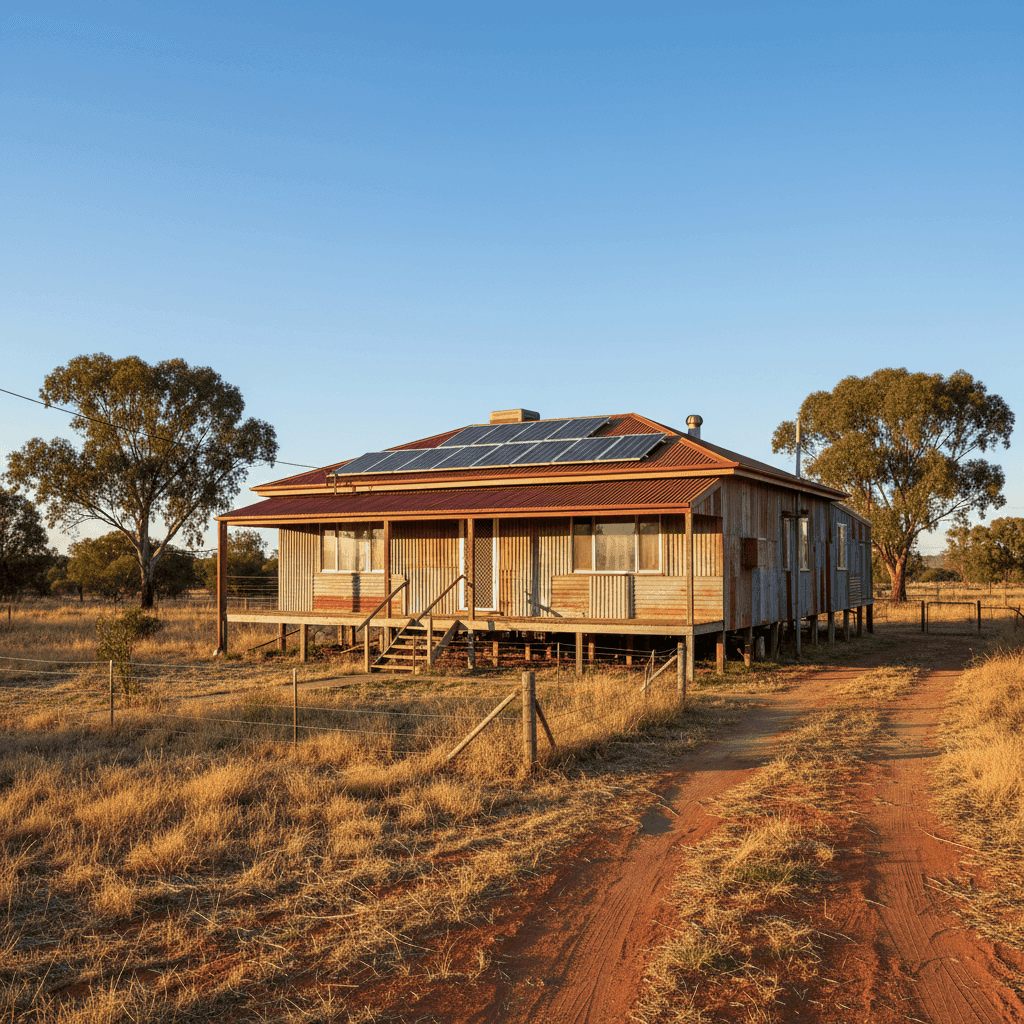
Home insurance premiums across regional New South Wales can vary enormously — and Broken Hill is no exception. This article takes a close look at a real home and contents insurance quote for a four-bedroom, free-standing home in Broken Hill NSW 2880, and puts that figure into context using suburb, state, and national benchmarks. Whether you're a current homeowner reassessing your policy or shopping around for the first time, understanding what drives your premium is the first step to getting better value.
---
Is This Quote Fair?
The annual premium for this property came in at $4,403 per year (or $422/month), covering both building (sum insured: $1,170,000) and contents ($119,000), each with a $500 excess.
Our pricing algorithm has rated this quote as EXPENSIVE — Above Average.
To put that in perspective, the suburb average for Broken Hill sits at just $1,829 per year, with a median of $1,630. This quote is more than 2.4 times the local average — a significant gap that warrants a closer look.
It's worth noting, however, that the suburb sample includes only 21 quotes, which means the local data has a relatively small base. Premiums in the sample range from around $1,021 (25th percentile) to $2,154 (75th percentile), and this quote sits well above even the top quartile. That said, several property-specific factors — explored below — help explain why this particular premium is elevated.
---
How Broken Hill Compares
Zooming out to a broader view gives useful context:
| Benchmark | Average Premium | Median Premium |
|---|---|---|
| Broken Hill (suburb) | $1,829/yr | $1,630/yr |
| LGA – Unincorporated NSW | $4,060/yr | — |
| NSW (state) | $9,528/yr | $3,770/yr |
| National | $5,347/yr | $2,764/yr |
You can explore the full NSW state insurance data or national benchmarks on CoverClub.
A few things stand out here. NSW as a state has a remarkably high average premium ($9,528), heavily skewed by coastal flood zones, bushfire-prone areas, and high-value properties in Sydney. The national median of $2,764 is a more representative figure for typical Australian homes.
This quote at $4,403 sits above the national average ($5,347 average, $2,764 median) when viewed against the median — suggesting it's on the pricier side by any measure. Interestingly, it falls within the LGA average of $4,060 for Unincorporated NSW, which suggests the broader region does attract higher premiums than the Broken Hill suburb average alone might imply.
---
Property Features That Affect Your Premium
Several characteristics of this property are likely contributing to the elevated premium:
Age of Construction (1950)
Homes built in or around 1950 are over 70 years old. Older properties often attract higher premiums due to the increased likelihood of ageing infrastructure — think original plumbing, wiring, and structural materials that may not meet current building codes. Insurers factor in the higher cost and complexity of repairing or rebuilding period homes.
High Building Sum Insured ($1,170,000)
At 244 sqm, this is a reasonably sized home, and the building sum insured of $1.17 million is substantial. The sum insured is one of the most direct drivers of premium cost — the more it would cost to rebuild, the more the insurer charges to cover that risk. It's worth periodically reviewing whether your sum insured accurately reflects current construction costs in your area.
Stump Foundation
Homes on stumps (also known as pier or post foundations) can be more expensive to insure than slab-on-ground homes. Stumped foundations are more susceptible to subsidence, pest damage (particularly termites), and structural movement — all of which increase the insurer's risk exposure.
Non-Standard External Walls
The external wall material is listed as "Other," which typically signals a non-standard construction type. Insurers price non-standard materials higher because they can be more costly or complex to repair and replace, and may have different fire or weather resistance characteristics compared to brick or weatherboard.
Solar Panels
This property has solar panels installed, which adds modest cost to the sum insured. Solar systems need to be covered as part of the building, and their replacement cost is factored into the overall premium.
Ducted Climate Control
Ducted air conditioning systems are a significant fixed installation and add to the overall rebuild value of the property, contributing marginally to the premium.
---
Tips for Homeowners in Broken Hill
If you're looking to reduce your home insurance costs — or simply ensure you're getting the best value — here are four practical steps:
1. Review your sum insured regularly Building costs have risen sharply in recent years. Make sure your sum insured reflects what it would actually cost to rebuild your home today — not what you paid for it, and not an outdated estimate. Overinsuring unnecessarily inflates your premium, while underinsuring leaves you exposed.
2. Increase your excess to lower your premium Both the building and contents excess on this policy are set at $500. Opting for a higher voluntary excess (say, $1,000 or $2,000) can meaningfully reduce your annual premium. Just make sure you could comfortably cover that amount out of pocket if you needed to make a claim.
3. Compare quotes annually Loyalty doesn't always pay in insurance. Premiums can shift significantly from year to year, and different insurers weigh risk factors differently. Using a comparison tool like CoverClub takes the legwork out of shopping around and helps you see what's available for your specific property.
4. Check what discounts you may be eligible for Many insurers offer discounts for bundling home and contents (which this policy already does), paying annually rather than monthly, or installing security systems. It's worth asking your insurer directly what discounts apply to your policy.
---
Get a Better Deal on Your Home Insurance
If your current premium feels high, you're not alone — and you don't have to accept it. CoverClub makes it easy to compare home and contents insurance quotes tailored to your property in Broken Hill. Enter your address and get started in minutes at coverclub.com.au. With transparent pricing data and suburb-level benchmarks, you'll know exactly where you stand before you commit to a policy.