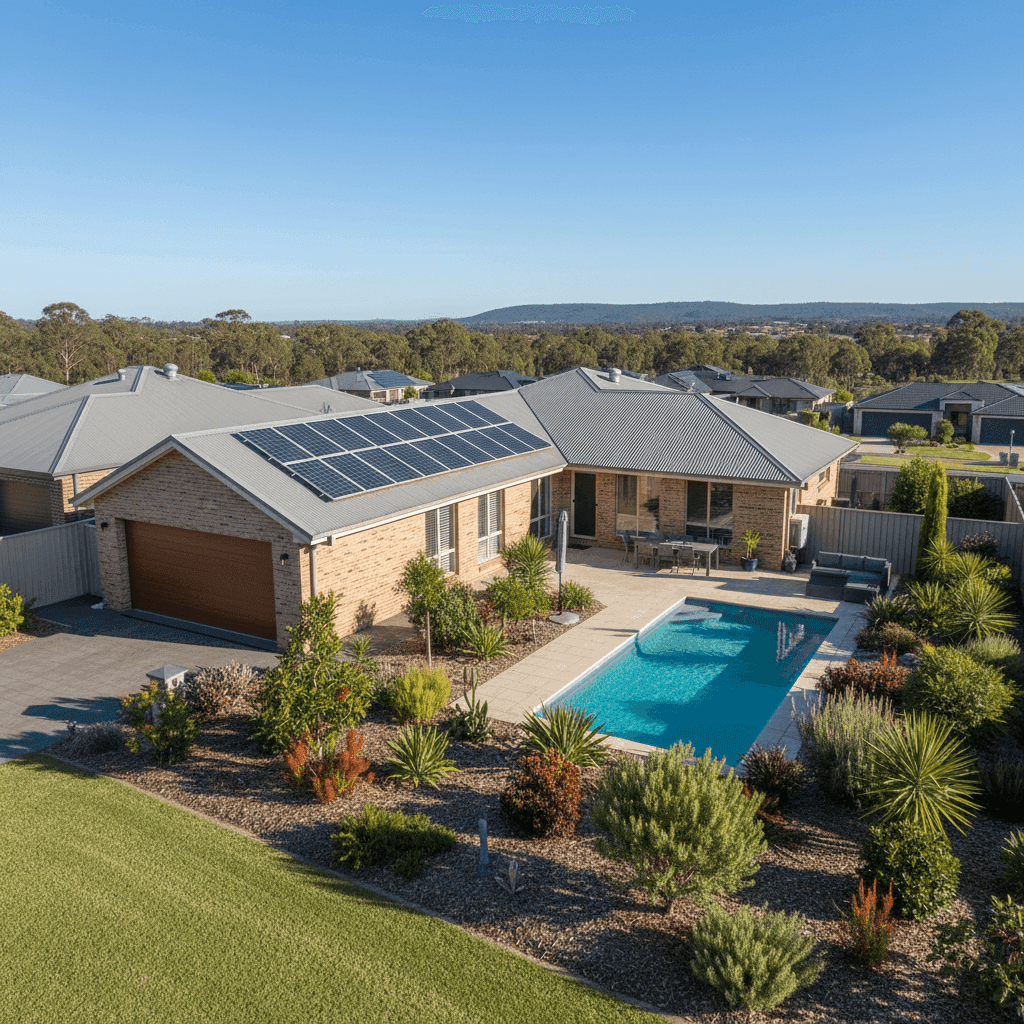
If you own a free standing home in Brookfield, NSW 2420, you already know this part of the Hunter Valley region offers a relaxed lifestyle — but that doesn't mean your home insurance should be an afterthought. Whether you're reviewing an existing policy or shopping around for the first time, understanding what a fair premium looks like for your property type and location can save you hundreds of dollars a year.
This article breaks down a real building-only insurance quote for a four-bedroom, double brick home in Brookfield, comparing it against local, state, and national benchmarks so you can make a truly informed decision.
---
Is This Quote Fair?
The short answer: yes — and then some. This quote came in at $2,057 per year (or roughly $197 per month) for building-only cover on a home with a sum insured of $550,000 and a building excess of $5,000. CoverClub's pricing engine rates this as CHEAP — below average for the area.
To put that in perspective, the average home insurance premium across New South Wales sits at a steep $9,528 per year, with a state median of $3,770. Nationally, the average premium is $5,347, with a median of $2,764. This quote lands well below every one of those benchmarks — a strong result for any homeowner.
It's worth noting that a higher excess of $5,000 on the building component does contribute to the lower premium. Agreeing to cover more of the initial cost yourself in the event of a claim is one of the most effective levers for reducing what you pay annually. If cash flow is a concern, it's worth weighing whether that trade-off suits your situation.
---
How Brookfield Compares
Suburb-level comparison data isn't available for Brookfield at this stage, but the broader Dungog LGA average gives us a useful reference point — and it tells an interesting story.
| Benchmark | Annual Premium |
|---|---|
| This Quote | $2,057 |
| Dungog LGA Average | $4,832 |
| NSW State Median | $3,770 |
| NSW State Average | $9,528 |
| National Median | $2,764 |
| National Average | $5,347 |
At $2,057, this premium sits below the national median and is less than half the Dungog LGA average of $4,832. That's a meaningful difference — the kind that adds up to thousands of dollars over the life of a mortgage.
The Dungog LGA encompasses a range of rural and semi-rural properties, some of which carry elevated risk profiles due to flood plains, bushfire proximity, or older construction. Brookfield's position within the postcode 2420, combined with this property's solid construction credentials, likely contributes to a more favourable risk assessment.
For the latest suburb-level data as it becomes available, keep an eye on Brookfield's insurance stats page.
---
Property Features That Affect Your Premium
Not all homes are priced equally, and insurers weigh up a range of property characteristics when calculating your risk profile. Here's how this particular home's features play into the equation:
Double Brick Walls Double brick construction is generally viewed favourably by insurers. It's durable, fire-resistant, and less susceptible to wind damage than timber-framed alternatives. This is one of the more premium-friendly construction types you'll find in Australian residential housing.
Steel / Colorbond Roof A Colorbond steel roof is another tick in the right column. It's lightweight, resistant to corrosion, and performs well in bushfire-prone zones (subject to ember guard requirements). Insurers tend to price these roofs more competitively than older terracotta or asbestos alternatives.
Concrete Slab Foundation Slab foundations are generally stable and low-maintenance, reducing the likelihood of subsidence-related claims — a factor insurers take seriously, particularly in areas with reactive soils.
Swimming Pool Pools add value to a property, but they also introduce liability considerations. Some insurers factor pool-related risks into their pricing, particularly around public liability cover. It's worth confirming your policy explicitly covers pool-related structures and liability.
Solar Panels Solar panels are an increasingly common feature on Australian homes, and they can affect your sum insured calculation. Panels are typically considered part of the building and should be included in your building cover. At $550,000 sum insured, it's worth verifying that this figure accounts for the replacement cost of your solar system.
Ducted Climate Control Ducted systems are expensive to replace and are generally captured under building cover. Again, ensuring your sum insured is adequate to cover this infrastructure — alongside the rest of the home — is essential.
1991 Construction Homes built in the early 1990s are generally well-regarded by insurers — old enough to have proven structural integrity, but not so old as to carry the elevated risk of pre-1970s construction. Wiring, plumbing, and roofing from this era are typically in reasonable condition, though it's worth having these assessed periodically.
---
Tips for Homeowners in Brookfield
1. Review Your Sum Insured Annually Construction costs in regional NSW have risen sharply in recent years. A sum insured of $550,000 may have been accurate when the policy was first taken out, but with labour and material costs climbing, it's worth getting a building replacement cost estimate each year. Underinsurance is one of the most common — and costly — mistakes homeowners make.
2. Consider Whether Building-Only Cover Is Enough This quote covers the building structure only. If you have valuable contents — furniture, appliances, electronics, or personal belongings — a combined building and contents policy may offer better overall value. Compare your options at CoverClub to see what a combined policy would cost.
3. Understand Your Excess Before You Claim The $5,000 building excess on this policy is on the higher end. While it helps keep premiums down, it means you'll need to cover the first $5,000 of any building claim out of pocket. Make sure you have that amount readily accessible — or consider whether a lower excess (at a slightly higher premium) better suits your financial position.
4. Check Your Bushfire and Flood Risk Rating Parts of the Dungog LGA carry elevated bushfire and flood risk. Even if your property isn't in a high-risk zone, it's worth confirming your insurer's specific risk classification for your address. Some policies include exclusions or sub-limits for these events that aren't immediately obvious in the product disclosure statement.
---
Ready to Compare?
Whether this quote is your current policy or one you're considering, it's always worth seeing what else is out there. Insurance markets shift, and what's competitive today may not be in 12 months. Use CoverClub to compare home insurance quotes for your Brookfield property — it takes just a few minutes and could uncover meaningful savings or better cover for the same price.