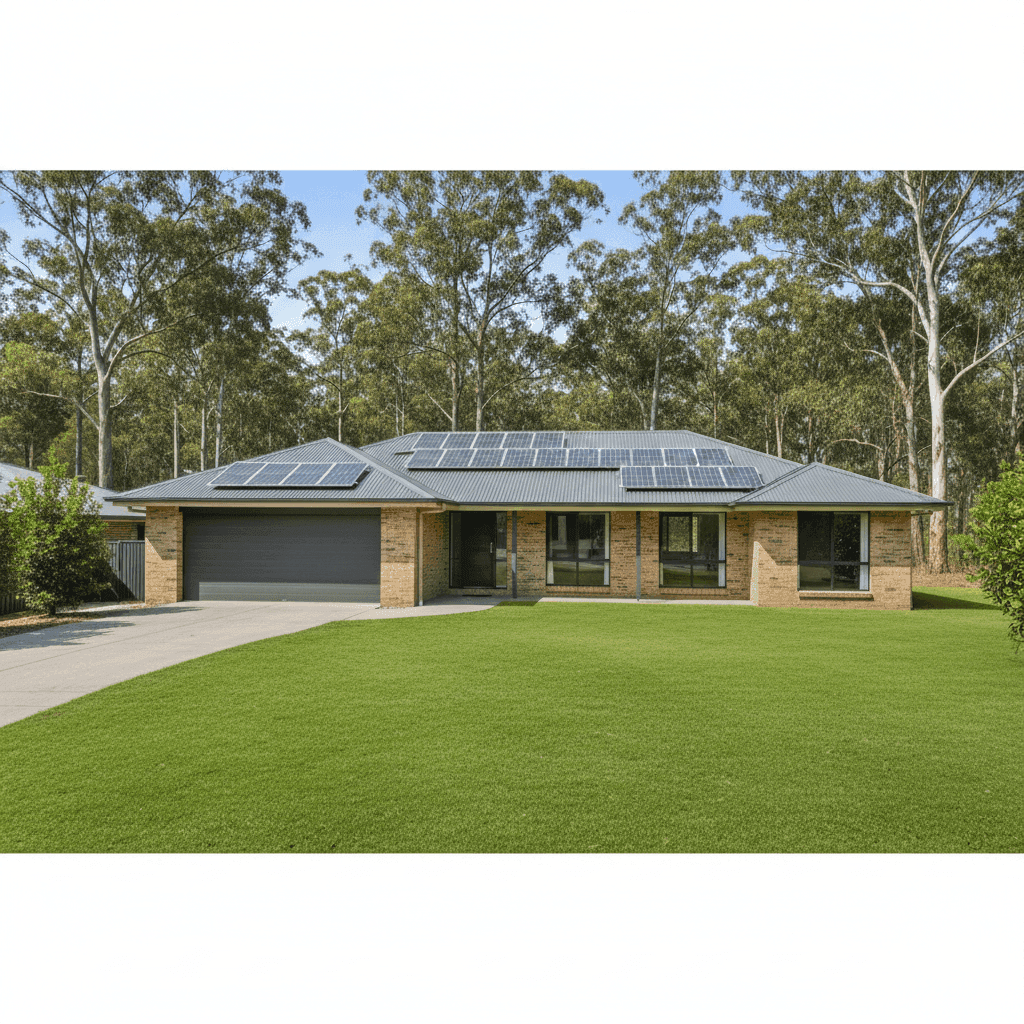
Brookfield is one of Brisbane's most sought-after semi-rural suburbs — a leafy, acreage-friendly pocket of the western corridor where large family homes sit on generous blocks. If you own a free standing home in the area, you already know that protecting a substantial property comes at a cost. But is what you're paying for home and contents insurance actually fair? In this article, we break down a real quote for a 6-bedroom home in Brookfield QLD 4069, compare it against local, state and national benchmarks, and share practical tips to help you get better value.
---
Is This Quote Fair?
The quote in question is $6,919 per year (or $676/month) for a combined home and contents policy, covering a building sum insured of $1,114,000 and contents valued at $185,000. Both the building and contents excess are set at $1,000.
Our price rating for this quote is FAIR — Around Average.
That rating reflects where the premium sits relative to comparable properties in the area. At $6,919 per year, this quote lands between the suburb's average ($6,030/yr) and the 75th percentile ($7,309/yr) — meaning it's slightly above what most Brookfield homeowners are paying, but still well within the normal range for a property of this size and value. It's not a bargain, but it's not a red flag either.
For a 345 sqm brick veneer home built in 2005 with a high building sum insured of over $1.1 million, this kind of premium is understandable. Larger, higher-value homes naturally attract higher premiums, and the contents coverage of $185,000 adds meaningfully to the overall cost.
---
How Brookfield Compares
Context is everything when evaluating an insurance quote. Here's how this premium stacks up across different levels of comparison:
| Benchmark | Annual Premium |
|---|---|
| This Quote | $6,919 |
| Brookfield Suburb Average | $6,030 |
| Brookfield Suburb Median | $5,473 |
| Brookfield 25th Percentile | $4,890 |
| Brookfield 75th Percentile | $7,309 |
| QLD State Average | $4,547 |
| QLD State Median | $3,931 |
| LGA (Brisbane) Average | $4,485 |
| National Average | $2,965 |
| National Median | $2,716 |
A few things stand out here. First, Brookfield premiums are significantly higher than both the Queensland state average and the national average. The Brookfield suburb average of $6,030/yr is more than double the national median of $2,716 — a stark difference that reflects the higher property values and larger homes typical of this suburb.
Second, Queensland as a whole already sits well above national averages, with a state average of $4,547/yr versus the national figure of $2,965/yr. This is largely driven by the state's exposure to extreme weather events — particularly flooding, storms and hail — which push premiums up across the board, even in areas not directly in a cyclone risk zone.
For this particular quote, the premium of $6,919 is $889 above the suburb average. Given the property's size (345 sqm, 6 bedrooms) and high sum insured, that difference is largely attributable to the scale of coverage rather than any pricing anomaly. It's worth noting that the suburb sample size is relatively small (6 quotes), so the averages should be treated as a guide rather than a definitive benchmark.
---
Property Features That Affect Your Premium
Every home is different, and insurers assess a range of property characteristics when calculating your premium. Here's how the key features of this Brookfield home influence what you pay:
Brick Veneer Walls Brick veneer is generally viewed favourably by insurers. It offers solid fire resistance and durability, which can help moderate premiums compared to timber-framed or weatherboard homes.
Steel/Colorbond Roof Colorbond roofing is a popular choice in Queensland for good reason — it's lightweight, durable and handles heat well. Insurers typically regard it as a lower-risk roofing material compared to older terracotta or concrete tiles, which can crack or become brittle over time.
Slab Foundation A concrete slab foundation is generally considered stable and low-maintenance. It reduces the risk of subsidence-related claims and is standard for homes of this era and construction type.
Solar Panels This home has solar panels installed. It's important to confirm with your insurer whether your panels are covered under your building policy, as coverage varies. Some policies include them automatically; others treat them as an optional extra. Given the cost of a quality solar system, ensuring they're adequately covered is worthwhile.
Construction Year (2005) A home built in 2005 benefits from modern building codes that were in place post-2000, including improved cyclone and storm-resistance standards. This can work in your favour when insurers assess structural risk.
High Sum Insured At $1,114,000, the building sum insured is the single biggest driver of this premium. It's essential that this figure accurately reflects the cost to rebuild — not the market value — of the home. Underinsuring to reduce premiums can leave you significantly out of pocket after a major claim.
Standard Fittings Standard-quality fittings (as opposed to high-end or custom finishes) help keep the sum insured and premium in check. Homes with premium fixtures and bespoke finishes typically cost more to rebuild and insure accordingly.
---
Tips for Homeowners in Brookfield
1. Review your sum insured regularly Building costs in South East Queensland have risen considerably in recent years. If your sum insured hasn't been updated to reflect current construction costs, you may be underinsured — or paying for coverage that doesn't match your actual rebuild cost. Use a building cost calculator or speak with a quantity surveyor to get an accurate figure.
2. Confirm solar panel coverage If your solar panels aren't explicitly listed in your policy, don't assume they're covered. Ask your insurer directly, and if necessary, add them as a specified item. A quality solar system can be worth tens of thousands of dollars — it's not something to leave to chance.
3. Compare quotes before renewing Loyalty doesn't always pay in insurance. Insurers often offer better rates to new customers, and premiums can vary significantly between providers for the same level of cover. Use CoverClub to compare quotes before your renewal date each year.
4. Consider your excess strategically Both the building and contents excess on this policy are set at $1,000. Increasing your excess can reduce your annual premium — but make sure you're comfortable paying that amount out of pocket in the event of a claim. For a property of this value, a slightly higher excess may be a reasonable trade-off for a lower ongoing premium.
---
Ready to Compare?
Whether you're reviewing your current policy or shopping for the first time, comparing quotes is the smartest way to ensure you're getting fair value. Head to CoverClub to get a home and contents insurance quote tailored to your Brookfield property — and see how your premium stacks up against the suburb, state and national benchmarks.