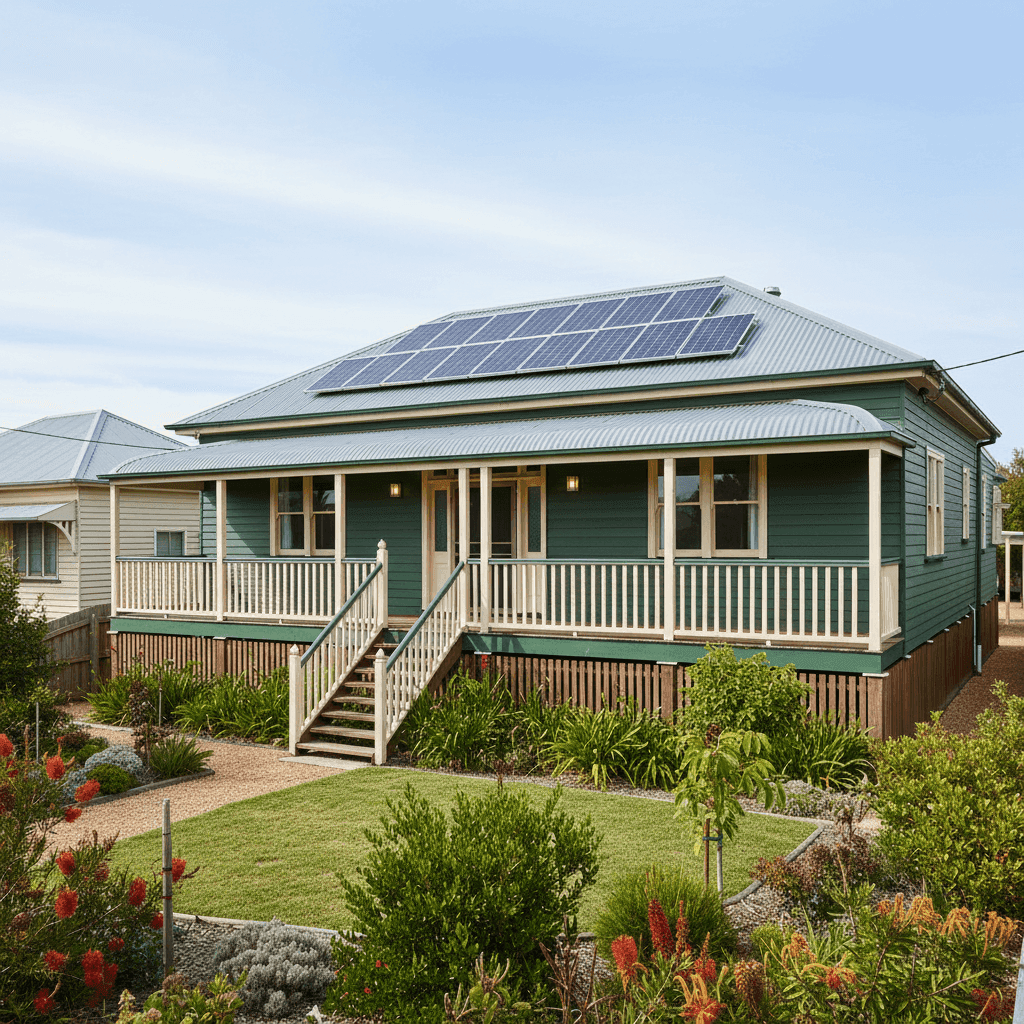
Nestled in the Central Goldfields region of Victoria, Broomfield (VIC 3364) is a quiet rural locality with a rich history and a characterful mix of older homes. If you own a free standing home here — particularly one of the many timber weatherboard properties built in the early twentieth century — understanding what you should be paying for building insurance is genuinely valuable. This article breaks down a real building-only insurance quote for a 3-bedroom, 1-bathroom free standing home in Broomfield, examines whether it represents good value, and offers practical tips to help local homeowners make the most of their cover.
---
Is This Quote Fair?
The quote in question comes in at $1,000 per year (or about $93 per month) for building-only cover on a home insured for $382,000, with a building excess of $5,000.
Our price rating for this quote is CHEAP — below average — and the numbers back that up convincingly.
When you stack this premium against the benchmarks, it's clear this homeowner is getting a strong deal:
- LGA (Central Goldfields) average: $1,855/yr — this quote is 46% below the local government area average
- Victorian state average: $3,000/yr — this quote is 67% cheaper
- Victorian state median: $2,718/yr — still more than 2.5× higher than this premium
- National average: $5,347/yr — nearly 5.3× more expensive
- National median: $2,764/yr — almost 2.8× higher
By any measure, $1,000 per year for building cover in Broomfield is well below what most Australian homeowners pay. The high $5,000 excess does play a role in keeping the premium down — a lower excess would push the annual cost up — but even accounting for that, this quote is competitively priced.
---
How Broomfield Compares
Without suburb-level data specific to Broomfield, we look to the broader Central Goldfields LGA as the closest benchmark. At an LGA average of $1,855/yr, Central Goldfields already sits well below the Victorian state average of $3,000 — suggesting the region is generally considered lower risk by insurers.
Zooming out further, Victoria as a whole is considerably cheaper than the national average of $5,347/yr, which is heavily influenced by high-risk zones in Queensland, Western Australia, and the Northern Territory — areas exposed to cyclones, flooding, and extreme weather events.
For Broomfield specifically, the absence of cyclone risk designation is a meaningful factor. Many regional Victorian properties benefit from relatively moderate natural hazard profiles compared to their interstate counterparts, and this is reflected in the premium data. You can explore Victoria-wide insurance statistics or dive into Broomfield's local stats to see how the suburb sits within the broader picture.
---
Property Features That Affect Your Premium
Several characteristics of this particular property have a direct bearing on the insurance premium — both positively and negatively.
🏚️ Weatherboard Construction (1910)
This is arguably the most significant risk factor for this property. Timber weatherboard homes built in 1910 are over 110 years old, and while many have been lovingly maintained, older timber construction carries a higher fire risk and is more susceptible to wear, rot, and structural deterioration than brick or modern materials. Insurers typically price older weatherboard homes at a premium — making the $1,000/yr quote even more impressive.
🏠 Elevated on Stumps
The home sits elevated on stumps (by less than 1 metre), which is common for older Victorian homes. This style of foundation can be a double-edged sword: it improves airflow and reduces some moisture-related risks, but it also means the subfloor is exposed and may require maintenance. Insurers generally view stump foundations as a moderate risk factor.
☀️ Solar Panels
Solar panels are installed on this property. Most building insurance policies cover solar panels as a fixed fixture of the home, but it's worth confirming with your insurer that the panels are explicitly included in your sum insured of $382,000. Replacement costs for solar systems can be significant.
🏗️ Steel / Colorbond Roof
A Colorbond steel roof is a positive feature from an insurance perspective. These roofs are durable, fire-resistant, and long-lasting — quite different from the corrugated iron or terracotta tiles found on many older homes. This likely contributes to the favourable premium.
📐 Building Size & Fittings
At 130 sqm with standard-quality fittings, the home is modest in size and finish. This keeps the sum insured ($382,000) and the resulting premium at a reasonable level. Larger homes or those with premium fittings would attract higher rebuild costs and, consequently, higher premiums.
🏊 No Pool, No Ducted Climate Control
The absence of a pool and ducted climate control system removes two common sources of additional premium loading. Pools introduce liability and equipment risks, while ducted systems add to the rebuild cost estimate.
---
Tips for Homeowners in Broomfield
1. Review Your Sum Insured Annually
Construction costs in regional Victoria have risen significantly in recent years. A sum insured of $382,000 for a 130 sqm home may be appropriate today, but it's worth reassessing each year using a building cost calculator to avoid being underinsured after a total loss event.
2. Confirm Solar Panels Are Covered
Solar panel systems can cost $8,000–$15,000 or more to replace. Ask your insurer directly whether your panels are included in the building sum insured, or whether they need to be listed separately. Don't assume — check the Product Disclosure Statement (PDS).
3. Maintain Your Weatherboard Exterior
Insurers may reduce or reject claims if damage is attributed to lack of maintenance. Regularly inspect and repaint your weatherboard cladding, check for rot or pest damage, and ensure the subfloor and stumps are in good condition. Proactive upkeep protects both your home and your claim eligibility.
4. Consider Whether Your Excess Is Right for You
This policy carries a $5,000 building excess. While this helps keep the annual premium low, it means you'd pay the first $5,000 of any claim out of pocket. If a $5,000 outlay would be a financial strain, it may be worth requesting a quote with a lower excess to understand the trade-off in premium cost.
---
Compare Your Options with CoverClub
Whether you're renewing your existing policy or shopping for cover for the first time, it pays to compare. The quote analysed here shows that below-average premiums are achievable in Broomfield — but every property is different, and your circumstances may yield an even better result. Get a home insurance quote through CoverClub to see what's available for your property, and make sure you're not paying more than you need to.