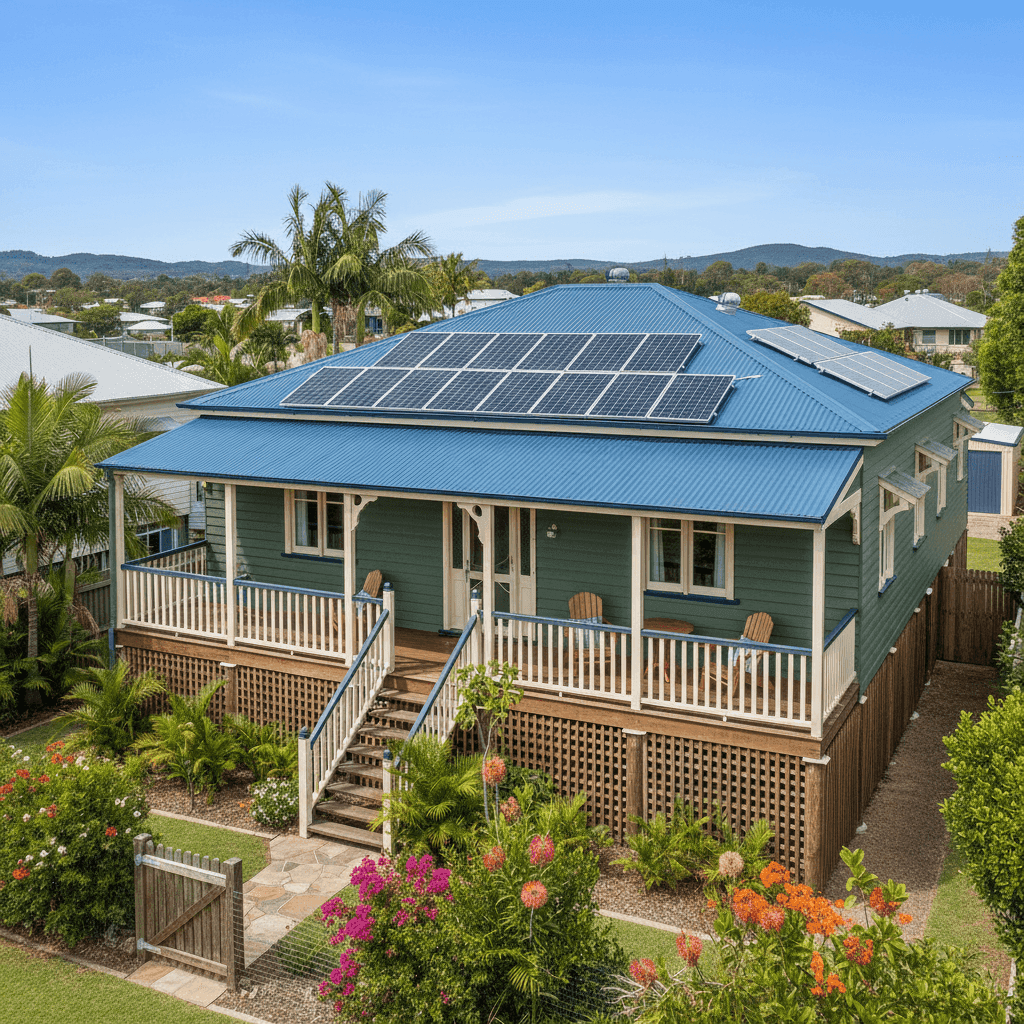
If you own a free standing home in Brooweena, QLD 4620, you've probably noticed that home insurance premiums in regional Queensland can vary enormously. This article breaks down a real home and contents insurance quote for a 3-bedroom, 2-bathroom weatherboard property in Brooweena — and puts it in context against local, state, and national benchmarks — so you can judge whether your own policy is working hard enough for you.
---
Is This Quote Fair?
The quote in question comes in at $5,429 per year (or roughly $513 per month) for combined home and contents cover, with a building sum insured of $558,000 and contents valued at $35,000. Both the building and contents excess sit at $1,000.
Our price rating for this quote is CHEAP — below average — which is genuinely good news for the homeowner. In a state where premiums can swing wildly depending on flood zones, cyclone exposure, and construction type, landing below the average benchmark is a result worth noting.
To be clear, "cheap" here doesn't mean inadequate. It simply means this premium is competitive relative to what other Queensland homeowners are typically paying for comparable cover. The sum insured is substantial at $558,000, reflecting the real cost of rebuilding a character home of this age and construction style, so the value-for-money equation looks solid.
---
How Brooweena Compares
Let's put the numbers side by side:
| Benchmark | Annual Premium |
|---|---|
| This quote | $5,429 |
| Fraser Coast LGA average | $4,810 |
| QLD state average | $9,129 |
| QLD state median | $3,903 |
| National average | $5,347 |
| National median | $2,764 |
A few things stand out here. The QLD state average of $9,129 is extraordinarily high — a reflection of the significant number of Queensland properties exposed to cyclone, flood, and storm surge risk, which drags the average upward. This quote sits well below that figure.
Compared to the national average of $5,347, this quote is almost exactly in line — just $82 above it — which reinforces the "cheap" rating in a Queensland context. The Fraser Coast LGA average of $4,810 is slightly lower, but that figure encompasses a broad mix of properties across the region, including newer builds and those with lower sum insured values.
It's also worth noting that medians tell a different story to averages. The QLD median of $3,903 and national median of $2,764 reflect the midpoint of all policies — meaning half of all insured homes pay less than these figures. However, many of those policies cover lower-value properties, smaller homes, or buildings-only cover without contents. For a home with a $558,000 rebuild value plus contents, this premium is proportionate.
You can explore Brooweena-specific insurance stats, Queensland-wide data, and national benchmarks on CoverClub to dig deeper into how your suburb stacks up.
---
Property Features That Affect Your Premium
Several characteristics of this property have a direct bearing on what insurers charge. Understanding them helps you have more informed conversations with your insurer — and potentially negotiate better terms.
Weatherboard Timber Construction (1947)
Weatherboard homes are a beloved part of Queensland's architectural heritage, but insurers view older timber construction with a degree of caution. Timber walls are more susceptible to fire, termite damage, and general wear compared to brick or rendered masonry. A home built in 1947 is nearly 80 years old, which means ageing wiring, plumbing, and structural elements may increase the likelihood of a claim. Insurers typically price this risk into the premium.
Elevated on Stumps
This home is elevated by at least one metre on stumps — a classic Queenslander design feature. The good news is that elevation can actually work in your favour for flood risk, as water is less likely to inundate the living areas. However, stumped foundations require periodic maintenance (re-stumping can be costly), and the underfloor space can create vulnerabilities if not properly enclosed and maintained.
Steel/Colorbond Roof
A Colorbond steel roof is generally viewed positively by insurers. It's durable, low-maintenance, fire-resistant, and performs well in severe weather events. Compared to older tile or fibrous cement roofing, Colorbond is a premium-friendly feature.
Solar Panels
The presence of solar panels adds value to the property but also adds a line item to the insurer's risk calculation. Panels represent a significant asset (often $8,000–$20,000 installed), and they can be damaged by hail, storms, or falling debris. Make sure your policy explicitly covers solar panels — some standard policies require you to list them separately or increase your sum insured to account for them.
Ducted Climate Control
Ducted air conditioning is another feature that increases the replacement value of the home. Ducted systems are expensive to replace, and mechanical failure or storm damage can result in sizeable claims. It's worth confirming your building sum insured adequately accounts for this.
Timber and Laminate Flooring
Timber flooring in an older elevated home can be susceptible to moisture ingress, particularly if the subfloor area isn't well-ventilated. Laminate flooring, while more affordable, can be damaged by water events. These factors are typically factored into the insurer's overall assessment of the property.
No Cyclone Risk
Brooweena is not classified as a cyclone risk area, which is a meaningful premium advantage in Queensland. Properties in cyclone-prone coastal and far-north Queensland zones can attract significant loadings. The absence of this risk factor helps keep this quote competitive.
---
Tips for Homeowners in Brooweena
Whether you're reviewing your existing policy or shopping for the first time, here are some practical steps to make sure you're getting the right cover at the right price.
1. Check your solar panels are explicitly covered Don't assume your solar system is automatically included in your building sum insured. Contact your insurer to confirm panels are listed and that the replacement value is current — installation costs have shifted considerably in recent years.
2. Review your building sum insured regularly Construction costs have risen sharply across Australia. A rebuild estimate that was accurate three years ago may now be significantly understated. Use a building cost calculator or speak with a local builder to ensure your $558,000 sum insured still reflects current replacement costs for a weatherboard home of this size and age.
3. Keep up with stump and subfloor maintenance Insurers may reduce or deny claims related to gradual deterioration. Regularly inspect your stumps for rot, termite activity, and movement. Keeping records of maintenance can also support any future claim.
4. Compare quotes at renewal — every year The home insurance market in Queensland is competitive, and loyalty doesn't always pay. Premiums can shift significantly between insurers for the same property. Use a comparison tool like CoverClub at each renewal to ensure you're not overpaying.
---
Ready to Compare?
Whether this quote is your current policy or one you're considering, it's always worth seeing what else is on the market. CoverClub makes it easy to compare home and contents insurance quotes from multiple Australian insurers in one place — so you can be confident you're getting genuine value. Start your comparison today and see how your premium stacks up.