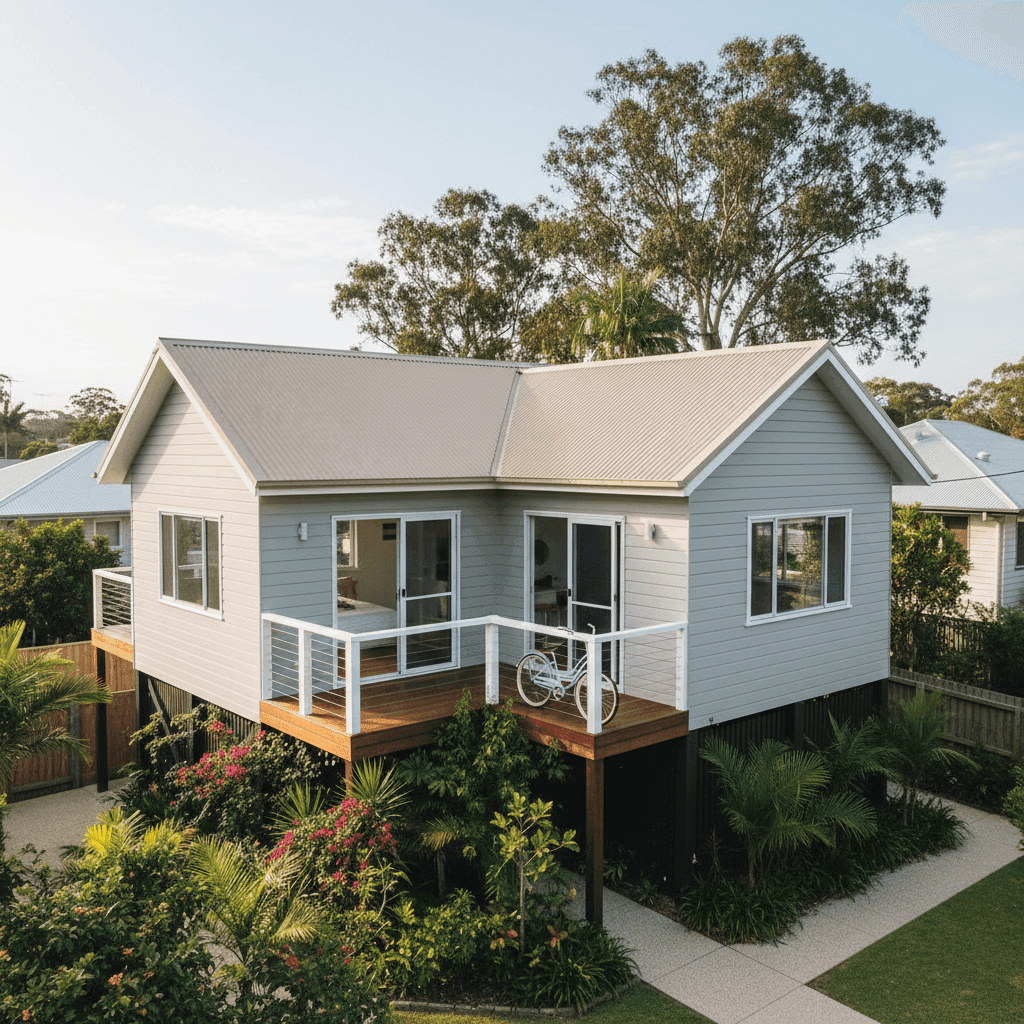
Brunswick Heads is one of those rare coastal gems on the NSW Northern Rivers that manages to feel unhurried despite its growing popularity. Its relaxed village character, proximity to the ocean, and lush hinterland backdrop make it a sought-after place to own a home — but that lifestyle appeal comes with its own set of insurance considerations. This article breaks down a recent building insurance quote for a three-bedroom free-standing home in Brunswick Heads (postcode 2483), examines whether the price stacks up, and offers practical guidance for local homeowners looking to make smarter coverage decisions.
---
Is This Quote Fair?
The quote in question sits at $4,218 per year (or $404/month) for building-only cover, with a $1,000 building excess and a sum insured of $601,000. Our price rating for this quote is Expensive — Above Average.
To put that in context: the average premium across the 16 quotes we've recorded for Brunswick Heads is $2,632/year, with a suburb median of $2,838/year. This quote is roughly 60% above the suburb average and sits well above the 75th percentile threshold of $3,559/year — meaning it's more expensive than at least three-quarters of comparable quotes in the area.
That said, "expensive" doesn't automatically mean "wrong." Insurers price risk based on a complex mix of factors including construction materials, age of the dwelling, flood and storm exposure, and proximity to the coast. A quote that looks high on the surface may reflect genuine risk characteristics of the property — or it may simply reflect that the insurer chosen isn't particularly competitive for this profile. Either way, it's a strong signal to shop around.
---
How Brunswick Heads Compares
Understanding where Brunswick Heads sits relative to broader benchmarks helps homeowners gauge whether their premium is driven by local risk or broader market forces.
| Benchmark | Average Premium | Median Premium |
|---|---|---|
| Brunswick Heads (suburb) | $2,632/yr | $2,838/yr |
| NSW (state) | $9,528/yr | $3,770/yr |
| National | $5,347/yr | $2,764/yr |
| Tweed LGA | $26,089/yr | — |
A few things stand out here. First, the NSW state average of $9,528/year is dramatically higher than the suburb average — this is largely driven by high-risk postcodes elsewhere in NSW (think flood-prone inland areas and cyclone-adjacent coastal zones) pulling the mean upward. The NSW median of $3,770/year is a more representative yardstick, and this quote still exceeds it.
Second, the Tweed LGA average of $26,089/year is eye-catching. Brunswick Heads falls within the Tweed Shire, and this figure reflects the significant flood and storm risk that affects parts of the LGA — particularly areas that experienced severe inundation during the 2022 Northern Rivers floods. Not all of Brunswick Heads carries the same flood exposure, but insurers do price at a postcode or even street level, so proximity to waterways matters.
Compared to the national median of $2,764/year, this quote is above average but not dramatically so — suggesting the premium is partly a reflection of genuine coastal Northern Rivers risk rather than pure insurer pricing inefficiency.
For more localised data, explore Brunswick Heads insurance stats on CoverClub, or browse NSW-wide benchmarks and national comparisons.
---
Property Features That Affect Your Premium
Several characteristics of this particular property are worth examining through an insurance lens.
Hardiplank/Hardiflex external walls are a fibre cement cladding product widely used in Australian residential construction. Insurers generally view fibre cement favourably — it's non-combustible, resistant to rot and termites, and holds up well in coastal humidity. This should, in theory, work in the homeowner's favour relative to timber weatherboard alternatives.
Steel/Colorbond roofing is similarly well-regarded by insurers. It's durable, fire-resistant, and performs well under high wind and hail loads — all relevant considerations on the NSW coast. This is a positive risk factor.
Stump foundations are common in older Queensland and Northern Rivers-style homes and can introduce some complexity. Stumps (whether timber or concrete) require periodic inspection and maintenance, and homes on stumps can be more vulnerable to underfloor flooding. Insurers may factor this into their assessment, particularly in a region with known flood history.
Construction year of 1982 means the home is over 40 years old. Older dwellings can attract higher premiums due to ageing electrical wiring, plumbing, and structural components that may be more susceptible to sudden damage. Ensuring the home has been well-maintained and that any major systems have been updated can help mitigate this.
Timber/laminate flooring is standard for the era and style of home, and while it doesn't significantly shift the premium needle on its own, it does contribute to the overall rebuild cost — which is reflected in the $601,000 sum insured for a 139 sqm home.
Ducted climate control is worth noting as it adds to the replacement value of the building. Ensuring this is adequately captured in the sum insured is important — underinsurance is a common and costly mistake.
---
Tips for Homeowners in Brunswick Heads
1. Compare at least three to four quotes before renewing Given this quote sits above the 75th percentile for the suburb, there's a meaningful chance a different insurer would price this risk more competitively. The Northern Rivers insurance market has tightened since 2022, but competition still exists — especially for properties with favourable construction materials like fibre cement and Colorbond roofing.
2. Review your sum insured annually Construction costs have risen significantly across Australia over the past few years, and $601,000 for a 139 sqm home may be appropriate — but it's worth validating with an independent building cost estimator. Both underinsurance and overinsurance carry costs: one leaves you exposed at claim time, the other inflates your premium unnecessarily.
3. Ask about flood zone classification In the Tweed LGA, your property's specific flood risk classification can have an outsized impact on your premium. If your home is not in a designated flood zone, make sure your insurer is aware of this — and consider requesting a formal flood risk assessment if you're unsure. Some insurers have access to more granular flood mapping than others.
4. Maintain the stumps and underfloor space Homes on stumps should have their foundations inspected periodically. Documenting good maintenance practices — and keeping records — can support your position in the event of a claim and may be relevant when discussing your risk profile with an insurer.
---
Ready to Find a Better Rate?
If this quote has you wondering whether you're paying too much, you're not alone — and the answer is often just a few comparisons away. CoverClub makes it easy to benchmark your premium against real data from your suburb and beyond. Get a home insurance quote today and see how your current cover stacks up.