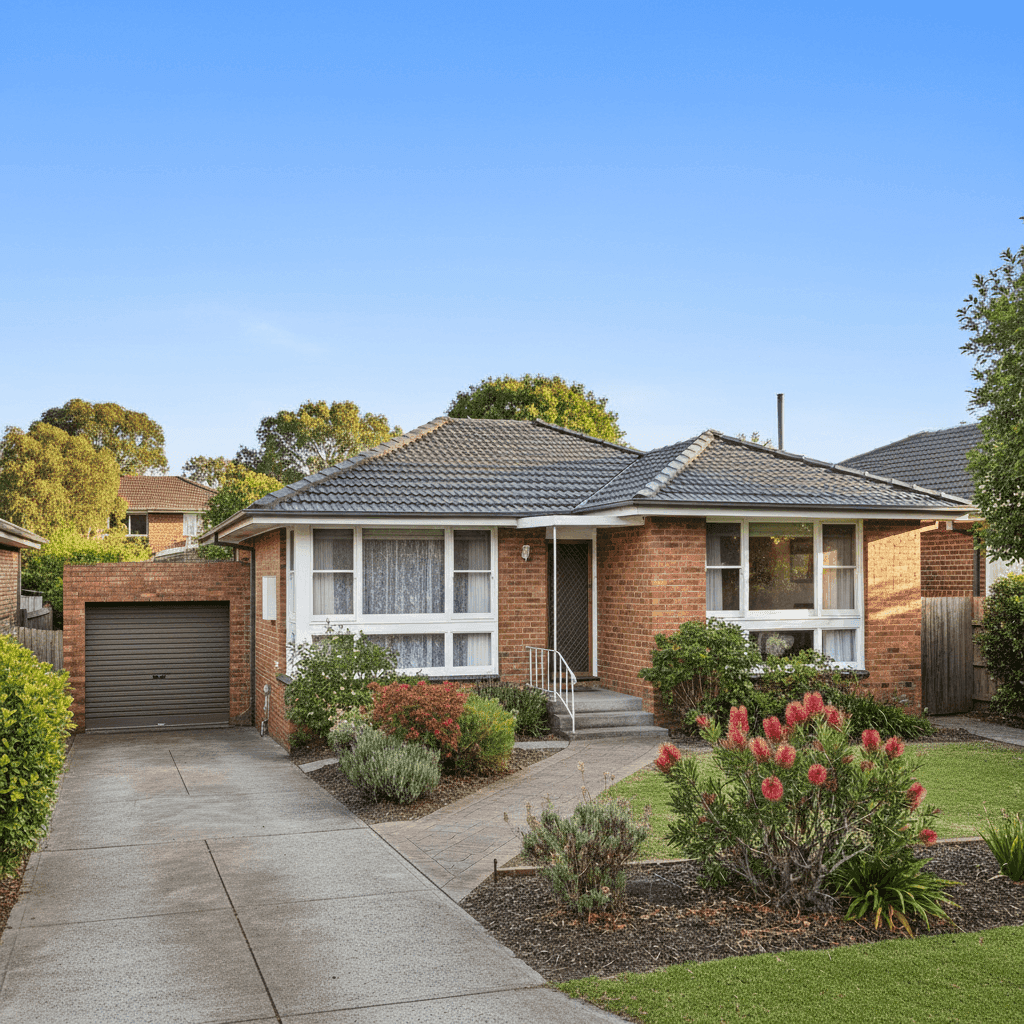
Bulleen is a well-established suburb in Melbourne's north-east, sitting within the City of Manningham and known for its leafy streets, proximity to the Yarra River, and a solid mix of post-war and mid-century housing stock. If you own a free-standing home here, understanding what you should be paying for building insurance — and why — can make a real difference to your household budget. This article breaks down a recent building-only quote for a 3-bedroom, brick veneer home in Bulleen, compares it against local, state, and national benchmarks, and offers practical tips for getting the best value on your cover.
---
Is This Quote Fair?
The quote in question comes in at $1,705 per year (or approximately $163 per month) for building-only cover, with a $1,000 building excess and a sum insured of $600,000.
Our price rating for this quote is FAIR — Around Average, and when you dig into the numbers, that assessment holds up well. The premium sits below both the suburb average ($2,110/yr) and the suburb median ($1,929/yr) for comparable properties in Bulleen, which is an encouraging sign. It also falls within the interquartile range for the area — between the 25th percentile of $1,618/yr and the 75th percentile of $2,625/yr — meaning it's solidly in the middle of the market rather than at either extreme.
In short, this isn't a bargain-basement quote, but it's not overpriced either. For a 1980s brick veneer home with above-average fittings in a desirable Melbourne suburb, paying $1,705 annually is a reasonable outcome. That said, "fair" doesn't necessarily mean you can't do better — more on that below.
---
How Bulleen Compares
One of the most useful ways to evaluate any insurance quote is to zoom out and look at the broader context. Here's how Bulleen stacks up:
| Benchmark | Premium |
|---|---|
| This quote | $1,705/yr |
| Bulleen suburb average | $2,110/yr |
| Bulleen suburb median | $1,929/yr |
| LGA (Manningham) average | $2,021/yr |
| VIC state average | $3,000/yr |
| VIC state median | $2,718/yr |
| National average | $5,347/yr |
| National median | $2,764/yr |
(Based on 28 quotes sampled for the Bulleen 3105 postcode.)
The figures tell an interesting story. At $1,705/yr, this quote is 19% below the Bulleen suburb average and 15% below the suburb median — a meaningful saving. Compared to the broader Manningham LGA average of $2,021/yr, it's also comfortably competitive.
When you look at the Victorian state average of $3,000/yr, the gap widens further. Bulleen homeowners generally benefit from lower premiums than many other parts of Victoria — particularly regional areas or suburbs with higher flood, bushfire, or storm risk. And compared to the national average of $5,347/yr, Melbourne's north-east looks like genuinely affordable territory for home insurance.
It's worth noting that national averages are heavily influenced by high-risk regions in Queensland, Western Australia, and parts of New South Wales, where cyclone, flood, and storm exposure can push premiums dramatically higher. Victoria, and Bulleen in particular, benefits from a relatively benign risk profile by comparison.
---
Property Features That Affect Your Premium
Every home is different, and insurers price policies based on a detailed assessment of the property's characteristics. Here's how the key features of this Bulleen home likely influence the premium:
Brick Veneer Walls Brick veneer is one of the most common external wall materials in Melbourne's suburban housing stock, and insurers generally view it favourably. It offers good fire resistance and structural durability, which can help keep premiums moderate compared to timber-clad or weatherboard homes.
Tiled Roof A tiled roof is similarly well-regarded by underwriters. Tiles are durable and long-lasting, though they can be susceptible to cracking under impact. Overall, a tiled roof is considered a lower-risk characteristic than some alternatives, such as older corrugated iron.
Stump Foundation Homes on stumps — common in Melbourne's older suburbs — can be a mixed factor. Stumps allow for some movement and ventilation underneath the home, but they may also require periodic maintenance or replacement. Insurers may factor this in, particularly for homes built in the 1980s where original timber stumps could be approaching the end of their useful life.
Timber / Laminate Flooring Timber and laminate floors are attractive and popular, but they can be more susceptible to water damage than tiles. This is worth keeping in mind when considering your sum insured and whether you have adequate cover for internal damage events.
Above-Average Fittings The quality of internal fittings — think kitchen appliances, bathroom fixtures, and built-in cabinetry — directly affects the cost to rebuild or repair. Above-average fittings mean higher-quality materials and finishes, which increases the rebuild cost and, consequently, the appropriate sum insured. The $600,000 sum insured on this policy reflects this.
Ducted Climate Control Ducted heating and cooling systems add value to a property but also add to the cost of reinstatement after a major loss event. This is appropriately captured in the building sum insured.
Construction Year: 1980 A home built in 1980 is now over 40 years old. While brick veneer construction from this era is generally solid, older homes may have outdated wiring, plumbing, or structural elements that can increase risk in the eyes of insurers. It's worth ensuring your policy covers the full cost of bringing the home up to current building codes in the event of a claim.
---
Tips for Homeowners in Bulleen
1. Review your sum insured regularly Construction costs have risen significantly across Australia in recent years. A sum insured that was appropriate two or three years ago may no longer cover the full cost of rebuilding your home. Use a building cost calculator or speak to a quantity surveyor to make sure your $600,000 figure still reflects current rebuild costs for a home of this size and quality in Bulleen.
2. Consider your excess carefully A $1,000 building excess is fairly standard, but increasing your excess is one of the most straightforward ways to reduce your annual premium. If you have the financial buffer to cover a higher out-of-pocket amount in the event of a claim, opting for a $2,000 or $2,500 excess could meaningfully lower what you pay each year.
3. Don't overlook stump maintenance If your home is on timber stumps, it's worth having them inspected periodically by a licensed builder. Insurers expect homeowners to maintain their property in good condition, and a claim arising from neglected stumps could be disputed. Proactive maintenance also protects the structural integrity of your home.
4. Compare quotes at renewal time Even if your current premium feels fair, the insurance market is competitive and premiums can vary significantly between providers for the same property. Rather than auto-renewing each year, take the time to compare multiple quotes. You may find a better rate without sacrificing the level of cover you need.
---
Ready to Compare?
Whether you're reviewing your current policy or shopping for cover for the first time, comparing quotes is the single most effective way to ensure you're not overpaying. At CoverClub, we make it easy to see how your premium stacks up and find a better deal. Get a home insurance quote today and see what's available for your Bulleen property — it only takes a few minutes, and the savings could be well worth it. You can also explore detailed Bulleen suburb insurance statistics to better understand the local market.