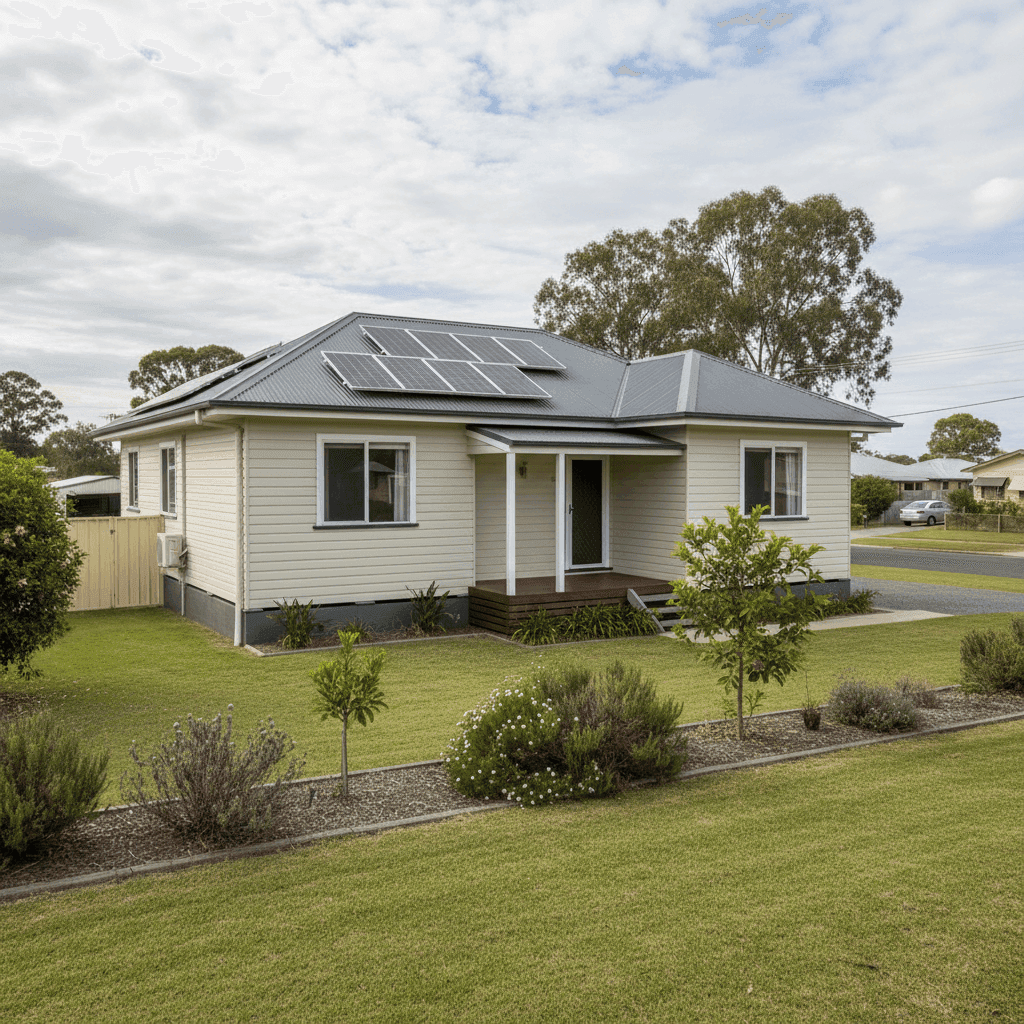
If you own a free standing home in Bundaberg North, QLD 4670, you'll know that home insurance premiums in regional Queensland can vary enormously — and not always in your favour. This article takes a close look at a real building insurance quote for a three-bedroom, two-bathroom weatherboard home in the suburb, compares it against local, state, and national benchmarks, and offers practical advice for homeowners looking to get better value on their cover.
---
Is This Quote Fair?
The quote in question sits at $10,872 per year (or $978/month) for building-only cover on a free standing home with a sum insured of $436,000 and a $5,000 building excess. Our pricing analysis rates this as EXPENSIVE — above average for the area.
To put that into perspective:
- The suburb average for Bundaberg North is $4,903/yr
- The suburb median is $4,520/yr
- The 75th percentile — meaning 75% of quotes in the area are cheaper — sits at $6,369/yr
At $10,872, this quote is more than double the suburb average and well above even the most expensive quarter of local quotes. That's a significant gap, and it suggests there may be specific risk factors at play — or simply that the insurer pricing this policy is not competitive for this type of property.
It's also worth noting that while the QLD state average premium is $9,129/yr (reflecting the elevated risk environment across the state), the state median is just $3,903/yr — a reminder that a small number of very high premiums can pull averages upward considerably. This quote exceeds even the state average, placing it firmly in the expensive tier by any measure.
---
How Bundaberg North Compares
Understanding the broader pricing landscape helps homeowners know where they stand. Here's a snapshot based on data from CoverClub's Bundaberg North insurance statistics:
| Benchmark | Annual Premium |
|---|---|
| This Quote | $10,872 |
| Bundaberg North Average | $4,903 |
| Bundaberg North Median | $4,520 |
| Bundaberg North 25th Percentile | $3,690 |
| Bundaberg North 75th Percentile | $6,369 |
| QLD State Average | $9,129 |
| QLD State Median | $3,903 |
| National Average | $5,347 |
| National Median | $2,764 |
Queensland as a whole tends to attract higher premiums than the national average, largely due to the state's exposure to severe weather events including flooding, storms, and hail. You can explore QLD-wide insurance data and national home insurance benchmarks to see how your own situation stacks up.
What stands out here is that even against the elevated QLD state average, this particular quote is still roughly 19% more expensive. That's a meaningful signal that shopping around could yield significant savings.
---
Property Features That Affect Your Premium
Several characteristics of this property are likely influencing the premium — some significantly.
Weatherboard Timber Construction
The external walls are weatherboard wood, which is one of the more risk-prone construction types from an insurer's perspective. Timber is more susceptible to fire, termite damage, and general wear compared to brick or rendered masonry. Homes built with timber weatherboard typically attract higher premiums, and many insurers apply loading to policies covering this wall type.
Age of Construction — 1960s Build
This home was built in 1960, making it over 60 years old. Older homes often have ageing electrical wiring, plumbing, and structural components that can increase the likelihood of a claim. Insurers factor in the cost of bringing a property up to current building codes following a loss event, which can substantially increase the sum insured required — and therefore the premium.
Steel / Colorbond Roof
On the positive side, a Colorbond steel roof is generally viewed favourably by insurers. It's durable, fire-resistant, and performs well in high-wind and storm conditions. This is one feature that likely helps moderate the premium somewhat.
Slab Foundation
A concrete slab foundation is considered low-risk by most insurers. Unlike homes on stumps or piers, slab foundations are less vulnerable to flooding ingress from below and structural movement, which can be a premium benefit.
Timber and Laminate Flooring
Timber and laminate flooring can be costly to repair or replace following water damage or flooding. While this is more relevant to contents cover, it can influence the overall risk profile of the property.
Solar Panels
The property has solar panels, which add to the overall replacement value of the home and may contribute modestly to the sum insured and premium. It's important to ensure your solar system is explicitly covered under your building policy.
Sum Insured — $436,000
At 139 sqm, the building sum insured of $436,000 equates to roughly $3,137 per square metre — which is on the higher end for a standard-quality fit-out. It's worth verifying this figure with a quantity surveyor or using an online building calculator to ensure you're not over-insured (which unnecessarily inflates premiums) or under-insured (which creates risk at claim time).
---
Tips for Homeowners in Bundaberg North
1. Compare Multiple Insurers — Seriously
This quote is priced well above the local median. The single most effective action you can take is to compare quotes from multiple insurers. Premiums for identical properties can vary by thousands of dollars annually depending on the insurer's risk appetite and pricing model for your postcode. Use CoverClub to compare quotes in minutes.
2. Review Your Sum Insured
Make sure your $436,000 sum insured accurately reflects the cost to rebuild — not the market value — of your home. Overestimating the rebuild cost means you're paying a higher premium than necessary. A professional building valuation or a reputable online calculator can help you land on the right figure.
3. Consider Your Excess Strategy
This quote carries a $5,000 building excess, which is relatively high. In many cases, opting for a higher excess is a deliberate strategy to reduce the annual premium. If your excess is already high and your premium is still expensive, it may indicate the insurer views the property as high-risk — another reason to shop around.
4. Ask About Discounts for Property Improvements
Some insurers offer reduced premiums if you can demonstrate that risk-reducing upgrades have been made to an older home — such as rewiring, re-plumbing, or installing monitored smoke alarms and security systems. Given the 1960s construction date, documenting any modernisation work could work in your favour when negotiating or comparing quotes.
---
Ready to Find a Better Deal?
If your current premium feels out of step with what other Bundaberg North homeowners are paying, it probably is. CoverClub makes it easy to compare building insurance quotes from multiple Australian insurers side by side — so you can see exactly what you're getting for your money. Start comparing home insurance quotes today and find out whether you could be paying significantly less for the same level of cover.