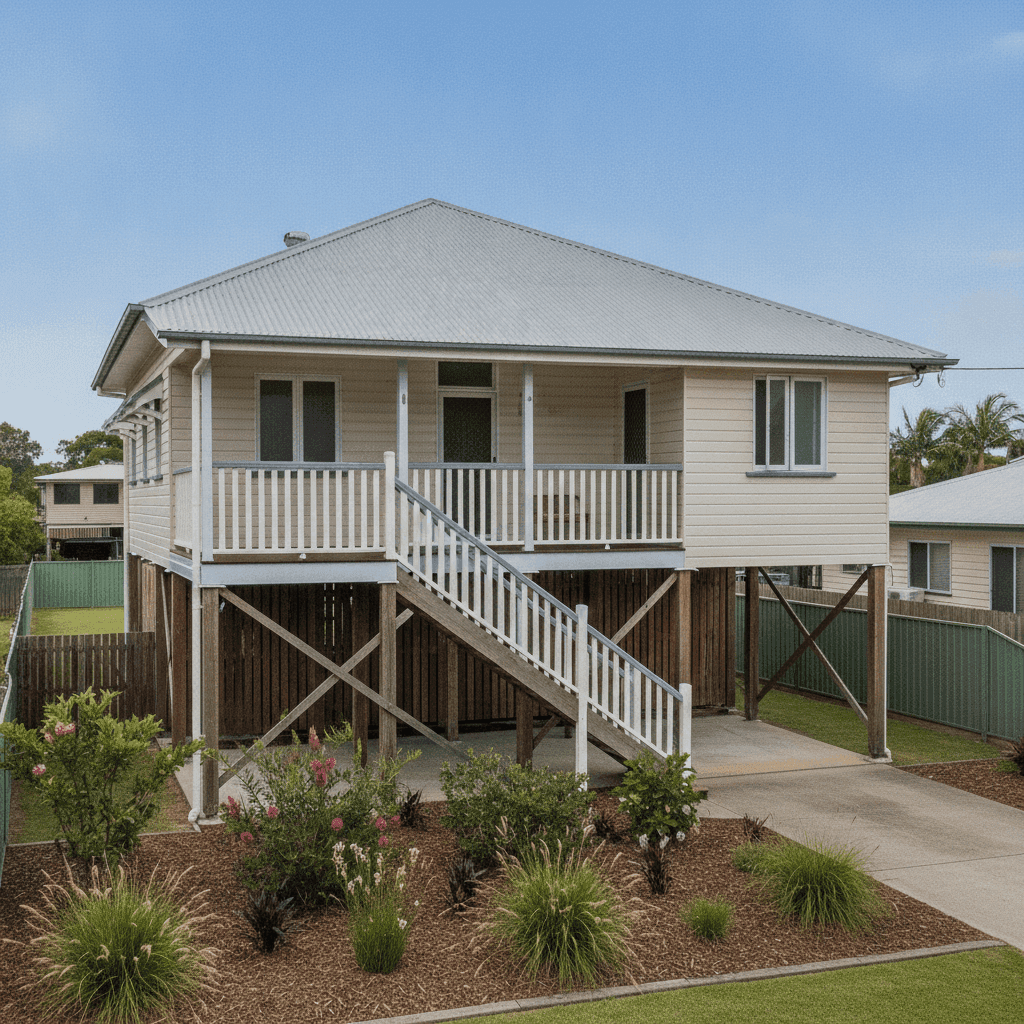
If you own a free standing home in Bundaberg North, QLD 4670, you already know that insuring an older Queensland property comes with its own set of considerations — from the construction style to the local weather. This article breaks down a real building insurance quote for a 3-bedroom, 1-bathroom weatherboard home in the suburb, helping you understand whether the premium stacks up and what factors are likely driving the cost.
---
Is This Quote Fair?
The quote in question comes in at $5,887 per year (or $557/month) for building-only cover, with a $1,000 building excess and a sum insured of $600,000. Our price rating for this quote is FAIR — around average.
That rating reflects where the premium sits relative to what others in the same suburb are paying. At $5,887, this quote lands comfortably within the middle range of the local market — above the suburb median of $4,520 but well below the 75th percentile of $6,369. In other words, roughly a quarter of comparable properties in Bundaberg North are paying more than this quote, while about half are paying less.
It's worth noting that "fair" doesn't necessarily mean "the best available." Insurance pricing varies significantly between providers, and the same property can attract very different premiums depending on the insurer's risk models, underwriting appetite, and the specific policy features included. A fair rating simply means this quote isn't an outlier in either direction — it's a reasonable starting point, but there may be room to do better.
---
How Bundaberg North Compares
Understanding where your suburb sits in the broader insurance landscape is useful context when evaluating any quote. Here's how Bundaberg North stacks up:
| Benchmark | Premium |
|---|---|
| This Quote | $5,887/yr |
| Suburb Average | $4,903/yr |
| Suburb Median | $4,520/yr |
| Suburb 25th Percentile | $3,690/yr |
| Suburb 75th Percentile | $6,369/yr |
| QLD State Average | $9,129/yr |
| QLD State Median | $3,903/yr |
| National Average | $5,347/yr |
| National Median | $2,764/yr |
(Based on 24 quotes collected for the Bundaberg North area. [View full suburb stats →](https://coverclub.com.au/stats/QLD/4670/bundaberg-north))
A few things stand out here. First, the QLD state average of $9,129 is dramatically higher than the Bundaberg North suburb average — a reflection of the extreme premiums paid in high-risk coastal and cyclone-prone parts of Queensland, which pull the state average upward. Bundaberg North is not classified as a cyclone risk area, which is a meaningful advantage for local homeowners.
Second, the national average of $5,347 is actually slightly below this quote, though the national median of $2,764 is considerably lower. The wide gap between national average and median is a well-known feature of Australian home insurance data — a relatively small number of very high-risk properties (think coastal North Queensland, flood-prone areas) inflate the average significantly. Bundaberg North's figures are more moderate by comparison.
You can explore QLD state insurance data and national home insurance benchmarks for further context.
---
Property Features That Affect Your Premium
Several characteristics of this property are directly relevant to how insurers price the risk. Understanding these can help you anticipate why your quote looks the way it does.
Weatherboard Construction (1960)
This home features weatherboard timber external walls, which are common in older Queensland homes but carry a higher fire and maintenance risk than brick or rendered masonry. Insurers typically apply a loading to weatherboard properties, particularly those built before modern building codes. A 1960 construction date means this home predates a number of structural and fire-safety standards, which can influence underwriting decisions.
Steel / Colorbond Roof
On the positive side, a Colorbond steel roof is generally viewed favourably by insurers. It's durable, resistant to ember attack, and less susceptible to storm damage than older tile or fibrous cement roofing. This may partially offset the loadings associated with the weatherboard walls.
Elevated on Poles
The property sits elevated by at least 1 metre on poles — a classic Queenslander-style foundation. Elevation can be a double-edged sword in insurance terms. It offers meaningful protection against surface flooding, which is a real consideration in parts of the Bundaberg region. However, the subfloor space and the structural complexity of pole foundations can also introduce additional risk factors that some insurers price carefully.
Timber / Laminate Flooring
Timber and laminate flooring in an elevated home can be vulnerable to moisture ingress from below, as well as damage from storms or flooding events. Insurers consider the replacement cost of these materials when assessing the sum insured.
Ducted Climate Control
The presence of ducted climate control adds to the replacement value of the home and is correctly factored into the sum insured. HVAC systems are expensive to replace and can be damaged in storm or flood events.
Sum Insured: $600,000
For a 214 sqm home in Bundaberg North, a sum insured of $600,000 represents a substantial rebuild cost — approximately $2,804 per sqm. This is on the higher end for a standard-finish home, though it may reflect the complexity of rebuilding an elevated, older-style weatherboard property, where labour and materials for heritage-adjacent construction can be costly.
---
Tips for Homeowners in Bundaberg North
1. Review Your Sum Insured Annually
Building costs in Queensland have risen sharply over recent years due to supply chain pressures and increased labour costs. Make sure your sum insured reflects current rebuild costs — not what you paid for the property or what it was insured for five years ago. Underinsurance is one of the most common and costly mistakes homeowners make.
2. Ask About Discounts for Safety Features
Some insurers offer premium reductions for properties with smoke alarms, deadbolts, security systems, or monitored alarms. If your home has any of these features, make sure they're disclosed when you get a quote — it can make a genuine difference.
3. Compare Multiple Quotes Before Renewing
With a "fair" price rating, this quote is reasonable — but the spread between the 25th percentile ($3,690) and 75th percentile ($6,369) in Bundaberg North shows that premiums vary considerably across providers for similar properties. Shopping around at renewal time is one of the most effective ways to manage your insurance costs.
4. Understand What's Included (and What's Not)
This policy covers the building only — contents are not included. If you have furniture, appliances, clothing, and other personal belongings you'd want covered in the event of a total loss, a separate contents policy (or a combined building and contents policy) is worth considering. Many homeowners underestimate how quickly contents replacement costs add up.
---
Compare Home Insurance Quotes in Bundaberg North
Whether you're reviewing your current policy or shopping for the first time, comparing quotes is the smartest way to make sure you're getting value for money. CoverClub makes it easy to see how your property's premium stacks up against the suburb, state, and national benchmarks — in seconds. Get a home insurance quote today →