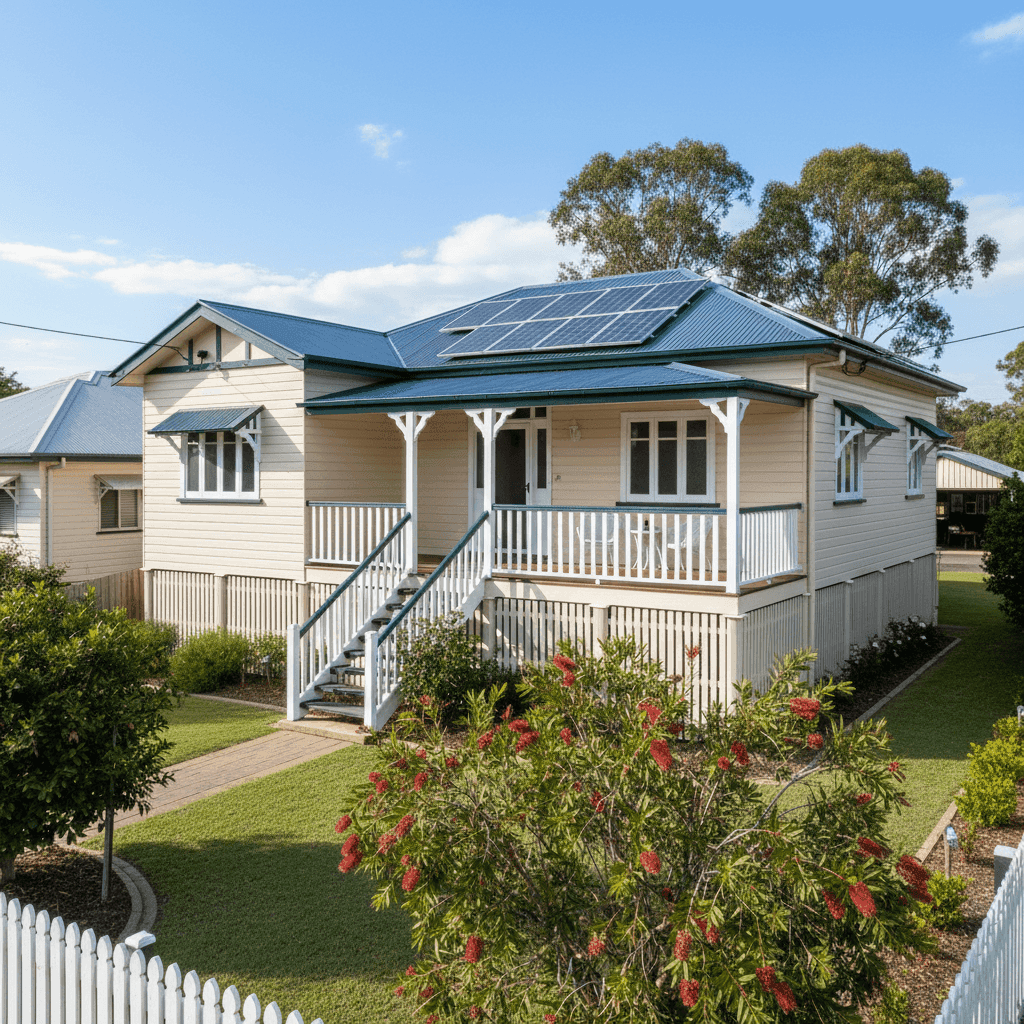
If you own a free standing home in Bundaberg North, QLD 4670, you've probably noticed that home insurance premiums can vary enormously — sometimes by thousands of dollars — depending on the insurer, the property's features, and how well your sum insured reflects today's rebuilding costs. This article breaks down a real home and contents insurance quote for a 3-bedroom, 1-bathroom weatherboard home in Bundaberg North, compares it against local, state, and national benchmarks, and offers practical tips to help you get the best value cover.
---
Is This Quote Fair?
The quote in question comes in at $5,453 per year (or $516/month) for combined home and contents cover, with a building sum insured of $595,000 and contents valued at $50,000. The building excess is $2,000 and the contents excess is $1,000.
Our price rating for this quote is FAIR — Around Average.
That assessment holds up well under scrutiny. The premium sits modestly above the Bundaberg North suburb average of $4,903/yr and the suburb median of $4,520/yr, but it falls comfortably within the middle of the local market range — the 25th percentile sits at $3,690/yr and the 75th percentile at $6,369/yr. In other words, roughly half of comparable quotes in this suburb land between those two figures, and this one sits squarely in that band.
It's also worth noting that the $595,000 building sum insured is a significant coverage level for a 130 sqm home built in 1900. Older homes — particularly those with character features like timber flooring and weatherboard cladding — can be considerably more expensive to rebuild per square metre than modern construction, so a higher sum insured is often entirely justified.
---
How Bundaberg North Compares
Understanding where your suburb sits relative to broader markets is one of the most useful tools a homeowner has when evaluating a quote.
| Benchmark | Average Premium | Median Premium |
|---|---|---|
| Bundaberg North (4670) | $4,903/yr | $4,520/yr |
| Queensland | $9,129/yr | $3,903/yr |
| National | $5,347/yr | $2,764/yr |
A few things stand out here. The Queensland state average of $9,129/yr is strikingly high — a reflection of the significant number of high-risk properties across the state, particularly in cyclone-prone coastal and far-north regions. That figure is heavily skewed by extreme premiums in those areas, which is why the QLD median of $3,903/yr tells a more grounded story for most homeowners.
Bundaberg North's suburb average of $4,903/yr sits above the Queensland median but well below the state average, suggesting it's a moderately priced market without the extreme risk loadings seen further north. Compared to the national average of $5,347/yr, Bundaberg North is actually slightly cheaper on average — a reassuring sign for local homeowners.
With a sample of 24 quotes from this suburb, the data is reasonably representative, though it's always worth shopping around to find where your specific property lands within that range.
---
Property Features That Affect Your Premium
Every home tells its own risk story, and insurers price accordingly. Here are the key features of this property and how they're likely influencing the premium:
Age of Construction (1900) A home built at the turn of the 20th century is over 120 years old. While these homes often have tremendous character, they also present higher risk from an insurer's perspective — older wiring, plumbing, and structural materials can increase the likelihood of certain claims. Rebuilding a heritage-era home to its original standard is also typically more expensive than rebuilding a modern equivalent.
Weatherboard Timber Walls Weatherboard is a classic Queensland construction material, but timber is more susceptible to fire, rot, and termite damage than brick or rendered masonry. Insurers factor this in, and it can push premiums higher compared to brick veneer or double-brick homes.
Stump Foundation Homes on stumps (also known as raised or high-set homes) are common in Queensland and can actually offer some flood resilience depending on stump height. However, they also introduce risks around subfloor access, timber decay, and structural movement that insurers consider.
Steel/Colorbond Roof This is a positive from an insurer's standpoint. Colorbond roofing is durable, fire-resistant, and performs well in high-wind events. It's one of the most insurer-friendly roof types available and likely helps moderate the premium.
Solar Panels Solar panels add replacement value to the home and can complicate roof repairs after storm or hail damage. Most insurers cover solar panels as part of the building, but it's worth confirming this is explicitly included in your policy — and that your sum insured accounts for their replacement cost.
Ducted Climate Control Ducted air conditioning is a valuable fixed asset that forms part of the building sum insured. At current installation prices, a full ducted system can cost $10,000–$20,000+ to replace, so ensuring your building sum insured reflects this is important.
No Pool, No Cyclone Risk Zone The absence of a pool removes a common liability and maintenance risk factor. And while Bundaberg does experience severe weather events, the property is not classified in a designated cyclone risk area — a meaningful premium advantage compared to properties further up the Queensland coast.
---
Tips for Homeowners in Bundaberg North
1. Review your sum insured regularly Building costs have risen sharply in recent years. For a home of this age and construction type, it's easy to underestimate the true cost of a full rebuild — including demolition, site preparation, and the premium cost of sourcing period-appropriate materials. Consider using an independent building estimator or your insurer's calculator to validate your $595,000 figure annually.
2. Confirm solar panels are explicitly covered Not all policies treat solar panels the same way. Check your Product Disclosure Statement (PDS) to confirm whether panels are covered under the building section, whether storm and hail damage is included, and whether the sum insured is sufficient to cover their full replacement value.
3. Ask about discounts for security and safety upgrades Installing smoke alarms (beyond the legal minimum), deadbolts, or monitored security systems can attract discounts with some insurers. For an older home, these upgrades also genuinely reduce risk — a win both for your safety and your wallet.
4. Compare quotes before renewal The insurance market in Bundaberg North has a wide spread — from $3,690/yr at the 25th percentile to $6,369/yr at the 75th percentile. That's nearly a $2,700 gap for what may be very similar cover. Loyalty doesn't always pay in insurance; comparing at renewal is one of the simplest ways to avoid overpaying.
---
Ready to Compare?
Whether you're reviewing your current policy or shopping for cover for the first time, comparing quotes is the single most effective way to ensure you're getting fair value. Get a home insurance quote at CoverClub and see how your premium stacks up against the Bundaberg North market in minutes.