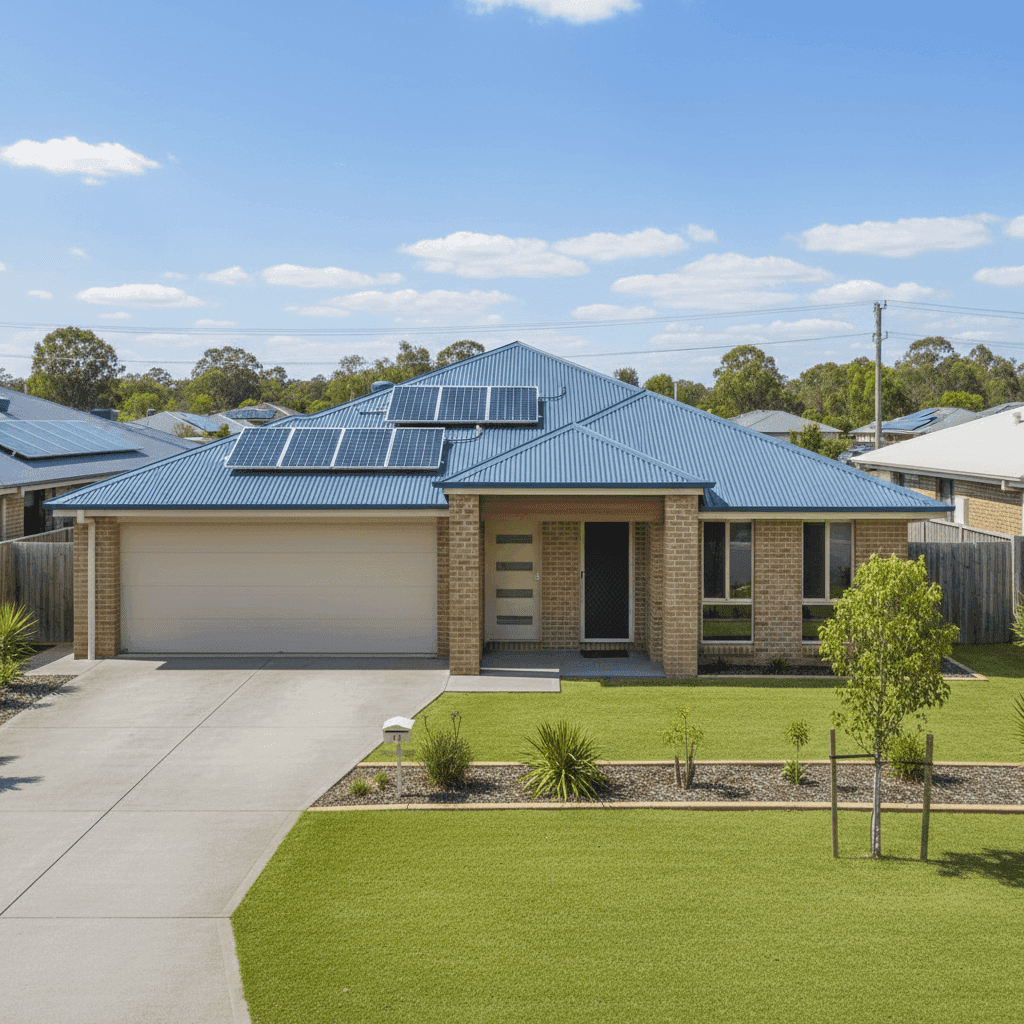
Bundaberg North is a well-established residential suburb in Queensland's Wide Bay region, and like much of regional QLD, home insurance here comes with its own set of pricing dynamics. This article takes a close look at a real home and contents insurance quote for a five-bedroom, free-standing home in Bundaberg North (postcode 4670) — breaking down whether the price stacks up, what's driving the premium, and what local homeowners can do to keep costs in check.
---
Is This Quote Fair?
The quote in question comes in at $5,439 per year (or $514/month) for combined home and contents cover, with a building sum insured of $1,452,000 and contents valued at $50,000. The building excess is set at $2,000, and the contents excess at $1,000.
Our price rating for this quote is FAIR — Around Average, and when you look at the numbers in context, that assessment holds up well.
The suburb average premium for Bundaberg North sits at $4,903/year, with a median of $4,520/year. This quote lands above both of those figures, but it's worth noting that the property is a large 325 sqm home with above-average fittings and a high building sum insured of $1.45 million — factors that naturally push premiums upward. It falls comfortably within the suburb's interquartile range of $3,690 to $6,369/year, meaning it's firmly in the middle of the pack for this area.
Compared to the broader Queensland average of $9,129/year, this quote looks quite reasonable. The state average is heavily skewed by high-risk coastal and cyclone-prone areas in Far North Queensland, which inflates the mean significantly — the QLD median of $3,903/year is a more representative benchmark, and this quote is modestly above that. Against the national average of $5,347/year, the quote is nearly identical, sitting just $92 above the country-wide figure.
All things considered, this is a reasonable premium for a large, well-appointed property in Bundaberg North.
---
How Bundaberg North Compares
Understanding where your suburb sits relative to state and national benchmarks is a useful exercise for any homeowner. Here's how the data shapes up:
| Benchmark | Average Premium | Median Premium |
|---|---|---|
| Bundaberg North (4670) | $4,903/yr | $4,520/yr |
| Queensland | $9,129/yr | $3,903/yr |
| National | $5,347/yr | $2,764/yr |
(Based on a sample of 24 quotes in the Bundaberg North suburb.)
The wide gap between Queensland's average and median premiums tells an important story: a relatively small number of very high-risk properties (particularly in cyclone-exposed coastal areas) are dragging the state average well above what most QLD homeowners actually pay. Bundaberg North, while in Queensland, is not classified as a cyclone risk area, which is a meaningful advantage when it comes to pricing.
Compared to the national median of $2,764/year, premiums in Bundaberg North are noticeably higher — reflecting the elevated weather and environmental risks that come with living in regional Queensland more broadly.
You can explore localised pricing data on the Bundaberg North suburb stats page, compare it against all of Queensland, or see how it measures up against national home insurance trends.
---
Property Features That Affect Your Premium
Several characteristics of this particular property have a direct influence on what insurers charge. Understanding them can help you make sense of your quote — and potentially identify opportunities to adjust your cover.
Size and sum insured At 325 sqm with a building sum insured of $1,452,000, this is a large home with a high replacement value. Insurers price building cover based on what it would cost to fully rebuild the property, so a larger, higher-quality home will always attract a higher premium. It's essential that the sum insured reflects true rebuild costs — underinsurance is a common and costly mistake.
Brick veneer construction Brick veneer external walls are generally viewed favourably by insurers. They offer solid fire resistance and durability, which can help moderate premiums compared to lighter construction materials like weatherboard or fibre cement.
Steel/Colorbond roof A Colorbond steel roof is another positive from an insurer's perspective. It's durable, low-maintenance, and performs well in storms and high winds — all of which reduce the likelihood of a claim.
Stump foundation The property sits on stumps, which is common for older Queensland homes built before slab-on-ground became standard. Stumped foundations can be more vulnerable to movement and pest damage over time, and some insurers factor this into their risk assessment.
Timber/laminate flooring Timber and laminate floors can be more susceptible to water damage than tiles, which may slightly increase the contents or building component of a claim. It's worth ensuring your policy adequately covers floor replacement.
Solar panels The presence of solar panels adds value to the property and increases the cost of replacement in the event of damage. Many policies cover solar panels as part of the building, but it's worth confirming this with your insurer — and ensuring the sum insured accounts for their value.
Ducted climate control Ducted air conditioning systems are a significant fixture and can be expensive to repair or replace. Like solar panels, they should be factored into your building sum insured to avoid a shortfall at claim time.
Above-average fittings Above-average quality fittings — think stone benchtops, quality cabinetry, premium tapware — increase the cost to reinstate a home to its original standard. This is appropriately reflected in a higher sum insured and, consequently, a higher premium.
---
Tips for Homeowners in Bundaberg North
Whether you're reviewing an existing policy or shopping for new cover, here are four practical steps to make sure you're getting the best value.
1. Review your sum insured regularly Building costs in regional Queensland have risen sharply in recent years. If your sum insured hasn't been updated to reflect current construction costs, you could be significantly underinsured. Use an independent building cost calculator or speak with a local builder to get a realistic rebuild estimate — especially for a large home like this one.
2. Check that solar panels and ducted systems are covered These are high-value items that are sometimes overlooked in policy reviews. Confirm with your insurer that both your solar panel system and ducted climate control are included in your building cover, and that the sum insured is sufficient to replace them at today's prices.
3. Compare quotes before renewing Loyalty doesn't always pay in insurance. Premiums can vary significantly between providers for the same property, and the market changes year to year. Use a comparison tool like CoverClub to see what other insurers are offering before you automatically renew.
4. Consider a higher excess to reduce your premium If you have a financial buffer and are unlikely to make small claims, opting for a higher excess can meaningfully reduce your annual premium. This is a straightforward lever that many homeowners overlook.
---
Ready to Compare?
If you own a home in Bundaberg North and want to see how your current premium stacks up, CoverClub makes it easy. Enter your address at coverclub.com.au to get a personalised quote comparison and see where your policy sits relative to your suburb, state, and national benchmarks. A few minutes could save you hundreds of dollars a year.