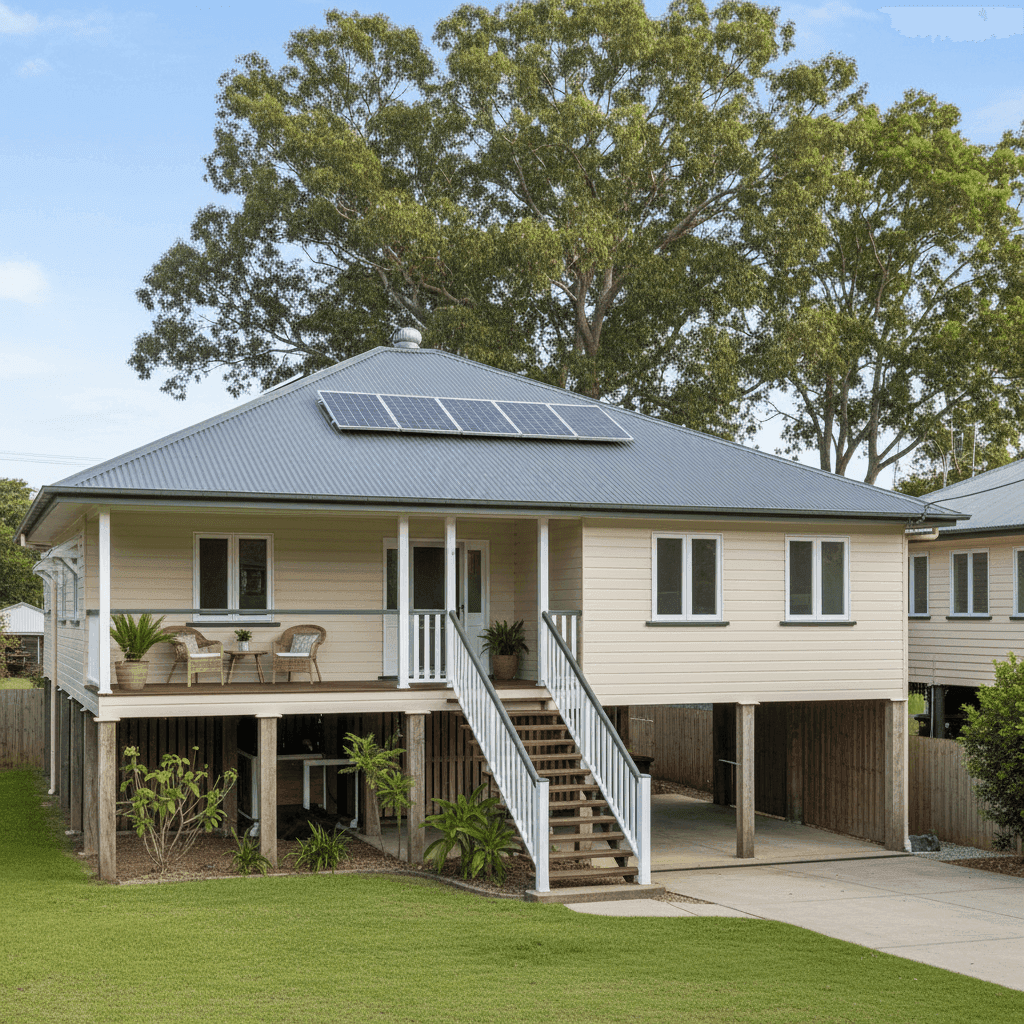
If you own a free standing home in Bundaberg South, QLD 4670, you've probably noticed that home insurance premiums in regional Queensland can vary enormously — and not always in ways that are easy to explain. This article breaks down a real building insurance quote for a 3-bedroom, 1-bathroom weatherboard home in the suburb, compares it against local, state, and national benchmarks, and offers practical advice for homeowners looking to get the best value on their cover.
---
Is This Quote Fair?
The quote in question comes in at $3,061 per year (or $287/month) for building-only cover on a home insured for $338,000, with a $1,000 building excess. Our price rating for this quote is FAIR — Around Average.
That assessment holds up well under scrutiny. At $3,061, this premium sits just below the suburb median of $3,218/yr, meaning roughly half of comparable quotes in Bundaberg South are actually more expensive. It's also meaningfully below the suburb's average premium of $8,400/yr — a figure that is heavily skewed upward by some very high-end quotes at the top of the market (the 75th percentile sits at a steep $11,571/yr).
In short: this homeowner is paying less than the typical Bundaberg South policyholder, which is a solid outcome given the property's age, construction type, and location.
---
How Bundaberg South Compares
Understanding where your premium sits relative to broader benchmarks is one of the most useful things you can do as a homeowner. Here's how this quote stacks up:
| Benchmark | Premium |
|---|---|
| This Quote | $3,061/yr |
| Bundaberg South Median | $3,218/yr |
| Bundaberg South Average | $8,400/yr |
| QLD State Median | $3,931/yr |
| QLD State Average | $4,547/yr |
| National Median | $2,716/yr |
| National Average | $2,965/yr |
A few things stand out from this comparison. First, premiums in Bundaberg South — and Queensland more broadly — run significantly higher than the national average. The QLD state average of $4,547/yr is more than 53% above the national average of $2,965/yr, reflecting the elevated risk profile that comes with insuring properties in a state prone to flooding, storms, and cyclone-adjacent weather events.
Second, the wide spread between Bundaberg South's 25th percentile ($2,315/yr) and 75th percentile ($11,571/yr) tells you that property characteristics matter enormously here. A well-elevated, well-maintained home can attract a very different premium to an older, flood-exposed property just a few streets away. It's worth noting that the suburb sample size of 17 quotes means these figures should be treated as indicative rather than definitive — but the trend is clear.
For more localised data, you can explore the Bundaberg South insurance stats page on CoverClub.
---
Property Features That Affect Your Premium
Every property tells a story to an insurer, and this one has several features worth unpacking.
Age and construction (1964, weatherboard) Built in 1964, this home is over 60 years old. Older homes can attract higher premiums due to the cost of sourcing period-appropriate materials and the potential for ageing electrical, plumbing, or structural systems. Weatherboard timber walls are also considered a higher fire risk than brick or Colorbond cladding, which some insurers price accordingly.
Elevated on stumps This is one of the most premium-friendly features of this property. Being elevated by at least one metre on stumps — a classic Queensland construction style — significantly reduces flood and inundation risk. Insurers recognise this, and it's likely one of the key reasons this quote sits below the suburb median despite the home's age and timber construction.
Steel/Colorbond roof A Colorbond roof is generally viewed favourably by insurers. It's durable, resistant to corrosion, and performs well in high-wind conditions compared to older tile or corrugated iron alternatives. This works in the homeowner's favour at premium time.
Solar panels The presence of solar panels adds a modest layer of complexity to a building insurance policy. Panels need to be covered for storm damage, hail, and fire, and their replacement cost should be factored into the sum insured. At $338,000, it's worth confirming that the building sum insured adequately accounts for the cost of replacing the solar system.
Timber/laminate flooring Timber floors can be expensive to repair or replace, particularly in older homes where matching period floorboards may be difficult. This is a factor worth considering when reviewing whether your sum insured is adequate.
No pool, no ducted climate control The absence of a pool and ducted air conditioning keeps this policy relatively straightforward and helps contain the premium.
---
Tips for Homeowners in Bundaberg South
1. Review your sum insured annually Construction costs in regional Queensland have risen sharply in recent years. A sum insured of $338,000 for a 130 sqm home works out to roughly $2,600/sqm — which is within a reasonable range, but worth stress-testing against a current building cost calculator. Being underinsured at claim time can be a costly mistake.
2. Document your solar panels separately Confirm with your insurer that your solar panel system is explicitly covered under your building policy and that the replacement value is included in your sum insured. Some policies cover panels as standard; others treat them as an optional add-on.
3. Shop around — the spread is wide The gap between the 25th and 75th percentile premiums in Bundaberg South is enormous. That means shopping around genuinely pays off here. Don't assume your renewal quote is competitive just because it hasn't changed much year-on-year.
4. Consider your excess strategically A $1,000 building excess is fairly standard. If you're comfortable with a higher out-of-pocket cost in the event of a claim, opting for a higher excess (say, $2,500 or $5,000) can meaningfully reduce your annual premium — particularly useful if your primary concern is major events rather than minor repairs.
---
Compare Your Home Insurance Quote Today
Whether you're reviewing your current policy or shopping for cover on a new property, CoverClub makes it easy to see how your premium stacks up. Get a home insurance quote in minutes and compare it against real suburb, state, and national data — so you always know if you're getting a fair deal.