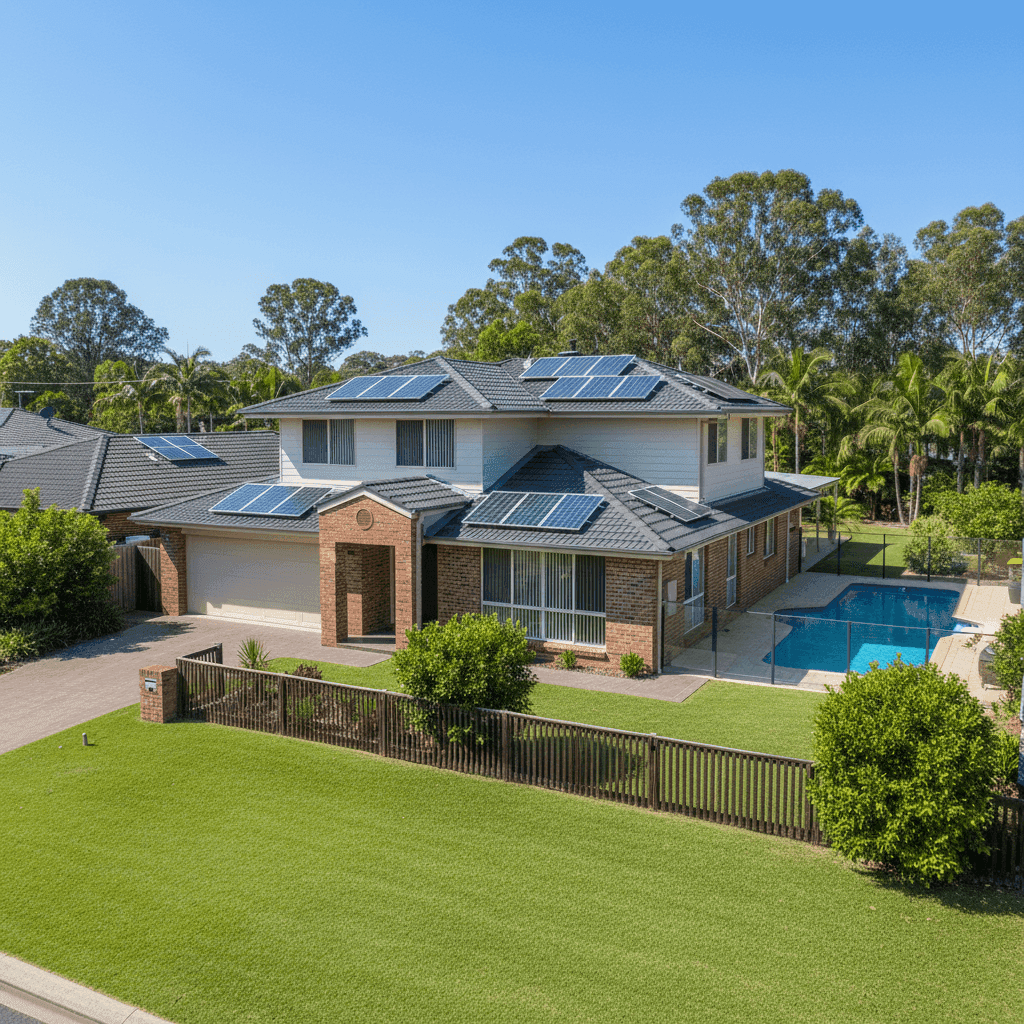
If you own a free standing home in Bundall, QLD 4217, you already know you're sitting in one of the Gold Coast's most desirable pockets — close to Surfers Paradise, the Nerang River, and all the lifestyle perks that come with it. But lifestyle comes with a cost, and home insurance is one of them. This article breaks down a real home and contents insurance quote for a three-bedroom, two-bathroom brick veneer home in Bundall, and puts it into context against local, state, and national benchmarks so you can judge whether you're getting a fair deal.
---
Is This Quote Fair?
The quote in question comes in at $2,108 per year (or roughly $202 per month) for combined home and contents cover, with a building sum insured of $531,000 and contents valued at $50,000. Both the building and contents excess are set at $1,000.
Our pricing engine rates this quote as CHEAP — below average for the area. That's genuinely good news for the homeowner. At more than $1,500 below the suburb average of $3,671 per year, this policy is sitting comfortably below the 25th percentile for Bundall ($2,405/yr), meaning fewer than one in four quotes in this postcode come in this low.
To put it plainly: if you received this quote, you'd be paying significantly less than most of your neighbours for comparable cover. Whether that's the result of a competitive insurer, a favourable risk profile, or a combination of both, it represents solid value worth holding onto — or at least using as a benchmark when shopping around.
---
How Bundall Compares
Home insurance pricing in Queensland can vary enormously depending on where you live, and the numbers here illustrate that clearly. Here's how the Bundall quote stacks up across different geographies:
| Benchmark | Premium |
|---|---|
| This Quote | $2,108/yr |
| Bundall Suburb Average | $3,671/yr |
| Bundall Suburb Median | $3,402/yr |
| Bundall 25th Percentile | $2,405/yr |
| Gold Coast LGA Average | $8,161/yr |
| QLD State Average | $9,129/yr |
| QLD State Median | $3,903/yr |
| National Average | $5,347/yr |
| National Median | $2,764/yr |
A few things stand out here. The Gold Coast LGA average of $8,161/yr and the Queensland state average of $9,129/yr are both dramatically higher than what's on offer in this quote — a reminder that postcode-level data tells a very different story to state-wide figures. Queensland's insurance market is heavily influenced by high-risk coastal and cyclone-prone areas further north, which drags the state average up considerably.
Bundall itself sits in a relatively favourable position. Its suburb median of $3,402/yr is well below both the QLD and national averages, which reflects its non-cyclone-rated status and established suburban character. You can explore more local pricing data on the Bundall suburb stats page, compare it against the QLD state overview, or check out national home insurance benchmarks for broader context.
Note: The Bundall sample size used here is 11 quotes, so while directionally useful, the suburb averages should be interpreted with some caution.
---
Property Features That Affect Your Premium
Every property tells its own risk story, and this home has a number of characteristics that insurers weigh carefully when calculating your premium.
Brick Veneer Walls & Tiled Roof Brick veneer construction is generally viewed favourably by insurers. It offers solid fire resistance and reasonable structural durability. Combined with a tiled roof — another material that performs well in fire risk assessments — this home presents a lower-risk profile compared to, say, a weatherboard home with a corrugated iron roof.
Slab Foundation A concrete slab foundation is a stable base that reduces concerns around subsidence or pest-related structural damage, both of which can influence premiums. It's a neutral-to-positive factor for most insurers.
Timber and Laminate Flooring While attractive, timber and laminate flooring can be more expensive to repair or replace after water damage events compared to tiles. This may be a minor factor in contents or building assessments, particularly given Queensland's storm season.
Construction Year: 1976 At nearly 50 years old, this home is in the bracket where insurers may consider the age of plumbing, electrical wiring, and roofing materials. Older homes can carry slightly higher risk of water damage or electrical faults, though a well-maintained property can mitigate this significantly.
Swimming Pool A pool adds both value and liability. Insurers typically factor in the cost of pool fencing compliance, equipment replacement, and potential liability claims. It's worth confirming your policy covers pool-related structures and equipment.
Solar Panels Solar panels are increasingly common on Australian rooftops, but they're not always automatically covered under standard home insurance. Confirm with your insurer whether your panels are included in the building sum insured, particularly for storm or hail damage — both real possibilities on the Gold Coast.
Ducted Climate Control Ducted air conditioning systems are a significant fixed asset. At replacement costs of $10,000–$25,000 or more, it's worth verifying this is captured within your building sum insured of $531,000.
No Cyclone Risk This is a meaningful advantage. Bundall sits outside Queensland's designated cyclone risk zones, which is a key reason premiums here are far more manageable than in areas like Cairns or Townsville. This factor alone can account for thousands of dollars in annual premium savings.
---
Tips for Homeowners in Bundall
1. Review your building sum insured regularly Construction costs have risen sharply in recent years. A sum insured of $531,000 for 139 sqm works out to roughly $3,820/sqm — which is broadly in line with current rebuild costs for a standard finish in South East Queensland, but worth reviewing annually as costs continue to shift.
2. Check your solar panels and pool equipment are covered These are easy items to overlook. Ask your insurer specifically whether solar panels are included in the building definition, and whether pool pumps, filters, and fencing are covered under your policy.
3. Don't let a cheap quote become a set-and-forget policy A below-average premium is great, but make sure the cover itself is adequate. Review the Product Disclosure Statement (PDS) to confirm inclusions, exclusions, and any sub-limits on contents items like jewellery, electronics, or portable valuables.
4. Use your competitive quote as leverage If your current insurer isn't offering you a rate close to this, it's worth shopping around at renewal time. Loyalty doesn't always pay in insurance — new customer pricing is often more competitive.
---
Compare Your Own Quote at CoverClub
Whether you're a first-time buyer or a long-time Bundall resident, understanding how your premium stacks up against the market is one of the smartest things you can do at renewal time. CoverClub makes it easy to see real pricing data for your suburb and get quotes tailored to your property. Start comparing home insurance quotes today and make sure you're not paying more than you need to.