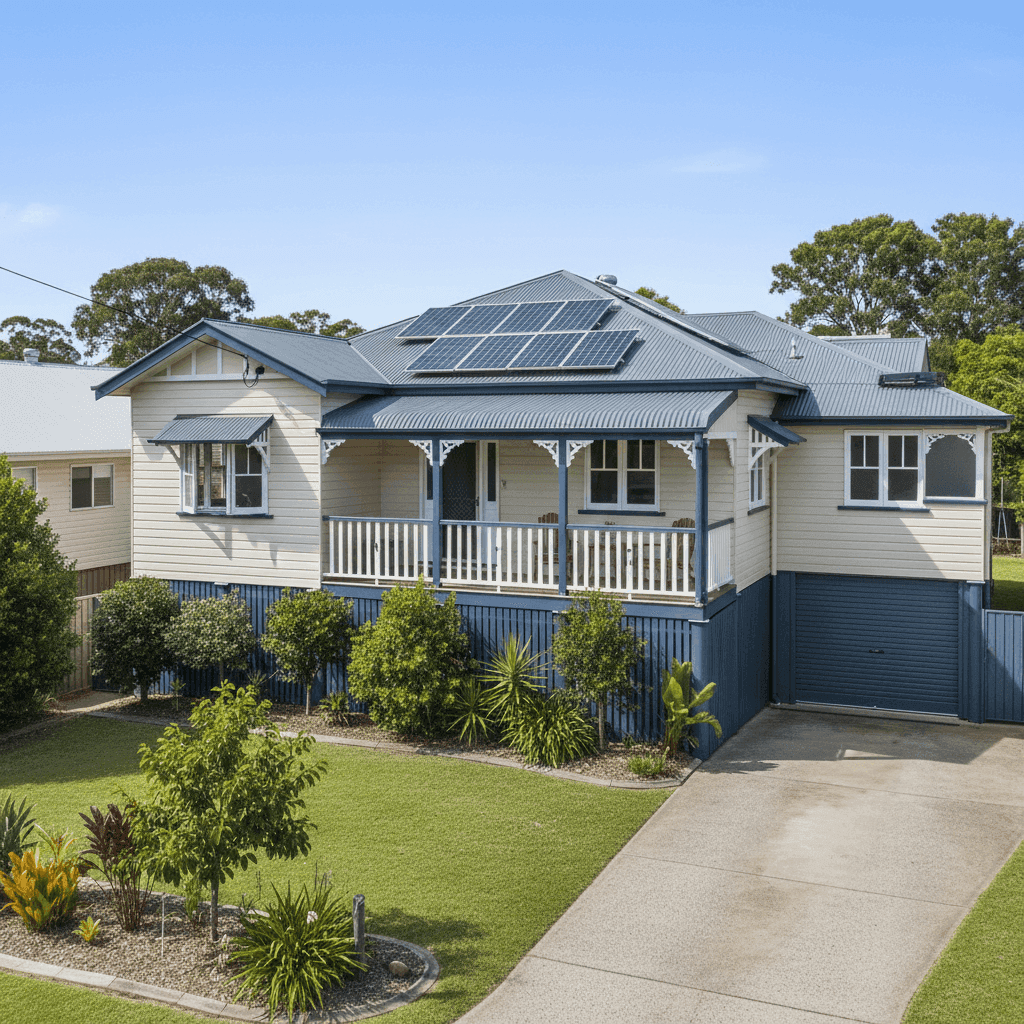
If you own a free standing home in Bundamba, QLD 4304, you already know that insurance isn't cheap in South-East Queensland. But how do you know whether the quote sitting in your inbox is genuinely competitive — or whether you're paying far more than you should be? In this article we break down a real home and contents insurance quote for a three-bedroom weatherboard property in Bundamba, compare it against suburb, state and national benchmarks, and share practical tips to help you get a fairer deal.
---
Is This Quote Fair?
The quote in question comes in at $32,822 per year (or $3,225 per month) for combined home and contents cover, with a building sum insured of $400,000 and contents valued at $100,000. The building excess is $3,000 and the contents excess is $2,000.
Our price rating for this quote is EXPENSIVE — Above Average.
To put that in perspective, the average home and contents premium across Bundamba sits at just $2,861 per year, with a median of $2,180. That means this quote is more than 11 times the suburb median — a staggering difference that warrants a closer look.
Even against the broader Queensland average of $4,547 per year, this quote is roughly seven times higher. Nationally, the average premium is $2,965, meaning this property is being quoted at more than ten times the national average.
There are a handful of legitimate reasons a premium can climb well above the norm — age of construction, building materials, high sum insured, and localised flood or storm risk all play a role. But a gap of this magnitude is a strong signal that shopping around is not just advisable — it's essential.
---
How Bundamba Compares
Understanding where Bundamba sits in the broader insurance landscape helps put any individual quote in context. Based on data from 56 quotes collected for postcode 4304:
| Benchmark | Annual Premium |
|---|---|
| Suburb average (Bundamba) | $2,861 |
| Suburb median (Bundamba) | $2,180 |
| Suburb 25th percentile | $1,810 |
| Suburb 75th percentile | $3,614 |
| LGA average (Ipswich) | $3,034 |
| QLD state average | $4,547 |
| QLD state median | $3,931 |
| National average | $2,965 |
| National median | $2,716 |
Interestingly, Bundamba's suburb average of $2,861 is actually below the national average of $2,965, which is somewhat surprising given that Queensland as a whole tends to attract higher premiums due to severe weather exposure. The QLD state average of $4,547 is significantly above the national figure, reflecting the elevated risk profile of many Queensland postcodes — from cyclone-prone coastal areas to flood-affected inland suburbs.
Bundamba itself sits within the Ipswich LGA, which has a well-documented history of flooding, particularly along the Bremer River corridor. Even though this specific property may not be in a high-flood-risk zone, insurers often price entire postcodes more conservatively when the broader area carries flood exposure.
---
Property Features That Affect Your Premium
Several characteristics of this property are likely influencing the premium — some pushing it higher, others that might otherwise bring it down.
Age and Construction (1972, Weatherboard)
Built in 1972, this home is over 50 years old. Older homes tend to attract higher premiums because ageing materials, outdated wiring, and older plumbing systems increase the likelihood and cost of a claim. Weatherboard timber walls, while charming and common in Queensland's older housing stock, are considered a higher fire risk than brick or rendered masonry, and can be more susceptible to storm and impact damage. Insurers price this material accordingly.
Steel / Colorbond Roof
On the positive side, a Colorbond steel roof is generally viewed favourably by insurers. It's durable, wind-resistant, and performs well in hail events compared to terracotta or concrete tiles. This may provide a modest offset against some of the other risk factors.
Slab Foundation
A concrete slab foundation is typically considered lower risk than a raised or timber subfloor, as it reduces the chance of subfloor moisture damage and pest intrusion. This is a neutral-to-positive factor for most insurers.
Timber / Laminate Flooring
Timber and laminate floors can be costly to replace or repair after a water damage event, which may push contents and building claim costs higher. This is worth keeping in mind when setting your sum insured.
Solar Panels
The presence of solar panels adds replacement value to the building and introduces some additional risk (electrical faults, storm damage to panels). Most insurers cover solar panels under building insurance, but it's worth confirming your policy explicitly includes them — and that the $400,000 sum insured accounts for their replacement cost.
High Sum Insured
A building sum insured of $400,000 for a 160 sqm home works out to $2,500 per square metre — on the higher end for standard construction, though not unreasonable for a full rebuild including demolition, site costs, and current material and labour prices in South-East Queensland. It's worth getting an independent building valuation to ensure this figure is accurate rather than over-inflated.
---
Tips for Homeowners in Bundamba
1. Get Multiple Quotes — Every Year
The single most effective thing you can do is compare. Insurance premiums vary enormously between providers, even for identical properties. A quote that was competitive two years ago may no longer be. Use a comparison tool like CoverClub to benchmark your options quickly.
2. Review Your Sum Insured Carefully
Over-insurance is more common than people realise. If your building sum insured is higher than the actual cost to rebuild your home (not its market value), you're paying premiums on coverage you don't need. Consider commissioning a professional building replacement cost assessment.
3. Ask About Flood Exclusions and Inclusions
Given Bundamba's location within the Ipswich LGA, it's critical to understand exactly what flood cover your policy includes — and what it excludes. Some policies distinguish between riverine flooding and storm surge; others exclude flood altogether unless you pay an additional premium. Read the Product Disclosure Statement (PDS) carefully.
4. Increase Your Excess to Reduce Your Premium
If you have a financial buffer and are unlikely to make small claims, opting for a higher voluntary excess can meaningfully reduce your annual premium. With excesses already set at $3,000 (building) and $2,000 (contents), this strategy may have limited additional upside here — but it's worth modelling with your insurer.
---
Compare Your Options with CoverClub
A premium of $32,822 per year is a significant household expense, and there's no reason to accept the first quote you receive. Whether you're insuring a weatherboard classic in Bundamba or a newer build elsewhere in Queensland, CoverClub makes it easy to see how your quote stacks up and find a better deal. Start comparing home insurance quotes today — it takes just a few minutes and could save you thousands.