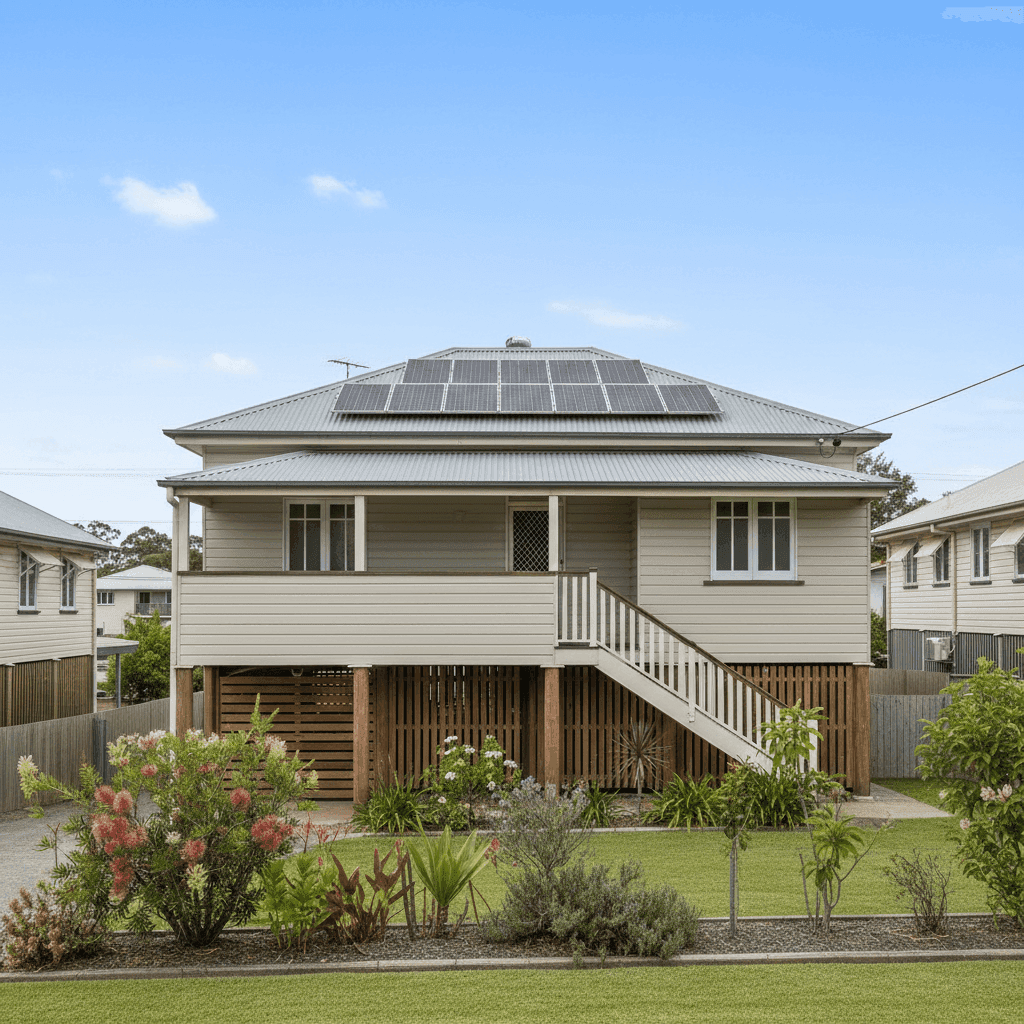
If you own a free standing home in Bundamba, QLD 4304, you've probably noticed that home insurance doesn't come cheap in South East Queensland. This article breaks down a real building insurance quote for a three-bedroom weatherboard home in the suburb, compares it against local, state, and national benchmarks, and offers practical tips to help you get better value on your cover.
---
Is This Quote Fair?
The quote in question comes in at $7,288 per year (or $715 per month) for building-only cover with a sum insured of $300,000 and a building excess of $3,000. Our analysis rates this quote as Expensive — Above Average.
To put that in perspective, the suburb average for Bundamba sits at $2,861 per year, and the median is just $2,180. That means this quote is roughly 2.5 times the suburb average and more than three times the suburb median. Even at the 75th percentile — meaning 75% of quotes in the area are cheaper — the figure is only $3,614 per year. This quote sits well above that threshold.
Compared to the Queensland state average of $4,547 per year, this premium is still 60% higher. And against the national average of $2,965, it's nearly 2.5 times what Australians typically pay for building cover.
That said, premium outliers do exist for legitimate reasons. Older homes with specific construction types, elevated foundations, and certain materials can attract higher risk assessments from insurers — and this property has several of those characteristics. We'll unpack those below.
---
How Bundamba Compares
Bundamba (QLD 4304) sits within the City of Ipswich, a region that has experienced significant flood and storm damage over the years. The LGA average premium for Ipswich is $3,034 per year — already above the national average — which reflects the elevated risk profile of the broader area.
Here's a quick snapshot of how premiums stack up:
| Benchmark | Annual Premium |
|---|---|
| This Quote | $7,288 |
| Bundamba Suburb Average | $2,861 |
| Bundamba Suburb Median | $2,180 |
| Ipswich LGA Average | $3,034 |
| QLD State Average | $4,547 |
| National Average | $2,965 |
(Based on 56 quotes sampled for the Bundamba suburb.)
You can explore the full breakdown for Queensland home insurance averages or compare your premium against national benchmarks to get a clearer picture of where you stand.
Queensland as a whole tends to attract higher premiums than other states, largely due to its exposure to severe weather events including storms, flooding, and hail. Ipswich, in particular, has a well-documented history with flood events — most notably the 2011 and 2022 Brisbane River floods — which have had a lasting impact on insurer risk models for the region.
---
Property Features That Affect Your Premium
Several characteristics of this property are likely contributing to the elevated premium. Understanding these factors can help you have a more informed conversation with insurers.
Weatherboard Timber Construction
Homes with weatherboard timber external walls are generally considered higher risk than brick veneer or full brick properties. Timber is more susceptible to fire, moisture damage, rot, and pest intrusion. Many insurers apply a loading to premiums for this wall type, particularly in older homes.
Older Build Date (1974)
At over 50 years old, this home predates many modern building codes. Older homes may have outdated wiring, plumbing, and structural elements that increase the likelihood of a claim. Insurers factor in the age of construction when pricing risk, and properties from the 1970s often attract higher loadings.
Elevated on Stumps
The home is elevated by at least one metre on stumps — a classic Queensland design. While elevation can actually help reduce flood inundation risk in some cases, homes on stumps have exposed subfloor structures, additional timber components, and can be more costly to repair or reinstate after events like storms or termite damage. Insurers assess this carefully.
Steel/Colorbond Roof
A Colorbond steel roof is generally viewed favourably by insurers — it's durable, fire-resistant, and performs well in high-wind conditions. This is one characteristic of the property that likely works in the homeowner's favour from a risk perspective.
Solar Panels
The presence of solar panels adds replacement value to the building sum insured. Depending on the system size, solar panels can add thousands of dollars to the cost of reinstatement, which can push premiums upward if not separately itemised.
Timber and Laminate Flooring
Internal timber and laminate flooring is a premium finish that can increase reinstatement costs compared to standard tiling or carpet. This may be reflected in the building sum insured and, in turn, the premium.
---
Tips for Homeowners in Bundamba
1. Shop Around — Seriously
The gap between this quote and the suburb average is significant. While some loading is expected given the property's characteristics, a difference of this magnitude warrants getting multiple quotes. Use a comparison service like CoverClub to quickly see what multiple insurers would charge for the same property.
2. Review Your Sum Insured
A sum insured of $300,000 for a 130 sqm home in Bundamba may be on the higher end depending on local rebuild costs. Over-insuring your property doesn't improve your cover — it just raises your premium. Consider using a professional building cost calculator or consulting a quantity surveyor to confirm your sum insured is accurate.
3. Consider a Higher Excess
The building excess on this quote is $3,000. If you're financially comfortable absorbing a larger out-of-pocket cost in the event of a claim, opting for a higher excess (say, $5,000) can reduce your annual premium meaningfully. Just make sure the trade-off makes sense for your financial situation.
4. Ask About Flood and Storm Definitions
Given Bundamba's location in the Ipswich area, it's critical to understand exactly what your policy covers when it comes to flood, storm surge, and water damage. These definitions vary significantly between insurers. Some policies exclude riverine flooding entirely or charge a separate flood premium — always read the Product Disclosure Statement (PDS) carefully.
---
Compare Your Quote Today
Whether you're renewing your policy or shopping for the first time, it pays to know where your premium sits relative to the market. CoverClub makes it easy to compare home insurance quotes for properties across Bundamba and the broader Ipswich region. Get a quote today and find out if you could be paying less for the same level of cover.