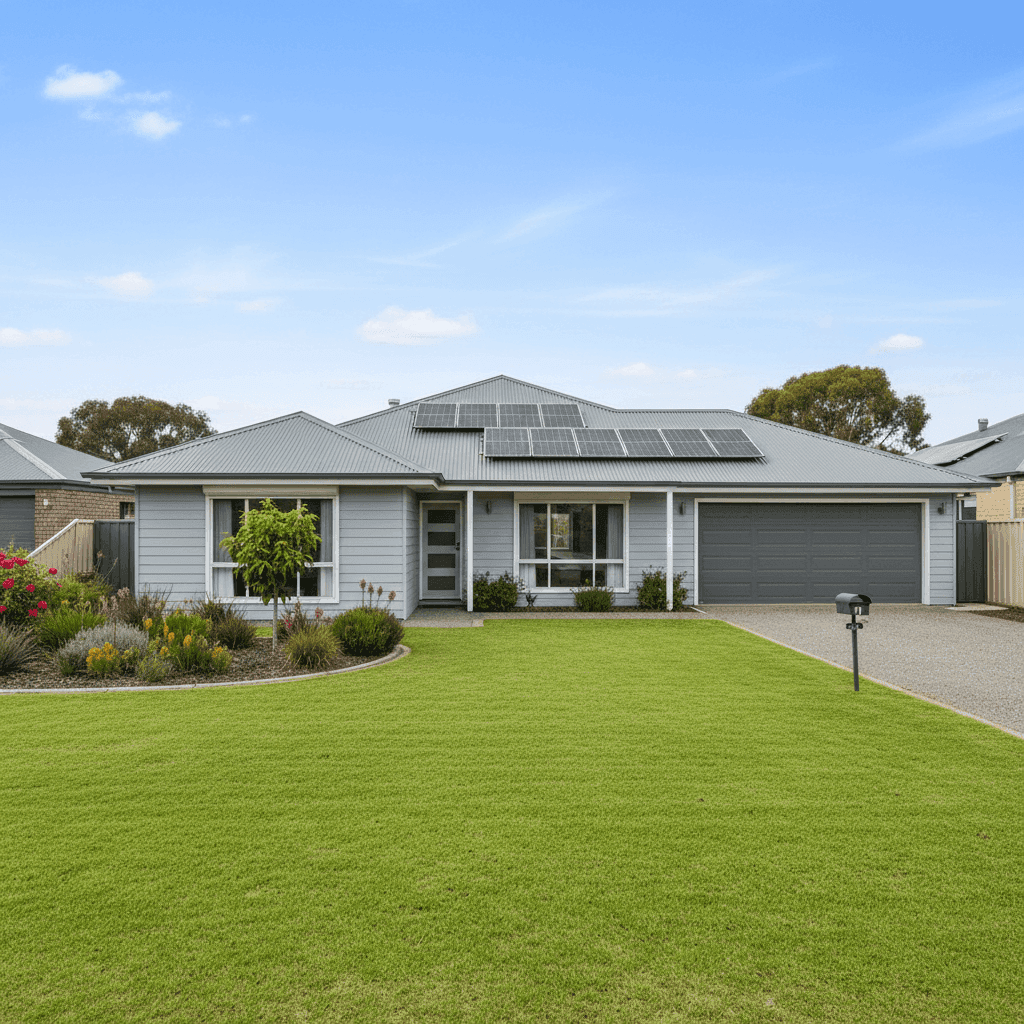
If you own a free standing home in Bungendore, NSW 2621, you've probably noticed that insurance premiums aren't always easy to benchmark. Bungendore is a charming semi-rural township in the Snowy Monaro Regional Council area, sitting about 30 kilometres east of Canberra. It attracts families and tree-changers alike, and the local housing stock reflects that mix — solid, suburban homes on generous blocks. But what does home insurance actually cost here, and is the quote you've received reasonable? Let's dig into the numbers.
---
Is This Quote Fair?
The quote under review is $2,566 per year (or $251/month) for building-only cover on a 4-bedroom, 2-bathroom free standing home, with a $1,000 building excess and a sum insured of $750,000.
Our price rating for this quote is EXPENSIVE — above average for the Bungendore area.
To put that in context, the suburb average premium for Bungendore sits at $2,252/year, with a median of $2,044/year. This quote comes in around $314 above the suburb average and a notable $522 above the median — meaning more than half the comparable quotes in the area are cheaper.
That said, it's worth noting the suburb's 75th percentile sits at $2,503/year, meaning roughly one in four quotes in Bungendore are even higher than this one. So while the price is elevated, it's not completely out of the ordinary — there are clearly properties and risk profiles in the area attracting steeper premiums.
The bottom line: this quote is on the higher end for Bungendore, and there's a reasonable case for shopping around.
---
How Bungendore Compares
One of the more reassuring findings here is how Bungendore stacks up against broader benchmarks.
| Benchmark | Average Premium | Median Premium |
|---|---|---|
| Bungendore (suburb) | $2,252/yr | $2,044/yr |
| LGA (Snowy Monaro) | $2,614/yr | — |
| NSW (state) | $9,528/yr | $3,770/yr |
| National | $5,347/yr | $2,764/yr |
A few things stand out here. First, NSW as a whole has a remarkably high average premium of $9,528/year — driven significantly by high-risk coastal and flood-prone areas, as well as Sydney's elevated rebuild costs. Bungendore sits well below that state average, which is a positive sign for local homeowners.
Compared to the national average of $5,347/year, Bungendore also looks favourable. Even this "expensive" quote at $2,566 is less than half the national average, and well below the NSW state average. The national median of $2,764/year is actually higher than the Bungendore suburb median, suggesting this is a relatively affordable area to insure overall.
The LGA average of $2,614/year (Snowy Monaro) is quite close to this quote, which suggests the premium may partly reflect broader regional risk factors rather than anything unusual about this particular property.
Our Bungendore suburb stats page has more detail on local premium trends if you'd like to explore further.
---
Property Features That Affect Your Premium
Several characteristics of this property are worth examining through an insurance lens.
Hardiplank/Hardiflex Cladding The external walls are clad in Hardiplank/Hardiflex — a fibre cement product that's popular in Australian homes built from the 1980s onwards. Insurers generally view fibre cement cladding favourably: it's non-combustible, resistant to rot, and holds up well in bushfire-prone areas. This should, in theory, work in the homeowner's favour when it comes to pricing.
Steel/Colorbond Roof A Colorbond steel roof is another tick in the "low risk" column. It's durable, fire-resistant, and requires minimal maintenance compared to older tile or iron roofing. Insurers tend to price Colorbond-roofed homes competitively.
Slab Foundation A concrete slab foundation is standard for homes of this era and is generally considered stable and low-risk from an underwriting perspective, particularly in areas without significant soil movement or flood exposure.
Solar Panels The property has solar panels installed. While solar panels add value and are generally a positive for sustainability, they do add to the rebuild cost and can introduce additional risk (particularly around fire or storm damage). Some insurers factor this into their pricing, and it's important to ensure your sum insured accounts for the replacement cost of the system.
Ducted Climate Control Ducted air conditioning is another feature that increases the overall value of the home and its rebuild cost. A $750,000 sum insured on a 130 sqm home is on the higher side per square metre, but given the fittings, solar system, and ducted climate control, it may well be justified — and getting the sum insured right is critical to avoiding underinsurance.
Construction Year (1993) At around 32 years old, this home is mature but not aged. Homes from this era are generally well-regarded by insurers, though it's worth ensuring any updates (electrical, plumbing) are documented.
---
Tips for Homeowners in Bungendore
1. Shop around — seriously With the suburb's 25th percentile sitting at just $1,594/year, there's clearly meaningful variation in what insurers will charge for similar properties in Bungendore. A difference of nearly $1,000 per year is well worth the time spent comparing. Get a comparison quote at CoverClub to see what else is available.
2. Review your sum insured carefully At $750,000 for a 130 sqm home, this is a relatively high sum insured. While it may reflect the quality of fittings, solar panels, and ducted systems, it's worth using a building cost calculator to verify the figure. Overinsurance means you're paying premiums on cover you may never need; underinsurance can be financially devastating after a claim.
3. Ask about bushfire and ember attack risk Bungendore and the broader Snowy Monaro region can experience elevated bushfire risk during dry summers. Check whether your policy includes adequate cover for bushfire and ember attack, and ask your insurer how your property's BAL (Bushfire Attack Level) rating — if applicable — affects your premium.
4. Consider your excess strategically A $1,000 excess is fairly standard, but increasing your excess can meaningfully reduce your annual premium. If you're financially comfortable absorbing a higher out-of-pocket cost in the event of a claim, opting for a $2,000 or $2,500 excess could bring your annual premium down noticeably.
---
Compare and Save with CoverClub
Whether you're renewing your policy or shopping for the first time, comparing quotes is the single most effective way to make sure you're not overpaying. CoverClub makes it easy to benchmark your premium against real data from your suburb and beyond. Start your free quote comparison today and find out if you can do better than $2,566 a year.