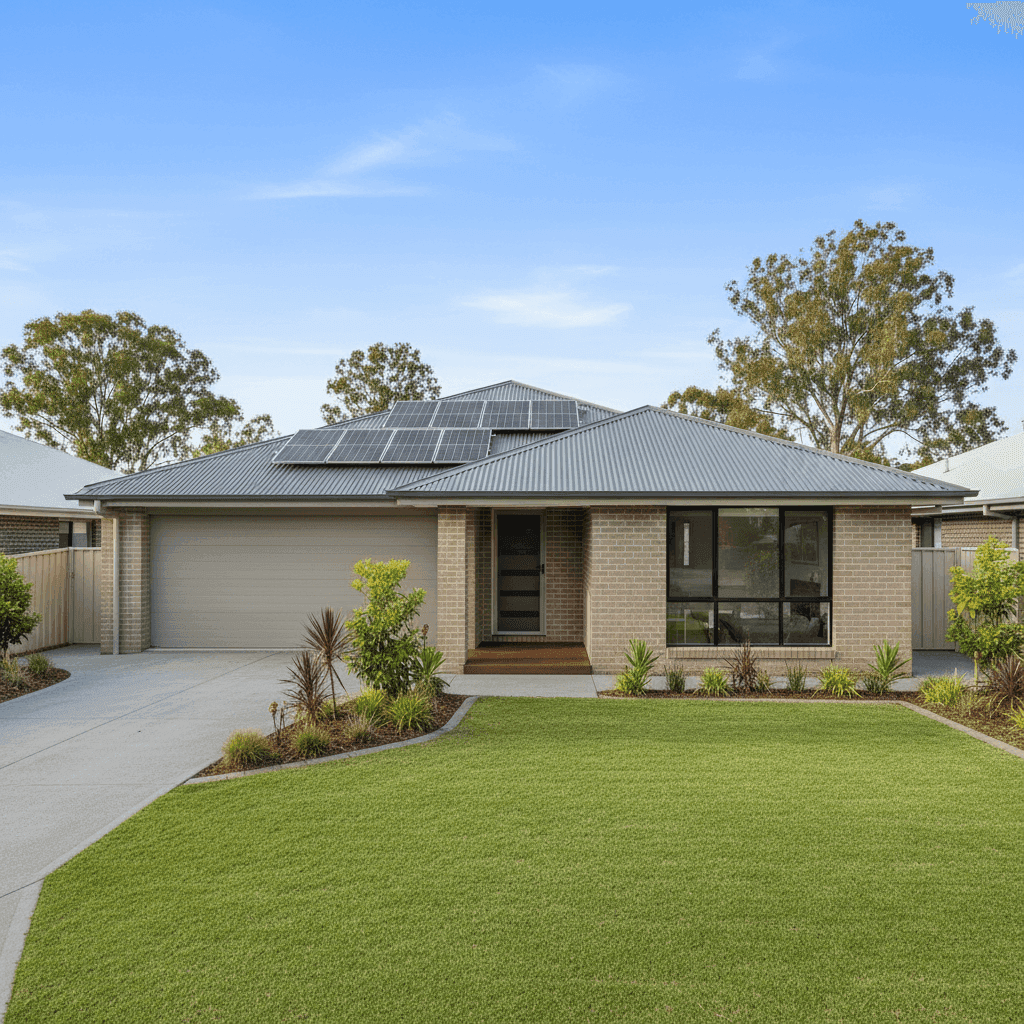
If you own a free standing home in Burdell, QLD 4818, you already know that insurance isn't exactly cheap in this part of the world. Sitting in the northern suburbs of Townsville, Burdell is a modern, family-friendly suburb — but its proximity to cyclone-prone coastal Queensland means premiums can vary wildly depending on who you ask. In this article, we break down a real building insurance quote for a four-bedroom, two-bathroom brick veneer home in Burdell, and put the numbers into context so you can make a more informed decision.
---
Is This Quote Fair?
The quote in question comes in at $3,655 per year (or around $350 per month) for building-only cover, with a $1,000 building excess and a sum insured of $504,000.
Our price rating for this quote? Cheap — below average. That's genuinely good news for this homeowner.
To put it simply: this premium sits noticeably below what most comparable properties in Burdell are paying. The suburb average sits at $4,812 per year, meaning this quote represents a saving of over $1,150 annually compared to the typical Burdell homeowner. That's not pocket change — that's a family holiday or a significant chunk off your mortgage repayments.
For a home in a designated cyclone risk area, landing a sub-$3,700 building-only premium is a solid outcome. Cyclone risk is one of the biggest premium drivers in northern Queensland, and many insurers price aggressively to account for potential storm damage, flooding, and wind events. The fact that this quote beats the suburb average by such a margin suggests the insurer has assessed the specific property favourably — likely due to its modern construction, robust materials, and slab foundation.
---
How Burdell Compares
Understanding where your premium sits relative to broader benchmarks is key to knowing whether you're getting a fair deal. Here's how this quote stacks up:
| Benchmark | Premium |
|---|---|
| This quote | $3,655/yr |
| Burdell suburb average | $4,812/yr |
| Burdell suburb median | $4,810/yr |
| Burdell 25th percentile | $4,333/yr |
| Burdell 75th percentile | $5,390/yr |
| LGA (Townsville) average | $7,340/yr |
| QLD state average | $9,129/yr |
| QLD state median | $3,903/yr |
| National average | $5,347/yr |
| National median | $2,764/yr |
A few things jump out here. First, the Queensland state average of $9,129 is dramatically higher than the state median of $3,903 — a sign that a relatively small number of very high-cost properties (think beachfront or high-risk flood zones) are pulling the average up significantly. This quote sits comfortably below both the state average and the suburb average, and is only marginally above the state median.
Compared to the national average of $5,347, this quote is around 31% cheaper — impressive for a cyclone-risk postcode. The national median of $2,764 is lower, but that figure is heavily influenced by lower-risk southern states like Victoria and South Australia where cyclone loading simply doesn't apply.
The Townsville LGA average of $7,340 is particularly telling. It suggests that across the broader Townsville region, many homeowners are paying nearly double this quote. Burdell, as a newer suburb with more modern housing stock, likely benefits from better construction standards that insurers reward with lower premiums.
---
Property Features That Affect Your Premium
Several characteristics of this property work in the homeowner's favour — and a couple add complexity worth understanding.
Brick veneer construction is generally viewed positively by insurers. It offers solid resistance to wind and fire compared to lightweight cladding or weatherboard, which is particularly relevant in a cyclone-prone area like Burdell.
Steel/Colorbond roofing is another strong asset. Colorbond is widely regarded as one of the most resilient roofing materials for high-wind environments. It's less likely to fail in a cyclone event than older tile roofs, which can become dangerous projectiles. Many insurers factor this in when calculating premiums.
Slab foundation provides structural stability and reduces the risk of subsidence or movement — a common concern in parts of Queensland with reactive clay soils.
Tile flooring is durable and easy to repair after a water ingress event, which is a meaningful consideration in a region prone to heavy rainfall and storm surge.
Solar panels add a layer of complexity. While they're an asset to the property's value and energy efficiency, they do represent an additional replacement cost in the event of storm or hail damage. Homeowners should confirm with their insurer whether solar panels are explicitly covered under the building policy and up to what value.
Cyclone risk area designation is the single biggest premium driver for this property. Insurers apply cyclone loading to properties in northern Queensland, and this is reflected across all the benchmarks above. The fact that this quote still comes in below average despite the cyclone designation is a testament to the property's overall risk profile.
---
Tips for Homeowners in Burdell
Whether you're reviewing an existing policy or shopping around for the first time, here are four practical steps to make sure you're getting the best outcome.
1. Don't set and forget your sum insured. Construction costs have risen sharply in recent years. A home built in 2012 and insured at $504,000 may have been appropriately valued a few years ago, but labour and materials costs have increased significantly. Review your sum insured annually and consider using a building cost calculator to check you're not underinsured.
2. Ask specifically about cyclone and storm surge cover. In Burdell, these aren't theoretical risks. Make sure your policy clearly covers cyclone damage, storm surge, and rainwater ingress — and pay close attention to any sub-limits or exclusions that might apply. Some policies apply separate cyclone excesses that can be substantially higher than the standard excess.
3. Check your solar panel coverage. With solar panels on the roof, confirm whether they're included in your building sum insured or need to be listed separately. Some insurers treat them as a fixed fixture (covered under building), while others require a specific endorsement. Getting this wrong could leave you out of pocket after a hail event.
4. Compare quotes at renewal — every year. The insurance market in Queensland is competitive, and pricing can shift significantly from year to year. Even if you're happy with your current insurer, it's worth running a comparison at renewal to make sure you're not paying a loyalty premium. CoverClub makes it easy to compare real quotes for your suburb.
---
Ready to See What You'd Pay?
If you own a home in Burdell or anywhere across Queensland and want to know whether your current premium is competitive, CoverClub can help. We aggregate real insurance quotes and benchmark them against suburb, state, and national data — so you always know where you stand. Get a personalised home insurance quote at CoverClub and find out if you're overpaying.
For more data on home insurance costs in Burdell, visit our Burdell suburb stats page, or explore Queensland-wide insurance trends to see how your area compares to the rest of the state.