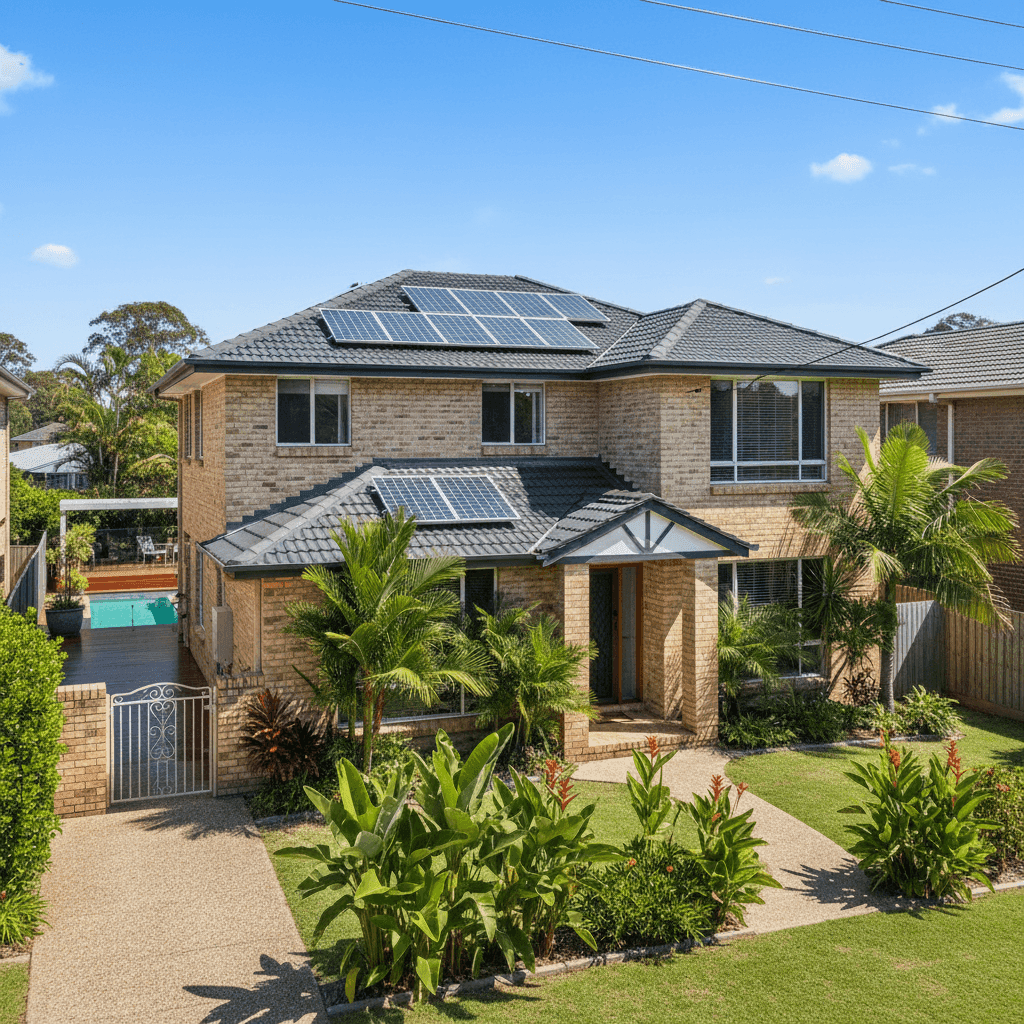
If you own a free standing home in Burleigh Heads, QLD 4220, you already know the appeal — golden beaches, a laid-back lifestyle, and one of the Gold Coast's most sought-after addresses. But with that desirability comes the responsibility of protecting your asset properly. Home and contents insurance is one of the most important financial decisions a homeowner can make, yet many Australians either underinsure or overpay without realising it.
In this article, we analyse a real home insurance quote for a four-bedroom, two-bathroom free standing home in Burleigh Heads, comparing it against local suburb data, Queensland-wide figures, and national benchmarks to help you understand what fair value looks like in this postcode.
---
Is This Quote Fair?
The quote in question comes in at $3,213 per year (or $308/month) for combined home and contents cover, with a building sum insured of $939,000 and contents valued at $100,000. Both the building and contents excess are set at $1,000.
Our price rating for this quote is FAIR — Around Average, and the data backs that up. Based on 50 quotes collected for the Burleigh Heads 4220 postcode, the suburb median premium sits at $3,193 per year — meaning this quote is almost exactly in line with what most local homeowners are paying. It falls comfortably within the interquartile range of $2,339 (25th percentile) to $4,971 (75th percentile), which confirms it's neither a bargain nor a red flag.
That said, "fair" doesn't necessarily mean "the best available." It means you're not being overcharged relative to the market, but there may still be room to do better — particularly if you compare multiple insurers side by side.
---
How Burleigh Heads Compares
To put this quote into proper context, it helps to look at the broader picture across Queensland and nationally.
| Benchmark | Average Premium | Median Premium |
|---|---|---|
| Burleigh Heads (4220) | $4,169/yr | $3,193/yr |
| Gold Coast LGA | $8,161/yr | — |
| Queensland | $9,129/yr | $3,903/yr |
| National | $5,347/yr | $2,764/yr |
A few things stand out here. First, the Queensland state average of $9,129 is dramatically higher than the suburb average — a reminder that QLD's premium market is heavily skewed by high-risk postcode areas in cyclone-prone regions of Far North Queensland and flood-affected inland areas. The median of $3,903 is a more realistic comparison point for south-east Queensland homeowners.
Second, the Gold Coast LGA average of $8,161 appears elevated, likely reflecting a mix of high-value waterfront properties, flood-affected suburbs, and premium beachside real estate across the broader council area. Burleigh Heads, by comparison, comes in considerably more affordable on average.
At $3,213, this quote sits below both the suburb average ($4,169) and the QLD median ($3,903), which is a positive sign. It's slightly above the national median of $2,764, but that's to be expected given the property's size, above-average fittings, and the high building sum insured of $939,000.
---
Property Features That Affect Your Premium
Several characteristics of this particular property influence how insurers assess and price the risk. Here's what matters most:
Brick Veneer Walls & Tiled Roof Brick veneer construction with a tiled roof is generally viewed favourably by insurers. These materials offer solid fire resistance and durability, which can help moderate premiums compared to properties with timber cladding or older iron roofing.
Concrete Slab Foundation & Tiled Flooring A slab-on-ground foundation is standard for Queensland homes of this era and presents minimal additional risk. Tiled flooring throughout is also a practical, low-maintenance choice that insurers tend to regard neutrally to positively.
Above-Average Fittings Quality This is one factor that does push premiums upward. Homes with above-average fittings — think stone benchtops, quality cabinetry, premium fixtures — cost more to repair or replace to the same standard. Insurers price this in, so it's important that your sum insured accurately reflects the cost of rebuilding to that quality level.
Swimming Pool A pool adds to the replacement cost calculation and can introduce liability considerations. It's a feature that contributes to a higher building sum insured and, in turn, a slightly elevated premium.
Solar Panels Solar systems are now a standard inclusion for many Queensland homes, but they do add to the insured value of the building. Importantly, solar panels should be explicitly covered under your building policy — it's worth confirming this with your insurer.
Ducted Climate Control Ducted air conditioning is a significant fixed asset in the home. Like solar panels, it contributes to the overall building replacement cost and should be factored into your sum insured calculation.
No Cyclone Risk Burleigh Heads is not classified as a cyclone risk area, which is a meaningful premium advantage compared to properties further north in Queensland. This likely contributes to the suburb's more moderate pricing relative to the broader state average.
Construction Year: 1998 A home built in 1998 is mature but not old enough to attract significant age-related loading. It's likely to comply with building codes that were strengthened in the 1990s following major weather events, which insurers generally view positively.
---
Tips for Homeowners in Burleigh Heads
1. Review Your Building Sum Insured Annually With construction costs rising across Australia, the cost to rebuild your home may be significantly higher than it was even two or three years ago. Underinsurance is a serious risk — if your sum insured doesn't cover the full cost of rebuilding (including demolition, professional fees, and fittings of the same quality), you could face a significant shortfall at claim time. Use a building cost calculator and revisit your figure each year.
2. Confirm Your Solar Panels and Pool Are Properly Covered Not all policies automatically include solar panels or pool equipment under the standard building definition. Read your Product Disclosure Statement (PDS) carefully or call your insurer to confirm these assets are explicitly covered — and that the sum insured accounts for their replacement value.
3. Compare Quotes Before Renewing Insurers often reserve their best rates for new customers, meaning loyal policyholders can end up paying more over time. Even if you're happy with your current insurer, it's worth running a comparison at renewal time. A quote that's "fair" today might become expensive if your insurer applies above-average increases at renewal.
4. Consider Your Excess Level Both the building and contents excess on this quote are set at $1,000. Opting for a higher excess (say, $2,000 or $2,500) can meaningfully reduce your annual premium. If you have the financial buffer to cover a larger out-of-pocket amount in the event of a claim, this can be a smart way to lower your ongoing costs.
---
Ready to Compare?
Whether you're reviewing an existing policy or shopping for the first time, the best way to know if you're getting a competitive deal is to compare. At CoverClub, we make it easy to see how your home insurance quote stacks up against real data from your suburb, your state, and across Australia.
Get a home insurance quote today and find out if you're paying the right price for your Burleigh Heads home — or if there's a better deal waiting for you.