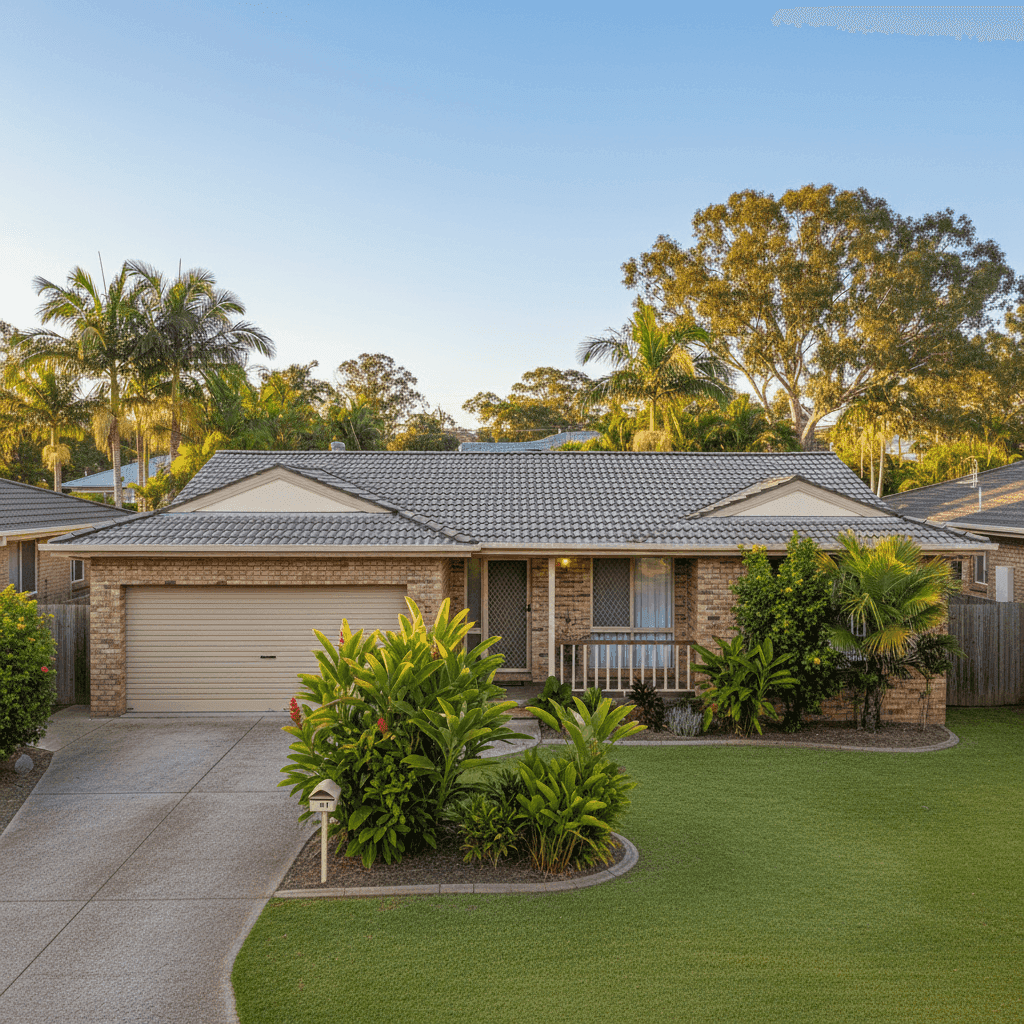
If you own a free standing home in Burleigh Waters, QLD 4220, you're likely wondering whether you're paying too much — or too little — for home insurance. This article breaks down a real insurance quote for a three-bedroom, two-bathroom brick veneer home in the suburb, and puts the numbers into context against local, state, and national benchmarks.
---
Is This Quote Fair?
The annual premium for this property came in at $2,115 per year (or roughly $208 per month), covering both building and contents. The building is insured for $700,000 and contents for $20,000, with a building excess of $3,000 and a contents excess of $600.
Our pricing analysis rates this quote as CHEAP — below average for the area. That's a meaningful finding. Based on 47 quotes collected for properties in the Burleigh Waters postcode, the suburb average sits at $4,059 per year, and the median at $3,904. This quote comes in at roughly half the suburb average, placing it well below even the 25th percentile of $2,307 per year.
In plain terms: the vast majority of comparable homeowners in Burleigh Waters are paying significantly more for their cover. Whether that's due to insurer pricing differences, the specific property characteristics, or the chosen excess levels, this quote represents strong value on paper — though it's always worth scrutinising what's actually covered before signing on the dotted line.
---
How Burleigh Waters Compares
To understand just how competitive this quote is, it helps to zoom out and look at the broader picture.
| Benchmark | Average Premium | Median Premium |
|---|---|---|
| Burleigh Waters (4220) | $4,059/yr | $3,904/yr |
| Queensland | $4,547/yr | $3,931/yr |
| National | $2,965/yr | $2,716/yr |
| Gold Coast LGA | $8,161/yr | — |
A few things stand out here. First, Burleigh Waters premiums are broadly in line with the Queensland state average, suggesting the suburb carries a similar risk profile to much of the state. Second, both figures sit notably above the national average of $2,965 — a reminder that Queensland homeowners generally face higher insurance costs than their counterparts in southern states, largely due to weather-related risks.
Perhaps most striking is the Gold Coast LGA average of $8,161 per year. This figure is heavily influenced by high-value properties and elevated risk areas across the broader Gold Coast region. Burleigh Waters, sitting within this LGA, comes in considerably cheaper at the suburb level — which is worth knowing if you've been quoted a figure closer to that LGA average.
You can explore the full pricing data for this postcode on the Burleigh Waters suburb stats page.
The wide spread between the 25th percentile ($2,307) and the 75th percentile ($6,095) also tells an important story: insurance pricing in this suburb varies enormously. Where you land on that spectrum depends heavily on your property's characteristics, the insurer you choose, and the level of cover you select.
---
Property Features That Affect Your Premium
Every property is different, and insurers weigh up a range of factors when calculating your premium. Here's how the features of this particular home are likely influencing its price:
Brick veneer construction is generally viewed favourably by insurers. It offers solid fire resistance and structural durability compared to timber-framed or weatherboard homes, which can translate to lower premiums.
Tiled roof is another positive signal. Terracotta or concrete tiles are durable and perform well in most weather conditions. They're less susceptible to hail damage than metal roofing in some scenarios, though they can crack under extreme impact.
Slab foundation is standard for Queensland homes of this era and is generally considered low risk from an insurance perspective, provided there are no known issues with soil movement or drainage.
Tiled flooring throughout is worth noting — tiles are highly resilient to water damage compared to timber or carpet, which could reduce the likelihood and cost of certain claims.
Built in 1990, this home is in a mid-range age bracket. It's old enough that some systems (plumbing, electrical) may be approaching the end of their useful life, but not so old as to attract the significant age loading that pre-1970s homes often face.
Standard fittings quality keeps the rebuild cost estimate more predictable and avoids the premium loading associated with high-end or custom finishes.
No pool, no solar panels, and no ducted climate control all simplify the risk profile. Each of these additions can increase a premium — pools introduce liability considerations, solar panels add to rebuild costs, and ducted systems are expensive to replace.
At 153 square metres, this is a modestly sized home, and the $700,000 sum insured reflects a reasonable cost-to-rebuild estimate for the Gold Coast region, where construction costs have risen sharply in recent years.
---
Tips for Homeowners in Burleigh Waters
1. Don't set and forget your sum insured. Construction costs across Queensland have increased significantly since 2020. A sum insured that was accurate three years ago may now fall short of what it would actually cost to rebuild your home. Review this figure annually and use a building cost calculator to sense-check it.
2. Shop around — the spread is wide. With premiums in Burleigh Waters ranging from around $2,307 at the 25th percentile to over $6,000 at the 75th, there's clearly no single "market rate." Different insurers price the same property very differently. Getting multiple quotes is one of the simplest ways to avoid overpaying.
3. Consider your excess carefully. This quote carries a $3,000 building excess, which is on the higher side. A higher excess typically lowers your premium, but it means more out-of-pocket cost if you need to make a claim. Make sure the excess level you choose is genuinely affordable in a worst-case scenario.
4. Check what's actually covered. A cheap premium is only good value if the policy covers what matters. Review the Product Disclosure Statement (PDS) carefully — pay particular attention to storm and flood definitions, which are especially relevant in South East Queensland. Some policies exclude flood entirely, while others include it as standard.
---
Compare Your Own Quote
Curious how your own premium stacks up? CoverClub makes it easy to see what other homeowners in your area are paying and whether your current cover is competitively priced. Get a quote and compare today — it takes just a few minutes and could save you hundreds of dollars a year.