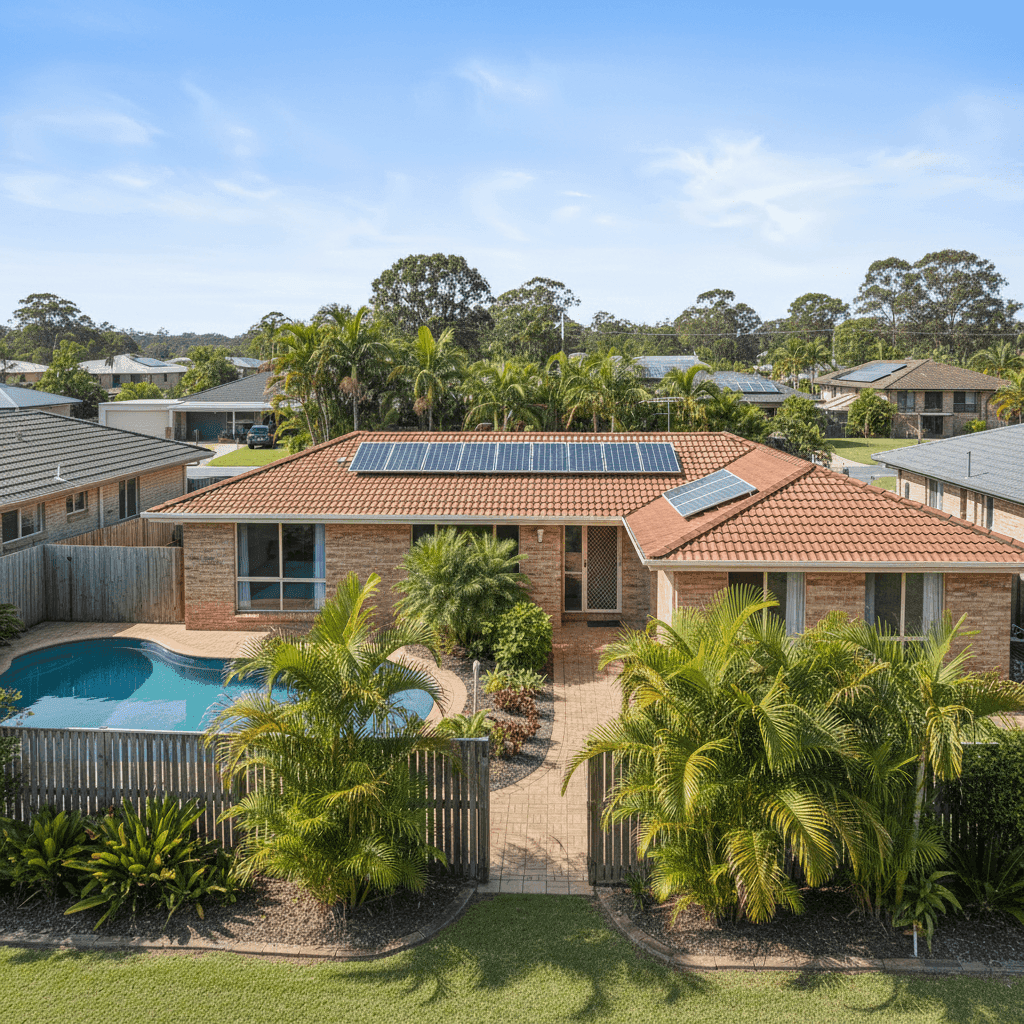
Burleigh Waters is one of the Gold Coast's most sought-after residential pockets — a leafy, canal-laced suburb that blends family-friendly living with easy beach access. For owners of a four-bedroom, two-bathroom free standing home here, protecting that investment with the right home and contents insurance is essential. But how do you know whether the premium you've been quoted is genuinely competitive, or whether you're paying more than you should? Let's break it down.
---
Is This Quote Fair?
The quote in question comes in at $3,254 per year (or $312 per month) for a combined home and contents policy, covering a building sum insured of $896,000 and $50,000 in contents. The building excess and contents excess are both set at $1,000.
Based on our pricing data, this quote is rated Expensive — above the suburb average. Compared to the Burleigh Waters suburb average of $2,480 per year and a median of $2,526 per year (drawn from 70 quotes in the area), this premium sits noticeably higher. It does, however, fall within the suburb's 75th percentile threshold of $3,206 per year — meaning roughly a quarter of comparable properties in the area attract quotes at a similar level or above.
So while it's not an outlier, it's fair to say there's likely room to find a more competitive rate, particularly if you shop around and tailor your policy details carefully.
---
How Burleigh Waters Compares
Understanding where your premium sits relative to broader benchmarks puts the number in proper perspective. Here's how Burleigh Waters stacks up:
| Benchmark | Average Premium | Median Premium |
|---|---|---|
| Burleigh Waters (suburb) | $2,480/yr | $2,526/yr |
| Queensland (state) | $9,129/yr | $3,903/yr |
| Australia (national) | $5,347/yr | $2,764/yr |
| Gold Coast LGA | $8,161/yr | — |
A few things stand out here. Queensland's average premium is extraordinarily high at $9,129 per year — a figure heavily skewed by cyclone-prone regions in Far North Queensland, where insurers price in significant catastrophe risk. The Gold Coast LGA average of $8,161 per year reflects a similar dynamic, with many coastal and flood-affected areas pulling that figure upward.
By contrast, Burleigh Waters sits in a comparatively favourable position. The suburb's average of $2,480 per year is well below both the state and LGA averages, and even sits below the national median of $2,764 per year. This suggests that properties in Burleigh Waters — at least those similar to this one — are generally considered moderate risk by insurers.
You can explore the full breakdown of local pricing data on the Burleigh Waters insurance stats page, compare it against the Queensland state overview, or see where it fits within the national picture.
---
Property Features That Affect Your Premium
Every property is different, and insurers weigh up a range of characteristics when calculating your premium. Here's how the key features of this particular home are likely influencing the quote:
Brick Veneer Walls & Tiled Roof Brick veneer construction is generally well-regarded by insurers for its durability and fire resistance. Combined with a tiled roof, this home presents a relatively low-risk profile from a structural standpoint. Both materials are long-lasting and less susceptible to storm damage than alternatives like weatherboard or corrugated iron.
Concrete Slab Foundation A slab foundation is the norm for homes built in this era and region, and it's typically viewed favourably by insurers. It reduces the risk of subsidence and is straightforward to assess for replacement cost purposes.
Built in 1992 At around 33 years old, this home is well past the high-risk early years but old enough that some building components — roofing materials, plumbing, electrical systems — may be approaching the end of their serviceable life. Insurers may factor in the age of the property when pricing, particularly for internal systems.
Swimming Pool A pool increases the insurable value of the property and adds some liability considerations, both of which can nudge the premium upward. Fencing compliance and safety features are important here — both for insurance and legal obligations in Queensland.
Solar Panels Solar panels are a valuable asset and typically need to be included in the building sum insured. Their replacement cost can be significant, and some insurers apply specific conditions around solar system coverage. It's worth confirming your policy explicitly covers panels for storm damage, hail, and electrical faults.
Ducted Climate Control Ducted air conditioning systems are a meaningful addition to a home's insurable value. Like solar panels, they should be factored into your building sum insured to avoid being underinsured in the event of a claim.
Building Size: 244 sqm At 244 square metres, this is a generously sized home. The building sum insured of $896,000 reflects a rebuild cost — not market value — and at roughly $3,672 per square metre, this sits within a plausible range for a well-appointed Queensland home, though it's worth periodically reviewing this figure with a quantity surveyor to ensure accuracy.
---
Tips for Homeowners in Burleigh Waters
1. Review your sum insured annually Construction costs have risen sharply in recent years. A sum insured that was accurate two or three years ago may no longer reflect the true cost to rebuild your home. Underinsurance is one of the most common — and costly — mistakes homeowners make. Consider engaging a quantity surveyor or using an online building calculator to verify your figure.
2. Don't overlook your pool and solar assets Make sure your policy explicitly covers your pool, solar panels, and inverter. Some standard policies treat these as optional extras or apply sub-limits. Read the Product Disclosure Statement (PDS) carefully and ask your insurer directly if you're unsure.
3. Compare quotes before renewal Insurance loyalty rarely pays off. Insurers frequently offer their best rates to new customers, meaning long-term policyholders can end up paying a premium for the privilege of staying put. Use a comparison tool to benchmark your renewal quote each year.
4. Consider your excess strategically Both the building and contents excesses on this policy are set at $1,000. Opting for a higher excess can meaningfully reduce your annual premium — but only if you're comfortable covering that amount out of pocket in the event of a claim. Run the numbers to see whether the premium saving justifies the trade-off.
---
Compare Your Home Insurance Options
Whether you're reviewing an existing policy or shopping for cover on a new property, it pays to see what the market has to offer. CoverClub makes it easy to compare home and contents insurance quotes tailored to your property and suburb. Get a quote today and find out whether you could be paying less for the same level of protection.