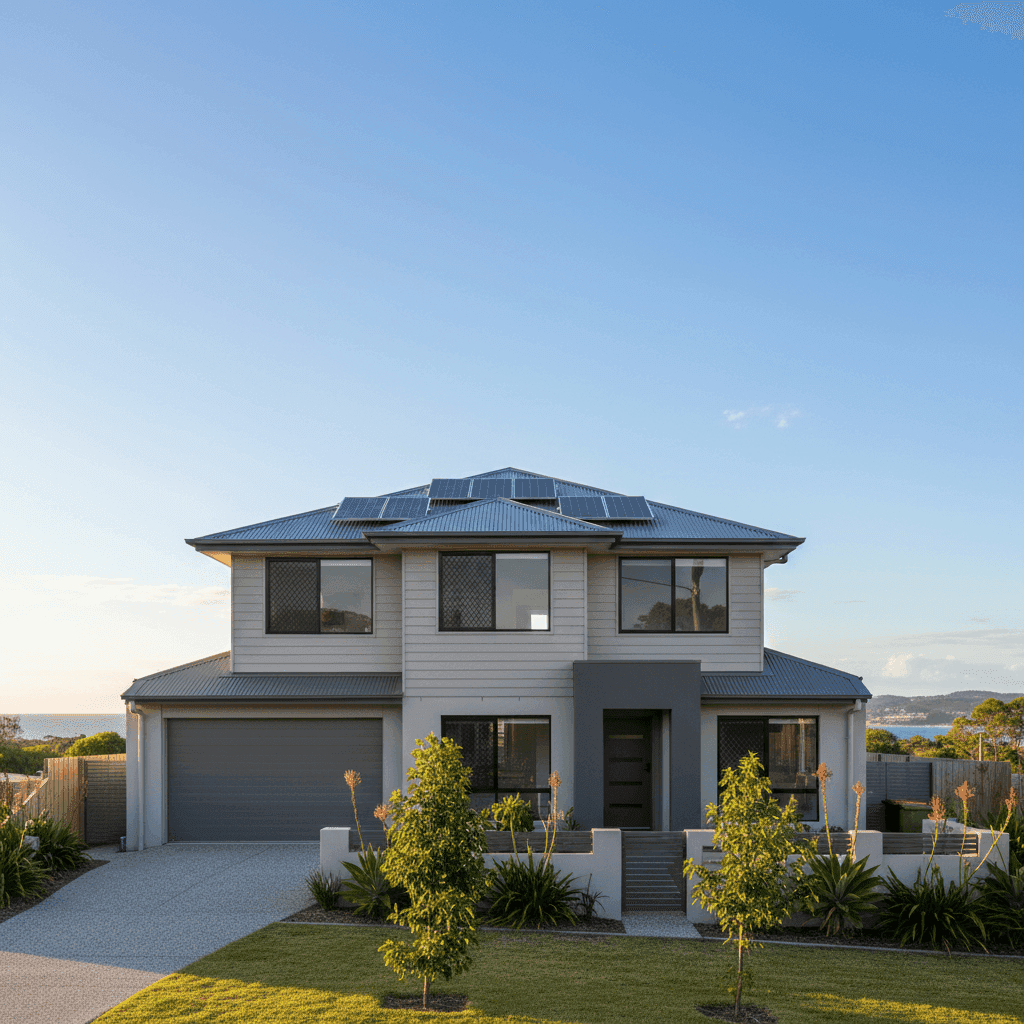
Burnett Heads is a quiet coastal community on Queensland's Wide Bay coast, sitting at the mouth of the Burnett River just north of Bundaberg. It's the kind of suburb that attracts sea-changers and retirees alike — and with new builds appearing in the area, it's worth understanding exactly what home insurance costs look like for modern properties here.
This article breaks down a real home and contents insurance quote for a 2-bedroom, 2-bathroom semi detached home in Burnett Heads (postcode 4670), built in 2025, and examines how it stacks up against local, state, and national benchmarks.
---
Is This Quote Fair?
The annual premium on this quote comes in at $3,763 per year (or $376/month), covering a building sum insured of $680,000 and contents valued at $20,000. The building excess is $2,000 and the contents excess is $1,000.
Our pricing engine rates this quote as FAIR — around average. That's a reasonable outcome for a relatively new property in a coastal Queensland suburb. It's not the cheapest quote you'll find in the area, but it's well within the normal range and reflects the genuine risk profile of the location and property type.
For homeowners wondering whether they're overpaying, the short answer is: not significantly. This premium sits close to the suburb average and is meaningfully below the Queensland state average, which is a positive sign.
---
How Burnett Heads Compares
Understanding where your premium sits relative to others is one of the most useful things you can do as a homeowner. Here's how this quote compares across three levels:
| Benchmark | Average | Median |
|---|---|---|
| Burnett Heads (4670) | $3,799/yr | $3,080/yr |
| Queensland | $4,547/yr | $3,931/yr |
| National | $2,965/yr | $2,716/yr |
A few things stand out here:
- Against the suburb: At $3,763/yr, this quote is fractionally below the Burnett Heads suburb average of $3,799 and sits comfortably within the interquartile range ($2,937 – $4,873). That's a healthy position — not at the cheap end, but far from the top.
- Against Queensland: Queensland homeowners pay significantly more on average ($4,547/yr) than this quote. The state's elevated premiums are largely driven by cyclone-prone regions in North Queensland and flood-affected inland areas. This property benefits from not being in a designated cyclone risk zone, which helps keep the premium competitive.
- Against the national average: This is where the gap becomes more apparent. Australia's national average sits at $2,965/yr — about $800 less than this quote. Coastal Queensland properties almost always attract higher premiums than the national norm, reflecting the elevated natural hazard exposure that comes with living near the coast.
It's also worth noting that the suburb sample size here is 10 quotes, so the local data is indicative rather than definitive. As more quotes are collected for Burnett Heads, these benchmarks will sharpen. You can track the latest figures on the Burnett Heads suburb stats page.
---
Property Features That Affect Your Premium
Insurance pricing isn't arbitrary — every feature of a property feeds into the risk calculation. Here's how the characteristics of this particular home influence what you pay:
New Construction (2025 Build)
A brand-new home is one of the best things you can have from an insurance perspective. Modern building codes require higher wind resistance, better waterproofing, and improved structural integrity. Insurers generally reward this with more competitive premiums compared to older homes that may have ageing wiring, plumbing, or roofing.
Hardiplank / Hardiflex Cladding
Fibre cement cladding like Hardiplank and Hardiflex is widely regarded as a durable, low-maintenance external wall material. It's resistant to rot, termites, and fire, which makes it attractive to underwriters. Compared to older weatherboard or fibro homes, this cladding type typically attracts a more favourable rate.
Steel / Colorbond Roof
Colorbond steel roofing is a popular choice across coastal Queensland for good reason — it's lightweight, corrosion-resistant, and performs well in high-wind events. Insurers view it positively, particularly in areas with any storm exposure.
Slab Foundation
A concrete slab foundation is considered low-risk from an insurance standpoint. It's less susceptible to subsidence, termite ingress, and moisture damage compared to timber stumped or pier-and-beam foundations.
Solar Panels
The presence of solar panels adds some value to the contents or building sum insured, and some policies cover them explicitly under building insurance. It's worth confirming with your insurer that your solar system is included in the $680,000 building sum insured — and that the replacement cost is accurately reflected.
Ducted Climate Control
Ducted air conditioning is a significant fixed asset. Like solar panels, it should be factored into your building sum insured to avoid being underinsured in the event of a total loss.
Above-Average Fittings Quality
This property is noted as having above-average fittings — think quality tapware, stone benchtops, engineered flooring, and premium appliances. Higher-spec finishes increase the cost to rebuild, which is directly reflected in the $680,000 building sum insured and, consequently, the premium.
---
Tips for Homeowners in Burnett Heads
1. Review Your Sum Insured Annually
Construction costs have risen sharply across Australia in recent years. A sum insured that was accurate when you took out your policy may no longer reflect the true cost to rebuild. With above-average fittings and a new build, ensure your $680,000 figure is reviewed each year — ideally with a quantity surveyor's estimate.
2. Confirm Solar and Ducted AC Are Covered
Ask your insurer explicitly whether your solar panel system and ducted climate control are covered under your building policy, and at what value. These are easy items to overlook, but expensive to replace if they're not properly insured.
3. Compare Quotes Before Renewal
Even a "fair" quote can be beaten. Insurance premiums vary significantly between providers for the same property and risk profile. Using a comparison platform like CoverClub at renewal time takes only a few minutes and could save you hundreds of dollars annually.
4. Consider Your Excess Strategy
This policy carries a $2,000 building excess and a $1,000 contents excess. Opting for a higher excess is one of the most direct levers you have to reduce your annual premium. If you have the financial buffer to absorb a larger out-of-pocket cost in a claim, increasing your excess could meaningfully lower what you pay each year.
---
Ready to See What You Could Pay?
Whether you're insuring a new build or reviewing an existing policy, comparing quotes is the single most effective way to ensure you're getting value. Get a home insurance quote at CoverClub and see how your property stacks up against real data from Burnett Heads and across Queensland — in minutes, with no obligation.