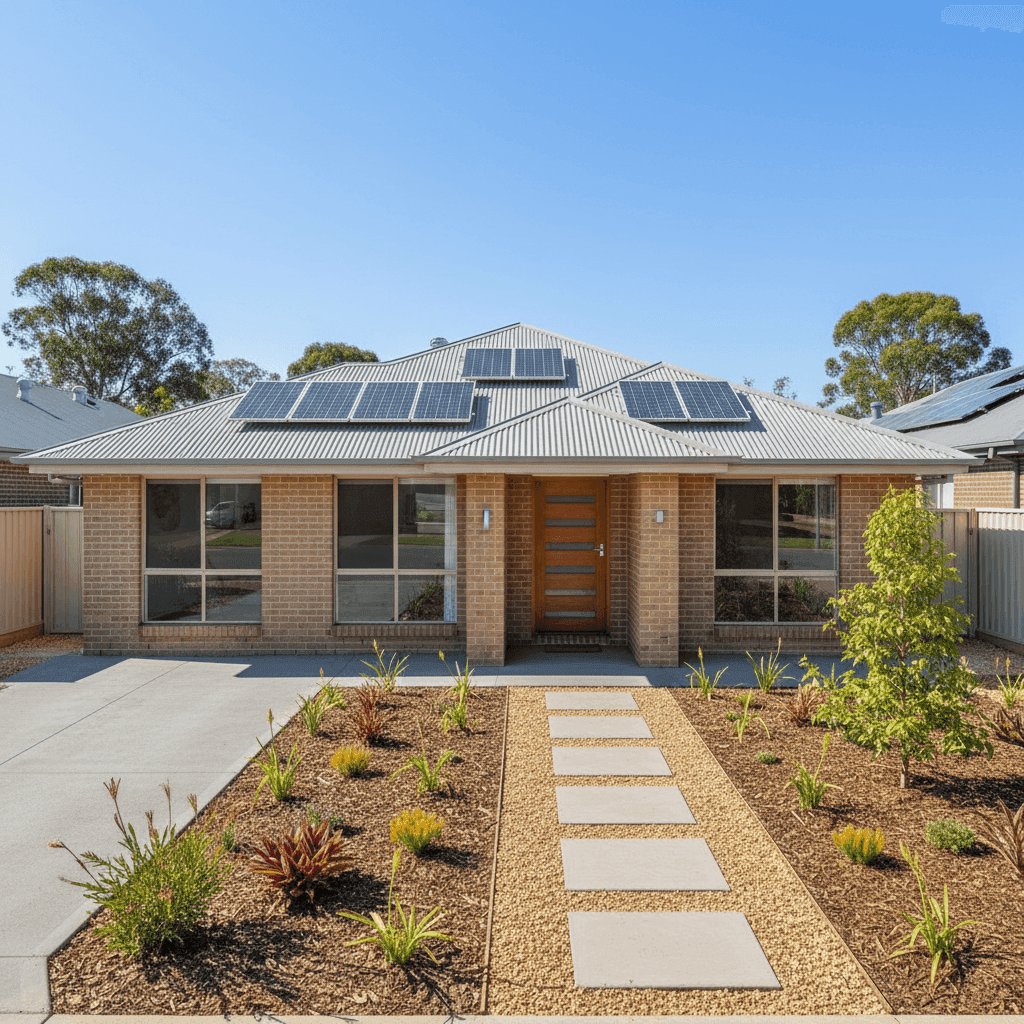
If you own a free standing home in Burnside, QLD 4560, you've probably noticed that home insurance costs on the Sunshine Coast can vary enormously from one property to the next. This article breaks down a real home and contents insurance quote for a three-bedroom, two-bathroom brick veneer home in Burnside — and puts that price in context against what other homeowners in the suburb, across Queensland, and nationally are paying.
---
Is This Quote Fair?
The short answer: yes — and then some. This quote came in at $2,209 per year (or $216/month) for combined home and contents cover, with a building sum insured of $712,000 and contents valued at $50,000. Both the building and contents excess sit at $1,000.
Our pricing engine rates this quote as CHEAP — Below Average, meaning it sits well beneath what most comparable properties in Burnside are attracting. For homeowners, that's a genuinely positive outcome. Insurance in South East Queensland — and particularly on the Sunshine Coast — has been under significant upward pressure in recent years due to weather-related claims, reinsurance costs, and inflationary pressures on building materials. Landing a quote this far below the local average is worth taking seriously.
To put it in plain terms: this quote is $1,860 per year cheaper than the Burnside suburb average, and nearly $2,400 below the Queensland state average. That's a meaningful saving, not a rounding error.
---
How Burnside Compares
Here's how this quote stacks up across different benchmarks:
| Benchmark | Premium |
|---|---|
| This Quote | $2,209/yr |
| Burnside Suburb Average | $4,069/yr |
| Burnside Suburb Median | $3,916/yr |
| Burnside 25th Percentile | $3,087/yr |
| Burnside 75th Percentile | $4,960/yr |
| QLD State Average | $4,547/yr |
| QLD State Median | $3,931/yr |
| Sunshine Coast LGA Average | $4,608/yr |
| National Average | $2,965/yr |
| National Median | $2,716/yr |
This quote doesn't just beat the suburb average — it comes in below the national average of $2,965/yr, which is remarkable for a Queensland property. Homeowners across the country pay a national median of $2,716/yr, and this quote is only marginally above that figure despite being located in a state where premiums are consistently elevated.
The Sunshine Coast LGA average sits at $4,608/yr, which means the broader region is paying more than double what this particular quote reflects. Even the cheapest quarter of Burnside quotes (the 25th percentile) comes in at $3,087/yr — still nearly $900 more than this result.
You can explore more local pricing data on the Burnside suburb stats page, compare it against Queensland-wide figures, or take a look at national home insurance benchmarks.
---
Property Features That Affect Your Premium
Several characteristics of this property work in the homeowner's favour when it comes to pricing:
Brick Veneer Walls
Brick veneer is generally well-regarded by insurers. It offers solid fire resistance and structural durability compared to timber or fibre cement cladding. While it's not as robust as full double brick, it strikes a good balance between cost and resilience — and most insurers price it favourably.
Steel / Colorbond Roof
Colorbond steel roofing is one of the most insurer-friendly roofing materials available in Australia. It's lightweight, resistant to fire and pests, and holds up well in high-wind events. Compared to older tile roofs (which can crack, leak, or become dislodged), Colorbond is associated with fewer claims — a factor that can meaningfully reduce your premium.
Concrete Slab Foundation
A slab foundation is considered low-risk by insurers. It eliminates the underfloor moisture and pest issues associated with raised timber stumps, and provides excellent structural stability. Combined with tile flooring (which is durable and resistant to water damage), this property presents a low-maintenance risk profile.
Built in 2006
Homes built after 2000 benefit from modern building codes that mandate improved cyclone strapping, fire-resistant materials, and stronger structural connections. A 2006 build sits in a sweet spot — modern enough to benefit from these standards, but not so new that replacement costs are disproportionately high.
Solar Panels
The property has solar panels installed. While these add some replacement cost to the building sum insured, most modern home insurance policies include solar panels as part of the building cover. It's worth confirming with your insurer that panels are explicitly covered under your policy, particularly for damage from storms or hail.
No Pool, No Cyclone Risk Zone
The absence of a swimming pool removes a common liability risk that can nudge premiums upward. Burnside also falls outside designated cyclone risk areas, which is a significant pricing factor in Queensland — properties in cyclone zones can attract dramatically higher premiums.
---
Tips for Homeowners in Burnside
1. Don't assume your renewal is still competitive. Insurance premiums in Queensland have shifted considerably over the past few years. Even if your current policy was competitively priced when you took it out, your insurer may have quietly increased your renewal premium. It's worth comparing at least once a year — particularly given how wide the spread is in Burnside (from $3,087 at the 25th percentile to $4,960 at the 75th).
2. Review your building sum insured regularly. Construction costs in South East Queensland have risen sharply. A sum insured of $712,000 for a 214 sqm home works out to roughly $3,327 per square metre — a reasonable figure for a standard-fit home, but worth revisiting if you've done renovations or if local building costs have shifted. Being underinsured at claim time can be a costly mistake.
3. Confirm solar panel coverage in your policy wording. Solar panels are now common in Queensland homes, but not all policies treat them the same way. Some insurers cover them as part of the building; others require a separate endorsement. Check your Product Disclosure Statement (PDS) to make sure storm and hail damage to your panels is explicitly included.
4. Consider your excess carefully. Both the building and contents excess on this policy sit at $1,000. A higher excess typically lowers your premium, while a lower excess means less out-of-pocket cost at claim time. Think about your financial buffer — if you could comfortably cover a $2,000 excess, you might save on your annual premium. If $1,000 already feels like a stretch, it may be worth exploring lower-excess options.
---
Find the Right Cover for Your Home
Whether you're reviewing your current policy or shopping for the first time, comparing multiple quotes is the single most effective way to make sure you're not overpaying. The data above shows just how wide the range can be — even within a single suburb. Get a home insurance quote at CoverClub and see how your property compares in seconds.