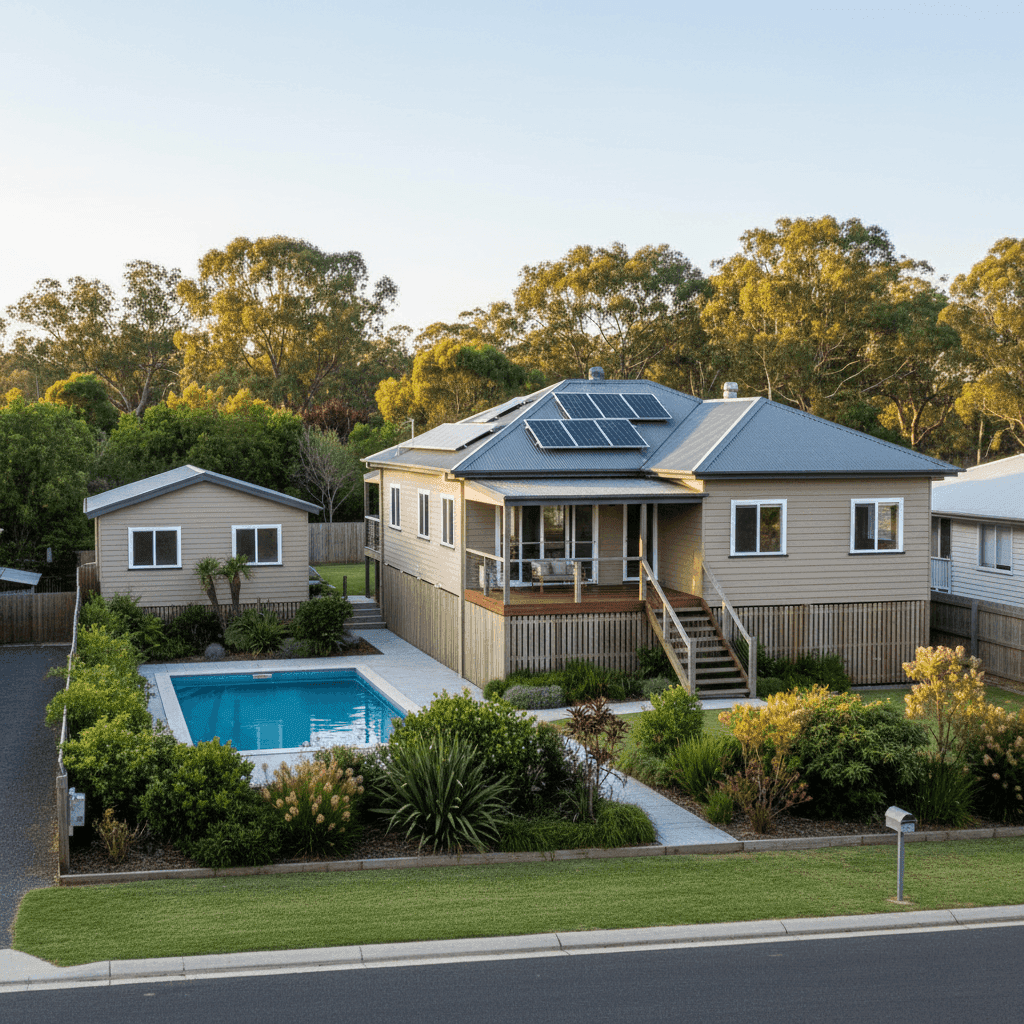
Burnt Bridge is a quiet residential locality nestled within the Port Macquarie-Hastings local government area on the mid-north coast of New South Wales. For owners of free standing homes in this part of NSW 2440, understanding what drives home insurance premiums — and whether your quote is competitive — can make a meaningful difference to your household budget. This article breaks down a real building insurance quote for a two-bedroom, two-bathroom free standing home in Burnt Bridge and puts it in context against local, state, and national benchmarks.
---
Is This Quote Fair?
The annual premium for this property comes in at $3,480 per year (or $327 per month), covering building-only insurance with a $1,000 excess on a sum insured of $325,000.
Our price rating for this quote is CHEAP — below average — which is genuinely good news for the homeowner. To put that in perspective:
- The NSW state average premium is $9,528/yr, and the state median sits at $3,770/yr
- The national average is $5,347/yr, with a national median of $2,764/yr
- The Port Macquarie-Hastings LGA average is $7,001/yr
At $3,480/yr, this quote sits below the NSW state median and well beneath both the LGA and state averages. It's also comfortably under the national average, though it does come in slightly above the national median of $2,764/yr — which reflects the unique characteristics of this particular property rather than any overpricing by the insurer.
In short: for a property of this nature in coastal NSW, this is a competitive premium that represents solid value.
---
How Burnt Bridge Compares
Without suburb-level data available for Burnt Bridge specifically, we can draw meaningful comparisons using broader datasets. You can explore NSW home insurance statistics and national home insurance data on CoverClub for a fuller picture.
| Benchmark | Annual Premium |
|---|---|
| This Quote | $3,480 |
| NSW State Median | $3,770 |
| National Median | $2,764 |
| NSW State Average | $9,528 |
| National Average | $5,347 |
| Port Macquarie-Hastings LGA Average | $7,001 |
The LGA average of $7,001/yr is particularly telling. The Port Macquarie-Hastings region encompasses a wide variety of properties — some in flood-prone areas, some in bushfire-prone zones, and others in coastal locations exposed to storm surge. The fact that this quote comes in at roughly half the LGA average suggests the insurer has assessed this specific property favourably, likely due to its construction quality, elevation, and modern build year.
For more localised data as it becomes available, check out the Burnt Bridge suburb stats page.
---
Property Features That Affect Your Premium
Several characteristics of this property work together to produce a below-average premium. Here's how each one factors in:
Hardiplank / Hardiflex External Walls
Fibre cement cladding like Hardiplank and Hardiflex is well regarded by insurers. It's resistant to fire, rot, and termite damage — all meaningful risks in regional NSW. This material typically attracts more favourable premiums compared to weatherboard or older brick veneer.
Steel / Colorbond Roof
Colorbond steel roofing is a strong performer in the eyes of insurers. It handles heavy rain, hail, and high winds effectively, and its longevity reduces the likelihood of weather-related claims. This is a clear premium advantage.
Elevated Foundation (Stumps, at Least 1 Metre)
The property sits elevated by at least one metre on stumps — a construction style often called Queenslander-style in eastern Australia. This elevation provides meaningful protection against surface flooding and moisture ingress, which insurers reward with lower premiums in flood-adjacent regions.
Built in 2011
A construction year of 2011 means the home was built to relatively modern building codes. Newer homes generally benefit from updated wiring, plumbing, and structural standards, all of which reduce the risk of fire and water damage claims.
Timber / Laminate Flooring
While timber floors can be more susceptible to water damage than tiles, they are generally straightforward to repair or replace and don't dramatically inflate premiums in the way that high-end custom finishes might.
Pool, Solar Panels, and Ducted Climate Control
These features add to the overall sum insured — and rightly so, as they represent real replacement costs. Solar panels and ducted systems in particular can be expensive to repair or replace after storm or hail damage. Homeowners should ensure these are explicitly included in their policy coverage.
Granny Flat
The presence of a granny flat on the property adds structural value and complexity. It's important to confirm with your insurer that the granny flat is covered under the building policy, as some policies may require a separate declaration or endorsement.
Standard Fittings Quality
Standard-grade fittings keep the sum insured at a reasonable level. Properties with premium or bespoke finishes often carry higher rebuild costs and correspondingly higher premiums.
---
Tips for Homeowners in Burnt Bridge
1. Review your sum insured annually Building costs in regional NSW have risen sharply in recent years due to labour shortages and material price increases. A sum insured of $325,000 for a 123 sqm home may be adequate today, but it's worth using a building cost calculator each year to confirm your coverage keeps pace with actual rebuild costs. Being underinsured is one of the most common — and costly — mistakes homeowners make.
2. Confirm coverage for your solar panels and pool Solar panels, swimming pools, and ducted climate control systems represent significant value. Check your policy's product disclosure statement (PDS) to verify exactly what's covered, under what circumstances, and whether any sub-limits apply. Some policies treat solar panels as a fixed inclusion; others require them to be listed separately.
3. Document your granny flat separately If your granny flat is tenanted or used as a separate dwelling, notify your insurer. Some policies have specific conditions around structures used for rental income, and failing to disclose this could affect your ability to claim.
4. Consider your excess strategically A $1,000 building excess is fairly standard in NSW. If you're in a position to absorb a higher excess in the event of a claim, increasing it to $2,000 or more can reduce your annual premium — sometimes by a meaningful amount. Conversely, if cash flow is a concern, a lower excess may be worth the slightly higher premium.
---
Compare Your Own Quote on CoverClub
Whether you're renewing your existing policy or shopping around for the first time, it pays to compare. CoverClub makes it easy to benchmark your home insurance premium against real data from properties like yours across NSW and Australia. Get a quote today and find out whether you're paying a fair price — or whether there's a better deal waiting for you.