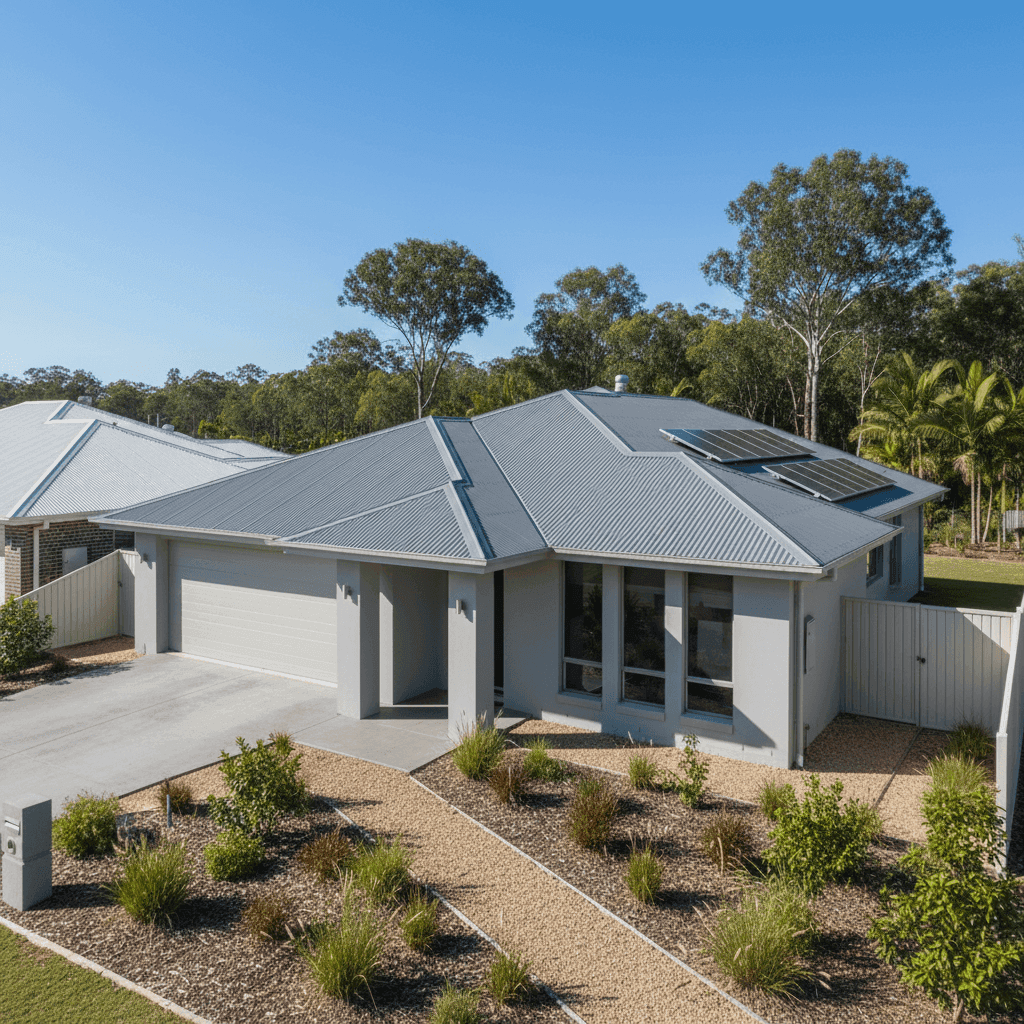
If you own a free standing home in Burpengary East, QLD 4505, you've probably wondered whether you're paying too much — or too little — for home and contents insurance. This suburb, sitting in the Moreton Bay region north of Brisbane, has seen steady residential growth, and with that comes a growing need for homeowners to understand what their premiums actually reflect. In this article, we break down a real quote for a 2-bedroom, 2-bathroom home in the area and put it under the microscope.
---
Is This Quote Fair?
The annual premium for this property came in at $2,380 per year (or about $228 per month), covering both building (insured at $847,000) and contents ($62,000). Our pricing engine rates this as CHEAP — below average for the area.
That's a meaningful finding. With a building excess and contents excess both set at $2,000, the policyholder is accepting a moderate level of self-insurance in exchange for a lower premium — a sensible trade-off for a brand-new home built in 2024, where the risk of an early structural claim is relatively low.
At $2,380 annually, this quote sits well below the suburb's median of $4,589 and comfortably under the 25th percentile of $3,283 — meaning it's cheaper than at least 75% of quotes sampled in the postcode. For a home of this specification, that represents genuine value.
---
How Burpengary East Compares
To understand just how competitive this quote is, it helps to zoom out and look at the broader picture. You can explore the full data on our Burpengary East insurance stats page.
| Benchmark | Premium |
|---|---|
| This quote | $2,380/yr |
| Suburb 25th percentile | $3,283/yr |
| Suburb median | $4,589/yr |
| Suburb average | $73,156/yr |
| LGA (Moreton Bay) average | $3,435/yr |
| QLD state median | $3,903/yr |
| QLD state average | $9,129/yr |
| National median | $2,764/yr |
| National average | $5,347/yr |
One figure that immediately stands out is the suburb average of $73,156 — an extraordinarily high number driven by extreme outlier quotes in the sample (only 16 quotes were captured, so a handful of high-risk or high-value properties can skew the average dramatically). The median of $4,589 is a far more reliable indicator of what most Burpengary East homeowners are actually paying.
Against the Queensland state median of $3,903 and the national median of $2,764, this quote of $2,380 is impressively positioned — sitting just below the national median while covering a building insured at $847,000. That's a strong result.
The Moreton Bay LGA average of $3,435 also provides useful local context. This quote undercuts that figure by over $1,000 annually, suggesting the specific property characteristics are working in the homeowner's favour.
---
Property Features That Affect Your Premium
Several features of this home are likely contributing to its favourable premium. Here's what insurers are paying attention to:
✅ Brand-New Construction (2024)
A home built in 2024 is subject to the latest Australian building codes, which means better structural integrity, improved fire resistance, and modern safety standards. Insurers reward this with lower risk assessments.
✅ Hebel External Walls
Hebel (autoclaved aerated concrete) panels are highly regarded by insurers for their fire resistance and durability. Unlike timber-framed cladding, Hebel is non-combustible, which reduces the likelihood of total loss in a fire event — a significant factor in premium calculations.
✅ Steel / Colorbond Roof
Colorbond steel roofing is a premium choice in Australian construction. It's resistant to corrosion, performs well in high winds, and requires minimal maintenance. Compared to older tile or terracotta roofs, it presents a lower risk profile for insurers.
✅ Concrete Slab Foundation
Slab foundations are stable, resistant to subsidence, and well-suited to Queensland's soil conditions. They're also less susceptible to pest damage than raised timber stumps, which can be a meaningful risk factor in some regions.
✅ Solar Panels
The presence of solar panels adds some complexity — they represent an additional asset that may need to be covered, and they introduce a minor electrical risk. However, modern solar installations are generally well-regarded, and many insurers now factor them into standard building cover.
✅ Ducted Climate Control
Ducted systems are a higher-value fitting that contributes to the overall sum insured, but they're also a sign of quality construction — something insurers tend to view positively in terms of overall property upkeep.
⚠️ Top-of-the-Range Fittings
The "top of the range" fittings quality designation does push the sum insured higher, which partly explains the $847,000 building valuation for a 105 sqm home. Premium finishes — stone benchtops, designer fixtures, high-end cabinetry — cost significantly more to replace, and the sum insured must reflect that.
✅ No Pool, No Cyclone Risk Zone
The absence of a pool removes a common liability concern, and being outside a designated cyclone risk area is a notable advantage in Queensland, where cyclone-prone regions can see dramatically higher premiums.
---
Tips for Homeowners in Burpengary East
1. Review your sum insured annually Construction costs in South East Queensland have risen sharply in recent years. A home built in 2024 with premium fittings should have its sum insured reviewed each year to ensure it reflects current rebuild costs — not just the original build price. Being underinsured can be just as costly as overpaying on premiums.
2. Consider your excess strategically This policy carries a $2,000 excess on both building and contents. For a new home with low short-term claim probability, this is a sensible way to keep premiums down. As the property ages, it may be worth revisiting whether a lower excess better suits your risk appetite.
3. Confirm your solar panels are covered Not all home insurance policies automatically cover solar panel systems under building cover, and some treat them as a separate item. Check your Product Disclosure Statement (PDS) carefully to confirm your panels — and any associated inverter equipment — are explicitly included.
4. Shop around at renewal time Even a below-average premium can drift upward at renewal. Insurers regularly adjust their pricing models, and loyalty doesn't always pay. Use a comparison tool like CoverClub to benchmark your renewal quote against the current market before you auto-renew.
---
Compare Your Own Quote
Whether you're a new homeowner in Burpengary East or approaching your annual renewal, it pays to know where your premium stands relative to the market. CoverClub makes it easy to compare home and contents insurance quotes from multiple insurers in one place — so you can see at a glance whether you're getting a fair deal or leaving money on the table.
👉 Get a home insurance quote at CoverClub and find out how your property compares.