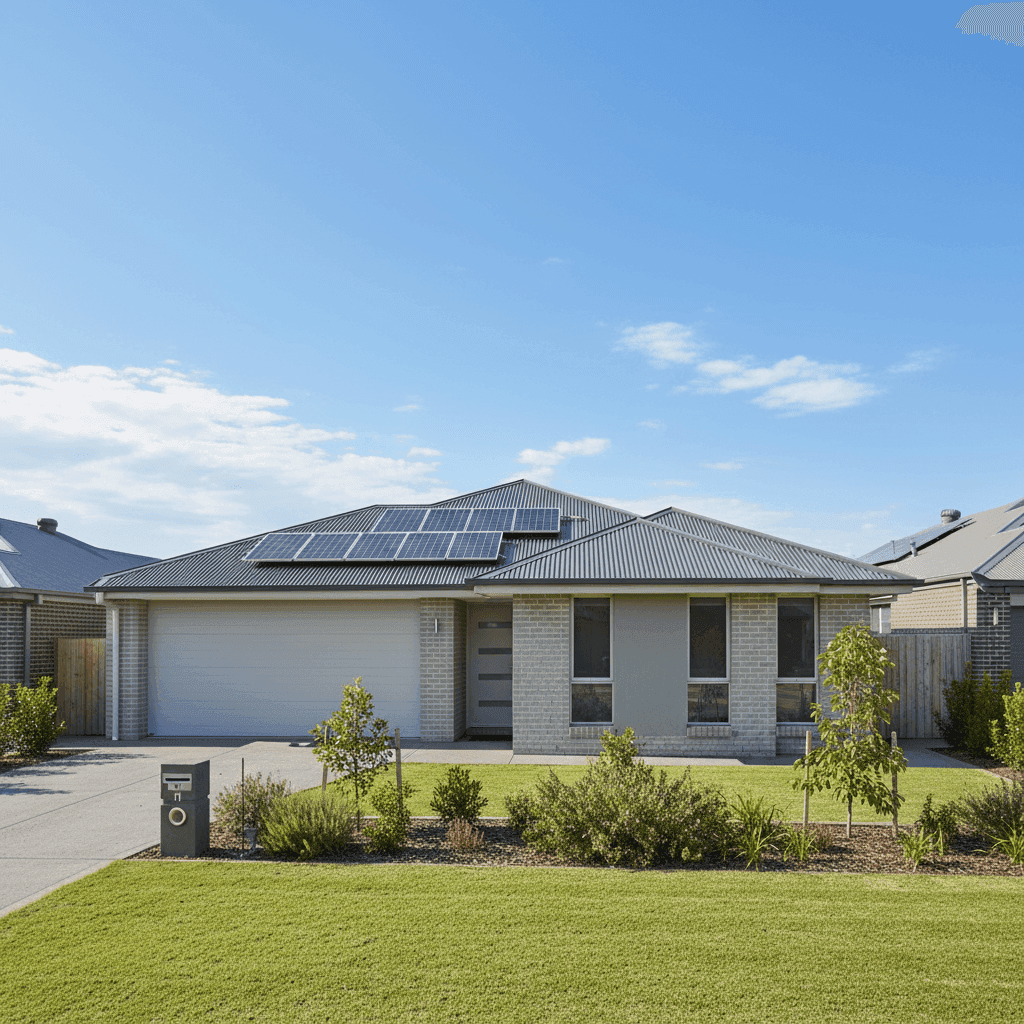
Burpengary is a growing residential suburb in the Moreton Bay region, sitting roughly 40 kilometres north of Brisbane's CBD. With new housing estates continuing to expand across the area, it's become a popular choice for families seeking space, affordability, and good transport links. If you own a free-standing home here, understanding what you should be paying for home and contents insurance — and why — can make a real difference to your household budget.
This article breaks down a real insurance quote for a four-bedroom, two-bathroom brick veneer home in Burpengary (postcode 4505), built in 2021, with a building sum insured of $768,000 and contents cover of $150,000. The annual premium comes in at $1,553 (or about $157 per month), with a building excess of $3,000 and a contents excess of $500.
---
Is This Quote Fair?
The short answer: yes, broadly fair — though not the cheapest available.
CoverClub rates this quote as Fair (Around Average) based on how it sits relative to other quotes collected for similar properties in the Burpengary area. The suburb's average premium sits at $1,899 per year, and the median is $1,741 per year — meaning this quote of $1,553 actually comes in below both of those benchmarks. It's comfortably above the 25th percentile ($1,470/yr), which means roughly three-quarters of comparable quotes are more expensive.
In other words, this isn't a bargain-basement price, but it's also not one of the pricier quotes doing the rounds in the suburb. For a relatively new, well-constructed home with a solid sum insured, it represents reasonable value.
That said, "fair" doesn't mean you can't do better. There's still a meaningful gap between this quote and the 25th percentile, so shopping around is always worthwhile.
---
How Burpengary Compares
One of the most striking things about this quote is how favourably Burpengary stacks up against broader Queensland and national averages.
| Benchmark | Annual Premium |
|---|---|
| This quote | $1,553 |
| Burpengary suburb average | $1,899 |
| Burpengary suburb median | $1,741 |
| Moreton Bay LGA average | $3,435 |
| QLD state average | $9,129 |
| QLD state median | $3,903 |
| National average | $5,347 |
| National median | $2,764 |
The Queensland state average of $9,129 per year reflects the enormous variability in premiums across the state — driven largely by cyclone-prone regions in Far North Queensland, flood-affected inland areas, and coastal zones with elevated storm risk. Burpengary, by contrast, benefits from its inland position and relatively benign risk profile, keeping premiums well below the state average.
Compared to the national average of $5,347 per year, this quote is remarkably competitive. Even the Moreton Bay LGA average of $3,435 is more than double this quote, suggesting that pockets within the LGA — including some flood-prone or storm-exposed areas — are dragging that figure up considerably.
For Burpengary homeowners, this is genuinely good news: you're in one of the more affordable corners of Queensland when it comes to home insurance.
---
Property Features That Affect Your Premium
Several characteristics of this particular property work in the owner's favour from an insurer's perspective.
Construction year (2021): Newer homes are generally cheaper to insure. A home built in 2021 will have been constructed to modern building codes, which means better structural integrity, improved fire resistance standards, and up-to-date electrical and plumbing systems. Insurers reward this with lower premiums.
Brick veneer walls: Brick veneer is one of the more insurer-friendly external wall materials available. It offers solid fire resistance and durability, and is far less susceptible to storm damage than lightweight cladding alternatives.
Steel/Colorbond roof: Colorbond steel roofing is a popular choice in Queensland for good reason — it's lightweight, durable, and performs well in high-wind conditions. Insurers generally view it positively compared to older roofing materials like terracotta tiles, which can crack or dislodge more easily.
Slab foundation: Concrete slab foundations are straightforward for insurers to assess and are less prone to subsidence or pest-related damage compared to timber stumps or raised foundations.
Solar panels: The property has solar panels installed, which adds some value to the sum insured. It's important to ensure solar panels are explicitly covered under your building policy — most modern policies include them, but it's worth confirming the specifics with your insurer.
No pool, no cyclone risk zone: The absence of a pool removes a source of liability and potential claims. Being outside a declared cyclone risk area also keeps premiums meaningfully lower — this is a significant cost driver in northern parts of Queensland.
Building size (214 sqm): At 214 square metres, this is a mid-to-large family home. The $768,000 sum insured works out to roughly $3,589 per square metre, which is within a reasonable range for a new brick veneer build in South East Queensland, though it's worth reviewing rebuild cost estimates periodically as construction costs have risen sharply in recent years.
---
Tips for Homeowners in Burpengary
1. Review your sum insured annually Construction costs in Queensland have increased significantly over the past few years due to labour shortages and material price rises. A sum insured set at settlement may no longer reflect the true cost to rebuild your home. Use an independent building cost calculator or speak with a quantity surveyor to make sure you're not underinsured.
2. Check your solar panel coverage If your solar system has been upgraded or expanded since the policy was taken out, let your insurer know. Solar panels and inverters can represent a significant asset, and you want to be confident they're fully covered under your building sum insured.
3. Consider your excess trade-off carefully This quote carries a $3,000 building excess — on the higher end. While a higher excess typically reduces your premium, it also means a larger out-of-pocket cost when you do make a claim. Think about whether a lower excess (and slightly higher premium) might suit your financial situation better.
4. Shop around at renewal Even if you're happy with your current insurer, it pays to get at least two or three competing quotes each year. The home insurance market is competitive, and loyalty doesn't always translate into the best price. Platforms like CoverClub make it easy to see how your current premium stacks up against alternatives in your postcode.
---
Compare Your Home Insurance with CoverClub
Whether you're a first-time buyer in Burpengary or a long-term homeowner wondering if you're overpaying, CoverClub gives you a clear, data-driven picture of what home insurance should cost for your property. Get a quote today and see how your premium compares to your neighbours — you might be surprised by what you find.