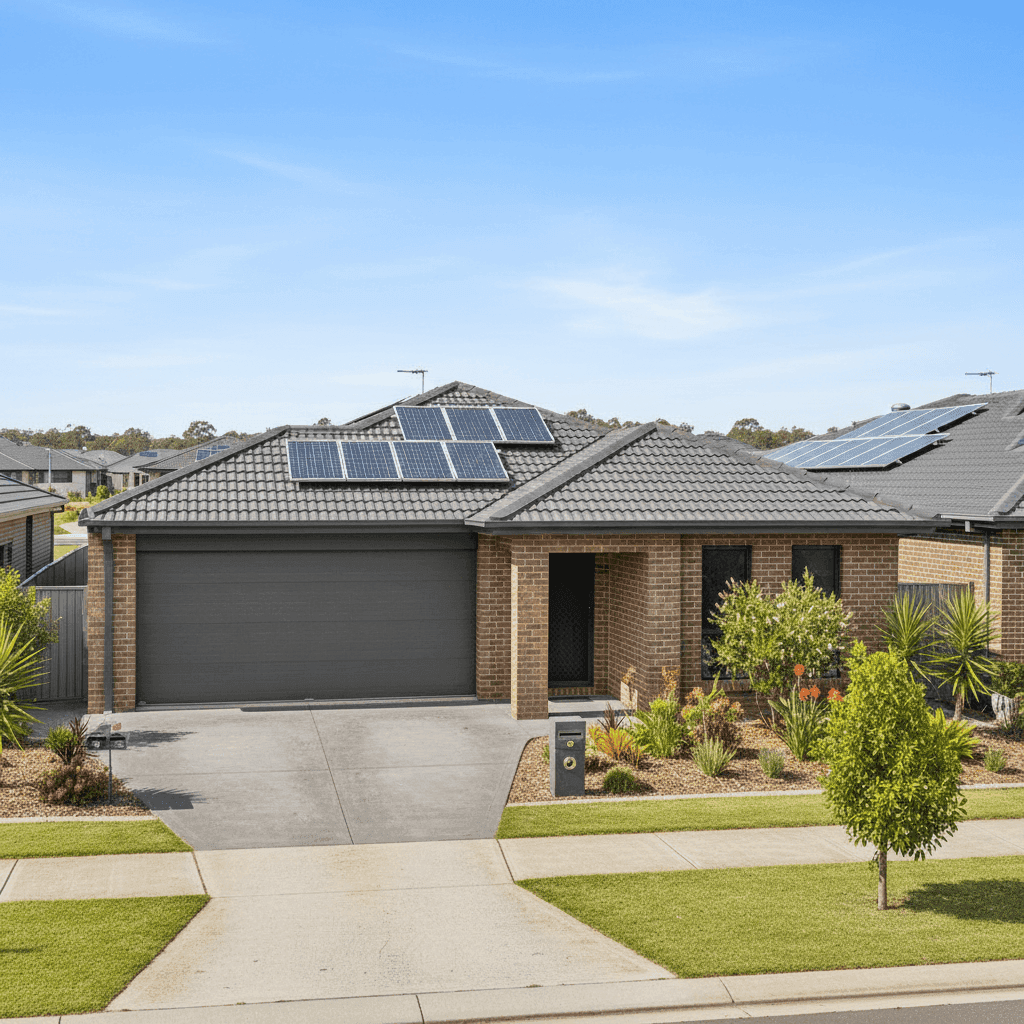
If you own a free standing home in Burpengary, QLD 4505, you've probably wondered whether your home insurance premium is reasonable — or whether you're quietly overpaying year after year. This article breaks down a real home and contents insurance quote for a four-bedroom, two-bathroom brick veneer property in Burpengary, comparing it against suburb, state, and national benchmarks so you can make a more informed decision at renewal time.
---
Is This Quote Fair?
The quote in question sits at $3,585 per year (or $337 per month) for combined home and contents cover, with a building sum insured of $765,000 and contents valued at $249,000. Both the building and contents excess are set at $1,000.
Our price rating for this quote is Expensive — above average for the Burpengary area.
To put that in context: the suburb average annual premium is $1,899, and the median sits at just $1,741. This quote comes in at nearly double the local median, which is a significant gap worth investigating. Even at the 75th percentile — meaning 75% of comparable quotes are cheaper — the benchmark is only $2,332 per year. At $3,585, this premium exceeds that upper quartile by more than $1,250 annually.
That said, a higher-than-average premium doesn't automatically mean you're being ripped off. Several property-specific factors can legitimately push a premium upward, and we'll explore those below. But it does mean this is a quote worth shopping around on.
---
How Burpengary Compares
Understanding where Burpengary sits in the broader insurance landscape helps put individual quotes in perspective.
| Benchmark | Annual Premium |
|---|---|
| This Quote | $3,585 |
| Burpengary Suburb Average | $1,899 |
| Burpengary Suburb Median | $1,741 |
| LGA (Moreton Bay) Average | $3,435 |
| QLD State Median | $3,903 |
| QLD State Average | $9,129 |
| National Median | $2,764 |
| National Average | $5,347 |
A few things stand out here. First, Burpengary's local premiums are notably lower than both the Queensland and national averages, reflecting the suburb's relatively benign risk profile — it sits outside designated cyclone risk zones, which is a major cost driver across much of Queensland. Second, the QLD state average is dramatically inflated by high-risk coastal and far-north Queensland properties, so it's not a particularly useful comparison for a Moreton Bay suburb like Burpengary.
More telling is the LGA (Moreton Bay) average of $3,435, which this quote exceeds by around $150. This suggests the quote is on the higher end even within the broader local government area, though it's not wildly out of range at that level.
For a deeper look at what homeowners in the area are paying, check out the Burpengary suburb insurance stats, the Queensland state overview, or the national insurance benchmarks.
> Note: The suburb sample size for Burpengary is 12 quotes, so local averages should be treated as indicative rather than definitive. More data points would sharpen these comparisons.
---
Property Features That Affect Your Premium
Insurance pricing is never one-size-fits-all. The specific characteristics of this property help explain why the premium lands where it does.
Brick Veneer Walls and Tiled Roof Brick veneer construction with a tiled roof is generally viewed favourably by insurers — it's a durable, fire-resistant combination that tends to attract more competitive pricing than, say, weatherboard or fibrous cement cladding. This is a neutral-to-positive factor for this property.
Slab Foundation A concrete slab foundation is standard for Queensland homes built in the 1990s and is considered low-risk from an insurer's perspective. No underfloor space means no concerns about subfloor moisture or pest damage in that area.
Above Average Fittings Quality This is likely one of the key premium drivers. Above-average fittings — think stone benchtops, quality appliances, premium fixtures and finishes — increase the cost to rebuild or repair, which flows directly into both the building sum insured and the premium itself. Insurers price for reinstatement, not market value.
Building Size: 244 sqm At 244 square metres, this is a sizeable family home. Larger floor areas cost more to rebuild, and the $765,000 building sum insured reflects that. Getting the sum insured right is critical — underinsuring can leave you badly exposed after a major loss.
Solar Panels The presence of solar panels adds a modest amount to the insured value and can slightly increase premiums, as panels need to be covered for damage from storms, hail, or fire. In southeast Queensland, hail events are not uncommon, making this a relevant consideration.
Ducted Climate Control Ducted air conditioning is a significant fixed installation that adds to the replacement cost of the home. Like solar panels, it contributes to a higher building sum insured and, by extension, a higher premium.
No Pool, No Cyclone Risk Zone The absence of a pool removes a common liability and property risk factor. And being outside a cyclone risk zone is a meaningful cost advantage for Queensland homeowners — cyclone-rated premiums in north Queensland can be many multiples of what southeast Queensland homeowners pay.
---
Tips for Homeowners in Burpengary
1. Shop the market at renewal Given this quote is rated expensive relative to the suburb, the single most effective action is to compare it against other insurers. Premiums for identical cover can vary by hundreds — sometimes thousands — of dollars between providers. Use a comparison tool like CoverClub to get multiple quotes side by side.
2. Review your sum insured carefully With above-average fittings and a 244 sqm floor plan, it's important your building sum insured accurately reflects current rebuild costs — not the market sale price of the property. Rebuild costs have risen sharply in recent years due to construction inflation. Consider using a building cost calculator or asking your insurer how they've determined the figure.
3. Consider your excess level Both the building and contents excess on this policy are set at $1,000. Opting for a higher excess (say, $2,000 or $2,500) can meaningfully reduce your annual premium. If you're financially comfortable absorbing a larger out-of-pocket cost in the event of a claim, this can be a smart trade-off.
4. Check what's included for solar and ducted systems Not all policies treat solar panels and ducted air conditioning the same way. Some include them automatically as part of the building; others require them to be specifically listed or may apply sub-limits. Read your Product Disclosure Statement (PDS) carefully to ensure these assets are fully covered.
---
Ready to Find a Better Deal?
Whether you're renewing soon or just doing your research, it pays to know what the market looks like. CoverClub makes it easy to compare home and contents insurance quotes from multiple Australian insurers in one place — so you can see whether you're getting value for money or leaving savings on the table.