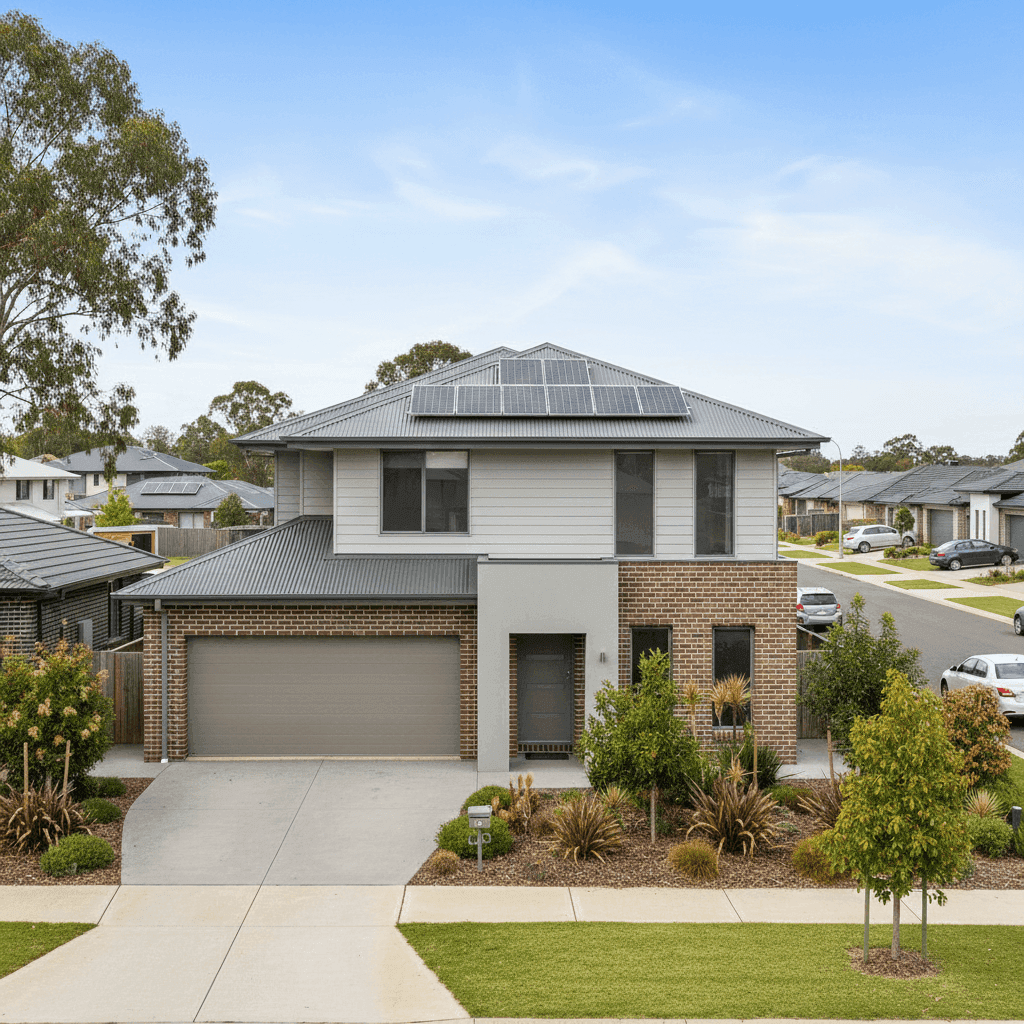
If you own a four-bedroom free standing home in Burpengary, QLD 4505, understanding what you should expect to pay for home and contents insurance is a smart first step toward making sure you're not overpaying — or underinsured. This article breaks down a real quote of $1,771 per year (or $170/month) for a property in this suburb, and puts it in context against local, state, and national benchmarks.
---
Is This Quote Fair?
The short answer: yes, broadly speaking. This quote has been rated Fair (Around Average), which means it sits comfortably within the typical range for comparable properties in Burpengary.
At $1,771 per year, this premium comes in:
- $128 below the suburb average of $1,899/yr
- $30 above the suburb median of $1,741/yr
- Well within the middle band of the local market (25th–75th percentile: $1,470–$2,332/yr)
In other words, roughly half of similar Burpengary properties are paying less than $1,741/yr, and half are paying more — placing this quote right in the thick of the pack. It's not a bargain-basement price, but it's also far from the top of the range. For a 214 sqm double brick home built in 1995 with a $625,000 building sum insured and $50,000 contents cover, this is a reasonable outcome.
It's worth noting that the $5,000 excess on both building and contents is on the higher side. Choosing a higher excess is one way insurers reduce the upfront premium — so if you were to lower your excess, you'd likely see the annual cost rise. Keep that trade-off in mind when evaluating the true value of this policy.
---
How Burpengary Compares
The pricing picture becomes even more interesting when you zoom out beyond the suburb. Burpengary (QLD 4505) sits in a relatively affordable pocket compared to broader Queensland and national figures.
| Benchmark | Average Premium | Median Premium |
|---|---|---|
| Burpengary (suburb) | $1,899/yr | $1,741/yr |
| Moreton Bay LGA | $3,435/yr | — |
| Queensland (state) | $9,129/yr | $3,903/yr |
| National | $5,347/yr | $2,764/yr |
The Queensland state average of $9,129/yr is heavily skewed by high-risk coastal and cyclone-prone areas in Far North Queensland — places like Cairns and Townsville, where premiums can be eye-watering. The median of $3,903/yr is a more representative figure for typical Queensland homeowners, and Burpengary sits well below even that.
Compared to national figures, Burpengary again fares well. The national median of $2,764/yr is notably higher than the suburb's median, reflecting the influence of flood, bushfire, and cyclone zones across Australia that push premiums up in many regions.
The Moreton Bay LGA average of $3,435/yr — which includes a wide range of properties across the council area — is nearly double the Burpengary suburb average, suggesting that Burpengary itself is one of the more affordable pockets within the region.
Bottom line: Homeowners in Burpengary are, on the whole, getting a relatively good deal compared to most of Queensland and the country. This quote reflects that favourable positioning.
---
Property Features That Affect Your Premium
Every property is different, and insurers weigh up a range of characteristics when calculating your premium. Here's how the features of this particular home are likely influencing the price:
- Double Brick external walls are generally viewed favourably by insurers. Brick construction is more resistant to fire, wind, and impact damage than timber-framed or clad alternatives, which can translate to lower risk assessments and, in turn, lower premiums.
- Steel/Colorbond roof is a durable, low-maintenance roofing choice that performs well in Australian conditions. It's resistant to rot and pests, and holds up reasonably well in storms — all positives from an underwriting perspective.
- Slab foundation is the most common foundation type in Queensland and is generally considered standard risk. No elevated stumps means reduced exposure to certain flood or moisture-related claims.
- Tile flooring throughout the home is another low-risk signal — tiles are durable, non-combustible, and easy to replace compared to carpet or timber floors.
- Solar panels add some value to the property and may need to be factored into the sum insured. Some policies cover rooftop solar as part of the building; it's worth confirming this is included in your $625,000 building cover.
- Ducted climate control adds to the replacement value of the home and is likely already factored into the building sum insured. Ensure your insurer is aware of this system, as it can be costly to replace.
- No pool removes one common liability and maintenance risk from the equation — a small but meaningful factor for some insurers.
- Construction year (1995) means the property is around 30 years old. While not brand new, a well-maintained brick home of this era is typically considered standard risk. Some insurers may apply modest loadings for older properties due to ageing plumbing, wiring, or roofing components.
---
Tips for Homeowners in Burpengary
Whether you're reviewing your current policy or shopping around for the first time, here are some practical steps to get the most out of your home insurance:
- Check your building sum insured regularly. Construction costs have risen significantly in recent years. A sum insured of $625,000 for a 214 sqm home works out to roughly $2,920/sqm — which is within a reasonable range for a brick home in South East Queensland, but worth verifying against current rebuild cost estimates. Being underinsured can leave you seriously out of pocket after a major claim.
- Review your excess carefully. The $5,000 excess on this policy is relatively high. While it reduces your annual premium, it also means you'd need to absorb the first $5,000 of any claim yourself. Consider whether a lower excess (say, $1,000–$2,500) might offer better overall value for your situation, particularly for contents claims.
- Confirm solar panel coverage. With solar panels installed, double-check your policy wording to ensure they're covered under the building section — both for physical damage and any liability arising from the system. Not all standard policies include solar panels automatically.
- Compare at renewal time. Insurers often quietly increase premiums at renewal without a corresponding change in your risk profile. Even if your current insurer is competitive, it pays to compare quotes annually. A difference of even $200–$300 per year adds up over time.
---
Ready to Compare?
Whether this quote resonates with your own situation or you're simply curious about what's available in the market, CoverClub makes it easy to see how your premium stacks up. Get a home insurance quote today and compare options tailored to your property in Burpengary. You might be surprised at what's out there.